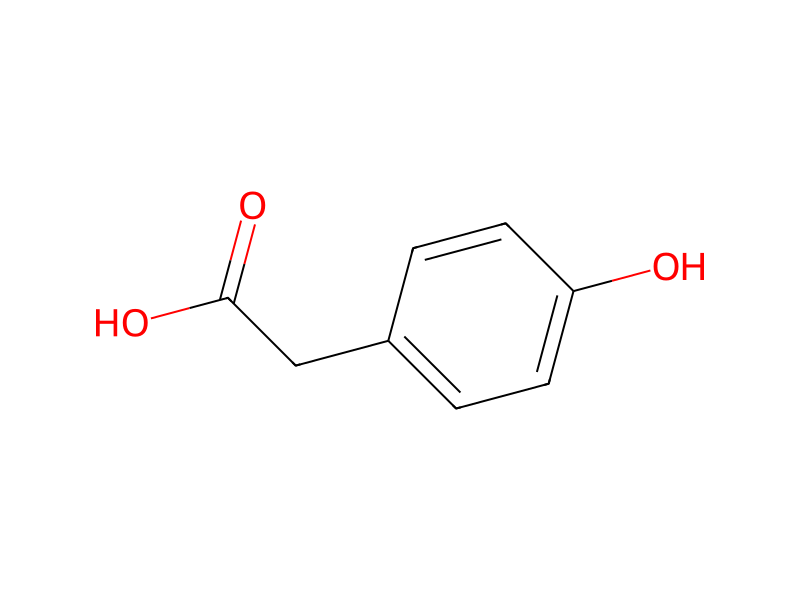
Hydroxyphenylacetic acid → Benzeneacetic acid, 4-(2-bromoethoxy)-, methyl ester
Reaction equation

[OH:1][C:2]1[CH:7]=[CH:6][C:5]([CH2:8][C:9]([OH:11])=[O:10])=[CH:4][CH:3]=1.C(=O)([O-])[O-].[Cs+].[Cs+].[Br:18][CH2:19][CH2:20]Br.[CH2:22](OCC)C>C(#N)C>[Br:18][CH2:19][CH2:20][O:1][C:2]1[CH:3]=[CH:4][C:5]([CH2:8][C:9]([O:11][CH3:22])=[O:10])=[CH:6][CH:7]=1Participants





Procedure
4-Hydroxyphenylacetic acid (100 g, 0.6 mol) and cesium carbonate (250 g) were suspended in 300 mL of anhydrous acetonitrile followed by addition of 1,2-dibromoethane (300 mL). The suspension was brought to reflux for 24 hours in a 2 L 3 neck round bottom flask fitted with a mechanical stirrer and reflux condenser then cooled to room temperature. The mixture was diluted to a volume of 2 L by addition of ethyl ether and the suspension was filtered. Concentration of the filtrate in vacuo afforded a colorless oil which was purified by vacuum distillation (0.2 mm Hg, 140-145° C.) to give methyl 4-(2-bromoethoxy)-phenylacetate (93.14 g, 60% yield) as a colorless oil. The methyl 4-(2-bromoethoxy)-phenylacetate was taken into methanol (250 mL) and the resulting solution was cooled to 0° C. Sodium hydroxide (29 g) in a minimum of water was added to the methanol solution in portions and the mixture was stirred at 0° C. for an additional 30 minutes. The solution was warmed to room temperature then concentrated to a white solid. The residue was taken into water and the solution washed once with ethyl ether. The aqueous solution was then acidified to pH 1 by addition of concentrated aqueous hydrochloric acid to give a thick suspension. Filtration and drying afforded 4-(2-bromoethoxy)-phenylacetic acid (86 g, 97% yield) as a colorless solid. The 4-(2-bromoethoxy)-phenylacetic acid (50 g) was taken into thionyl chloride (70 mL) and brought to reflux under an atmosphere of nitrogen for 2 hours. Fractional vacuum distillation (0.2 mm Hg, 139-140° C.) afforded 4-(2-bromoethoxy)phenylacetyl chloride (46.0 g, 86% yield) as a colorless oil that quickly crystallized on cooling. 1H NMR (CDCl3) 6.95, 6.76, 6.60 (m, 11H, Ar—H), 4.68 (m, 1H), 4.24 (m, 2H), 3.80 (m, 1H), 3.41-3.63 (m, 3H), 3.07 (m, 1H), 2.87 (m, 2H), 2.61 (m, 1H); ES-MS (m/z) 458 [M+H]+.
Workup
- customfitted with a mechanical stirrer
- temperaturereflux condenser
- filtrationthe suspension was filtered
- customConcentration of the filtrate in vacuo afforded a colorless oil which
- distillationwas purified by vacuum distillation (0.2 mm Hg, 140-145° C.)
Sources & evidence
- ORD record
- ord-e410232e88cb4e998df1209db865ad43
- Source dataset
- uspto-grants-2003_07
- Patent number
- US06593322B1
Reaction notes
Loading…