1,2,3,6-Tetrahydropyridine → HCID 21918743, compound
Reaction equation

[N+:1]([C:4]1[CH:9]=[CH:8][C:7]([N:10]=[C:11]=[O:12])=[CH:6][CH:5]=1)([O-:3])=[O:2].[NH:13]1[CH2:18][CH:17]=[CH:16][CH2:15][CH2:14]1>CN(C=O)C>[N+:1]([C:4]1[CH:5]=[CH:6][C:7]([NH:10][C:11]([N:13]2[CH2:18][CH2:17][CH:16]=[CH:15][CH2:14]2)=[O:12])=[CH:8][CH:9]=1)([O-:3])=[O:2]Participants
4
Reactant 2

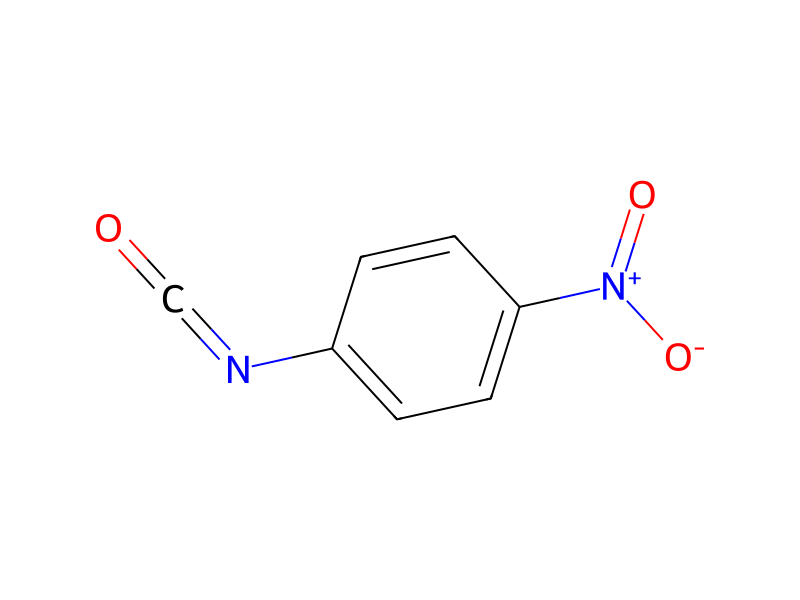
Product 1

Reagents, catalysts & solvents 1

Procedure
900 mg (5 mmol) of 4-nitrophenylisocyanate is dissolved, under an argon atmosphere, in a 100 ml three-necked flask in 17 ml of dry DMF. 0.45 ml (5 mmol) of 1,2,3,6-tetrahydropyridine is added to this solution in one go, and agitation is maintained for 15 hours. The reaction mixture is then concentrated to dryness under vacuum and the evaporation residue placed on a silica gel column. After elution with a heptane/ethyl acetate mixture: 4/6, the pure fractions are collected and concentrated under reduced pressure in order to produce 860 mg (70%) of a bright yellow powder. Melting point: 169-170° C.
Workup
- temperatureis maintained for 15 hours
- concentrationThe reaction mixture is then concentrated to dryness under vacuum
- washAfter elution with a heptane/ethyl acetate mixture
- custom4/6, the pure fractions are collected
- concentrationconcentrated under reduced pressure in order
Sources & evidence
- ORD record
- ord-305b3445dabf4105a26b3f3c5cef2890
- Source dataset
- uspto-grants-2003_07
- Patent number
- US06599903B2
Reaction notes
Loading…