Potassium Carbonate → HCID 15501042, compound
Reaction equation

[NH2:1][C:2]1[CH:7]=[C:6]([Br:8])[CH:5]=[CH:4][C:3]=1[OH:9].Br[CH:11]([CH2:17]Br)[C:12]([O:14][CH2:15][CH3:16])=[O:13].C(=O)([O-])[O-].[K+].[K+]>CC(C)=O>[CH2:15]([O:14][C:12]([CH:11]1[CH2:17][NH:1][C:2]2[CH:7]=[C:6]([Br:8])[CH:5]=[CH:4][C:3]=2[O:9]1)=[O:13])[CH3:16]Participants
5
Reactant 3

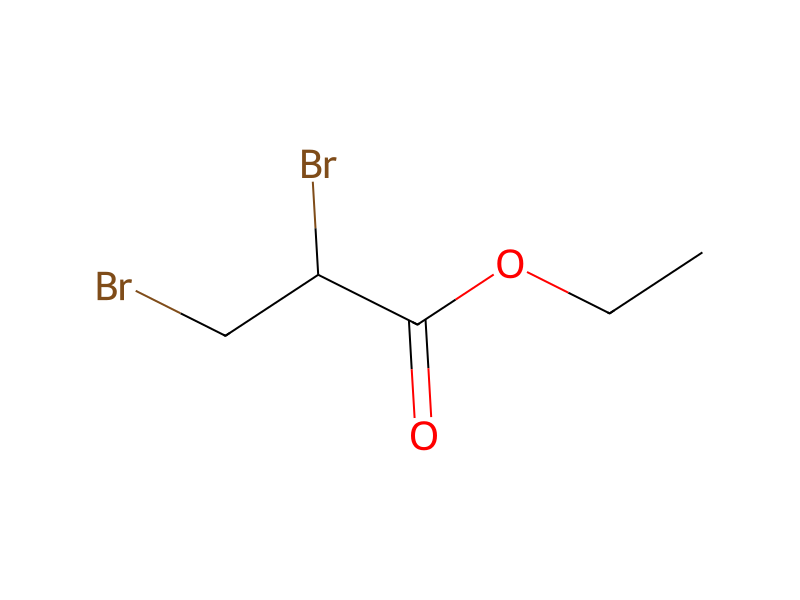

Product 1

Reagents, catalysts & solvents 1

Procedure
A mixture of 2-amino-4-bromophenol (5.00 g, 26.6 mmol), ethyl 2,3-dibromopropionate (7.84 g, 29.2 mmol), and potassium carbonate (10.3 g, 81.8 mmol) in acetone (55 mL) was heated at reflux for 16 h. After evaporation of volatile material, the residue was partitioned between dichloromethane and water. The organic layer was washed with 1 M aq. sodium carbonate solution and brine, dried (MgSO4), and evaporated. Chromatography (SiO2, heptane-ethyl acetate gradient produced 6-bromo-3,4-dihydro-2H-benzo[1,4]oxazine-2-carboxylic acid ethyl ester (5.95 g, 78%). Orange solid, MS (ISP)=286.0 (M+H)+.
Workup
- temperaturewas heated
- temperatureat reflux for 16 h
- customAfter evaporation of volatile material
- customthe residue was partitioned between dichloromethane and water
- washThe organic layer was washed with 1 M aq. sodium carbonate solution and brine
- dry with materialdried (MgSO4)
- customevaporated
Sources & evidence
- ORD record
- ord-ee1c4ac4253a4dd684c36cde359a0d41
- Source dataset
- uspto-grants-2011_02
- Patent number
- US07879845B2
Reaction notes
Loading…