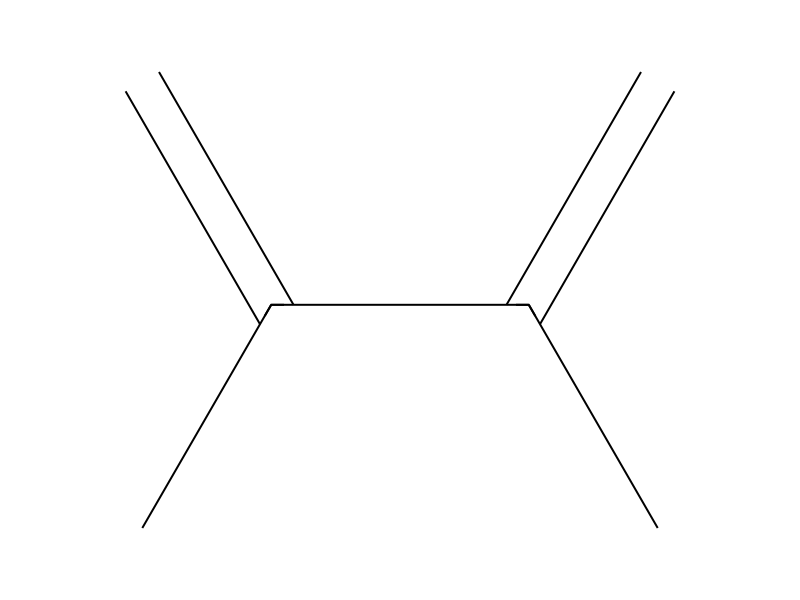
2,3-Dimethyl-1,3-butadiene → (4,5-Dimethyl-1,4-cyclohexadienyl)trimethylsilane
Reaction equation

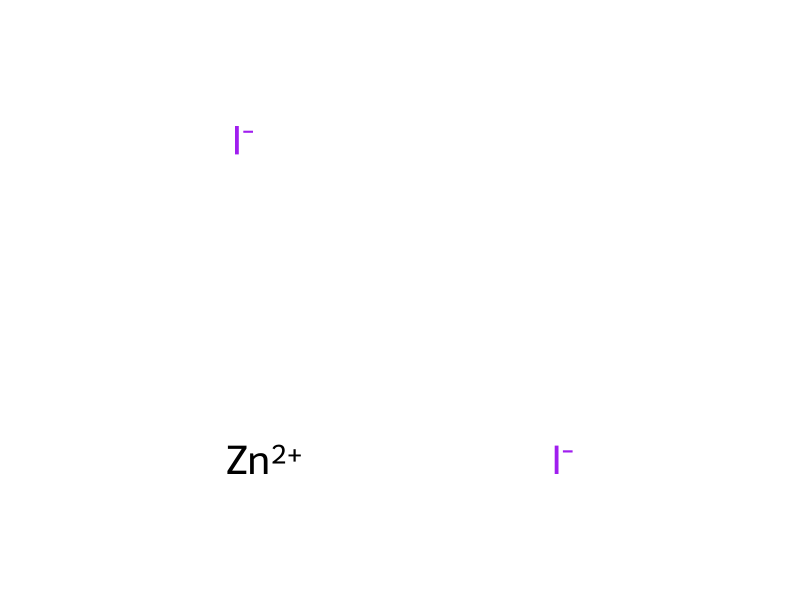
[CH3:1][C:2]([C:4]([CH3:6])=[CH2:5])=[CH2:3].[CH3:7][Si:8]([C:11]#[CH:12])([CH3:10])[CH3:9]>ClCCl.[Zn+2].[I-].[I-].C1(P(CC)C2C=CC=CC=2)C=CC=CC=1>[CH3:3][C:2]1[CH2:1][CH:12]=[C:11]([Si:8]([CH3:10])([CH3:9])[CH3:7])[CH2:5][C:4]=1[CH3:6]Participants
6




Conditions
- Temperature
- 30 °C
Procedure
In a four-necked flask, 0.54 g (2.5 mmol) of CoBr2, 2.62 g (8.2 mmol) of ZnI2 and 1.09 g (2.7 mmol) of diphenylphosphinoethane were dissolved in 120 ml of dichloromethane and the mixture was stirred for 0.5 hour at 30° C. Subsequently, 27.5 ml (244 mmol) of 2,3-dimethyl-1,3-butadiene, 21.5 g (219 mol) of trimethylsilylacetylene and 0.69 g (2.7 mmol) of Bu4NBH4 were added thereto, and the mixture was allowed to react for one hour at 30° C. After dichloromethane was evaporated under reduced pressure, 23.3 g of the title compound was obtained at a yield of 59.0% (GC purity 89%).
Workup
- customto react for one hour at 30° C
- customAfter dichloromethane was evaporated under reduced pressure
Sources & evidence
- ORD record
- ord-e022d6553de64971911c293a03bbf33c
- Source dataset
- uspto-grants-2011_02
- Patent number
- US07880025B2
Reaction notes
Loading…