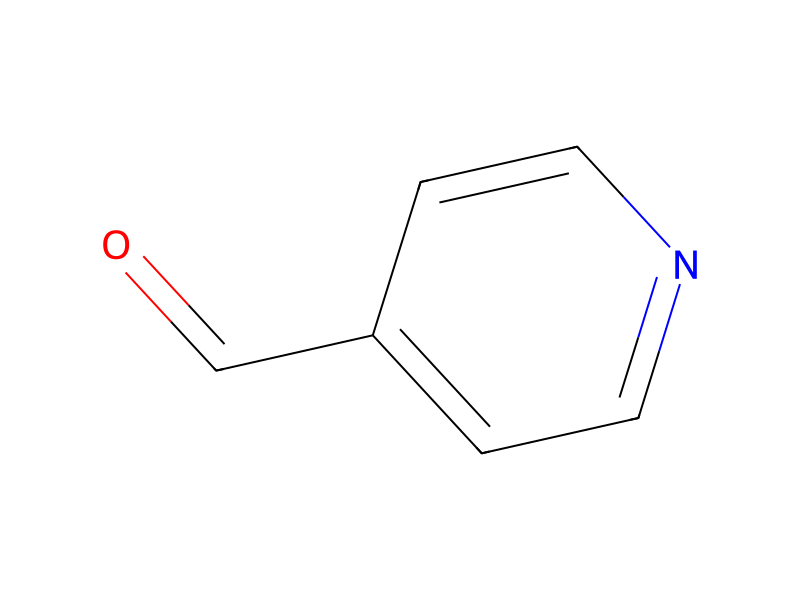
4-Pyridinecarboxaldehyde → HCID 86623571, compound
Reaction equation

[Cl:1][C:2]1[N:3]=[C:4]([N:14]2[CH2:19][CH2:18][O:17][CH2:16][CH2:15]2)[C:5]2[S:10][C:9]([CH2:11][NH:12][CH3:13])=[CH:8][C:6]=2[N:7]=1.[N:20]1[CH:25]=[CH:24][C:23]([CH:26]=O)=[CH:22][CH:21]=1>>[Cl:1][C:2]1[N:3]=[C:4]([N:14]2[CH2:19][CH2:18][O:17][CH2:16][CH2:15]2)[C:5]2[S:10][C:9]([CH2:11][N:12]([CH3:13])[CH2:26][C:23]3[CH:22]=[CH:21][N:20]=[CH:25][CH:24]=3)=[CH:8][C:6]=2[N:7]=1Participants


Procedure
(2-Chloro-4-morpholin-4-yl-thieno[3,2-d]pyrimidin-6-ylmethyl)-methylamine was reacted with pyridine-4-carbaldehyde using standard reductive amination conditions. The resulting crude solid was triturated with diethyl ether to give (2-chloro-4-morpholin-4-yl-thieno[3,2-d]pyrimidin-6-ylmethyl)methylpyridin-4-ylmethylamine as a solid (93% yield), which was reacted with 5-(4,4,5,5-tetramethyl-[1,3,2]dioxaborolan-2-yl)-pyrimidin-2-ylamine according to General Procedure A. The resulting solid was triturated with diethyl ether and methanol to give 426 as a solid (80% yield). NMR (CDCl3, 400 MHz), 2.35 (3H, s), 3.66 (2H, s), 3.88 (2H, s), 3.91 (4H, t, J=5.2), 4.07 (4H, t, J=5.2), 5.27 (2H, s), 7.32 (1H, s), 7.36 (2H, d, J=6), 8.61-8.62 (2H, m), 9.30 (2H, s). MS: (ESI+): MH+=449
Workup
- customThe resulting crude solid was triturated with diethyl ether
Sources & evidence
- ORD record
- ord-cea09ded9ba545eda9819e1897bb99d0
- Source dataset
- uspto-grants-2011_02
- Patent number
- US07888352B2
Reaction notes
Loading…