Triethylamine → Benzyl octahydroquinoxaline-1(2H)-carboxylate
Reaction equation

[NH:1]1[C@@H:10]2[C@@H:5]([CH2:6][CH2:7][CH2:8][CH2:9]2)[NH:4][CH2:3][CH2:2]1.C(N(CC)CC)C.Cl[C:19]([O:21][CH2:22][C:23]1[CH:28]=[CH:27][CH:26]=[CH:25][CH:24]=1)=[O:20]>ClCCl>[N:1]1([C:19]([O:21][CH2:22][C:23]2[CH:28]=[CH:27][CH:26]=[CH:25][CH:24]=2)=[O:20])[CH:10]2[CH:5]([CH2:6][CH2:7][CH2:8][CH2:9]2)[NH:4][CH2:3][CH2:2]1Participants
5
Reactant 3

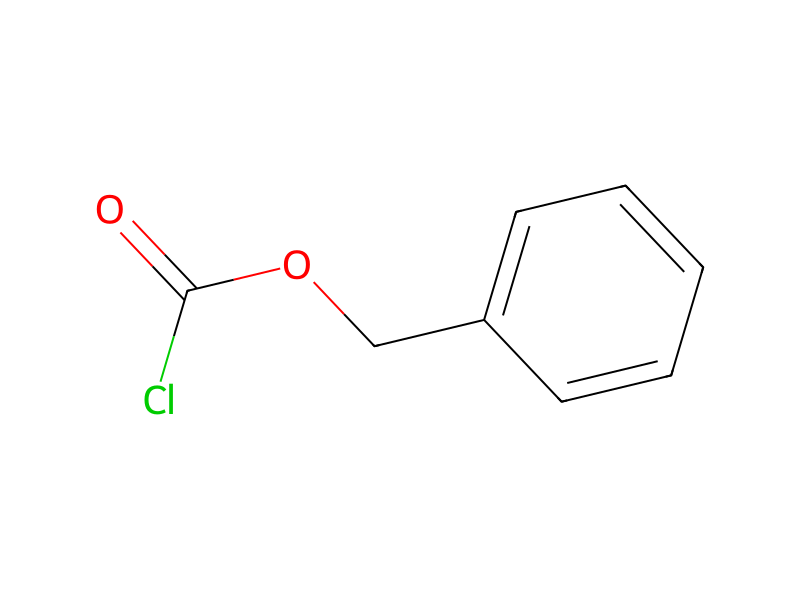

Product 1

Reagents, catalysts & solvents 1

Procedure
To (4aR,8aS)-decahydroquinoxaline (1.4 g, 10 mmol) in dichloromethane (50 mL) was added triethylamine (1.7 mL, 12 mmol) followed by dropwise benzyl chloroformate (1.71 g, 10 mmol). The reaction mixture was stirred at room temperature for 2 h before being diluted with dichloromethane and washed with 1N NaOH followed by sat. aq. NH4Cl. The combined organic layers were washed with brine, dried (MgSO4) and concentrated to provide the crude product, which was purified via Combiflash to yield phenylmethyl octahydro-1(2H)-quinoxalinecarboxylate (enantiomeric mixture, cis) (2.32 g, 85%). LCMS: (M+H)+: 275.1.
Workup
- washwashed with 1N NaOH
- washThe combined organic layers were washed with brine
- dry with materialdried (MgSO4)
- concentrationconcentrated
- customto provide the crude product, which
- customwas purified via Combiflash
Sources & evidence
- ORD record
- ord-0db471a3acb744eb8e837a7df0797d83
- Source dataset
- uspto-grants-2011_02
- Patent number
- US07893056B2
Reaction notes
Loading…