Acetic Acid → Methyl 2-chloro-3-nitrobenzoate
Reaction equation

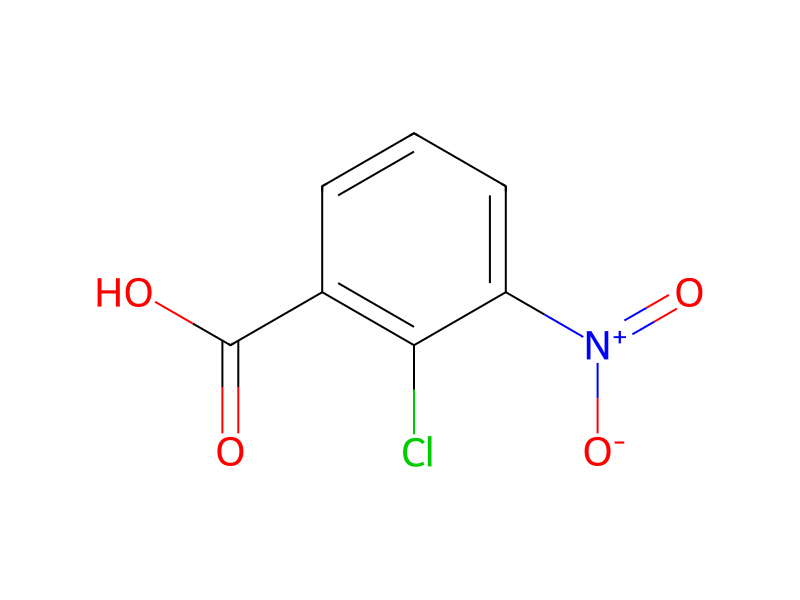
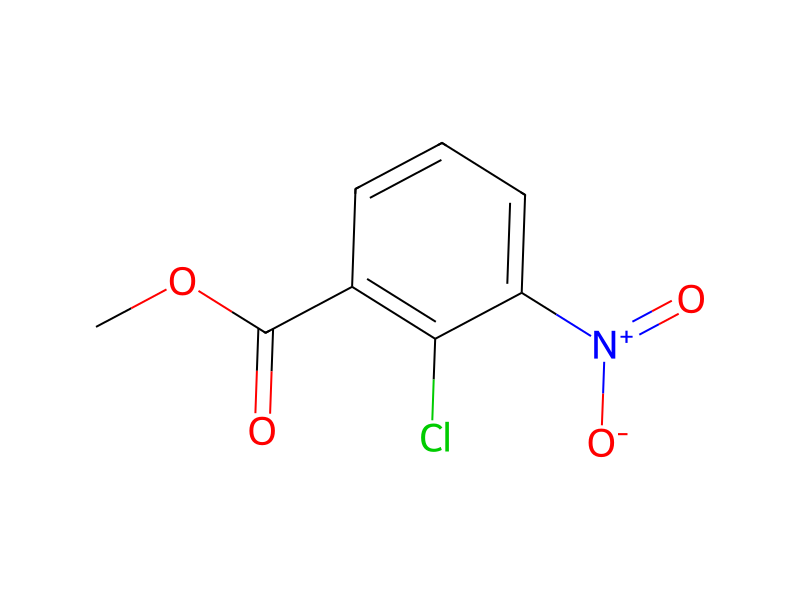
[CH3:1][Si](C=[N+]=[N-])(C)C.[Cl:8][C:9]1[C:14]([C:15]([OH:17])=[O:16])=[CH:13][CH:12]=[CH:11][C:10]=1[N+:18]([O-:20])=[O:19].C(O)(=O)C>CCCCCC.CO>[Cl:8][C:9]1[C:14]([C:15]([O:17][CH3:1])=[O:16])=[CH:13][CH:12]=[CH:11][C:10]=1[N+:18]([O-:20])=[O:19]Participants
6
Reactant 3


Product 1
Reagents, catalysts & solvents 2


Procedure
A solution of trimethylsilyldiazomethane in hexane (2 M) was added dropwise to a solution of 2.01 g 2-chloro-3-carboxy-nitrobenzene in 20 mL methanol at room temperature until no further gas evolution occurred. Acetic acid was then added to quench excess trimethylsilyldiazomethane. The reaction mixture was evaporated under vacuum and the residue was dried in an oven overnight. The 2-chloro-3-methoxycarbonylnitrobenzene obtained was pure enough for the following reaction.
Workup
- customto quench excess trimethylsilyldiazomethane
- customThe reaction mixture was evaporated under vacuum
- customthe residue was dried in an oven overnight
Sources & evidence
- ORD record
- ord-0e771c33fbeb4c0f98f16f7fa06c0bfd
- Source dataset
- uspto-grants-2003_06
- Patent number
- US06573293B2
Reaction notes
Loading…