Naphthalene → HCID 70013449, compound
Reaction equation

[Li:1].C1C2C(=CC=CC=2)C=CC=1.Cl[P:13](Cl)[C:14]1[CH:19]=[CH:18][CH:17]=[CH:16][CH:15]=1.[CH3:21][C:22]1[CH:30]=[C:29]([CH3:31])[CH:28]=[C:27]([CH3:32])[C:23]=1[C:24](Cl)=[O:25]>O1CCCC1>[CH3:21][C:22]1[CH:30]=[C:29]([CH3:31])[CH:28]=[C:27]([CH3:32])[C:23]=1[C:24]([PH:13][C:14]1[CH:19]=[CH:18][CH:17]=[CH:16][CH:15]=1)=[O:25].[Li:1]Participants
6
Reactant 4


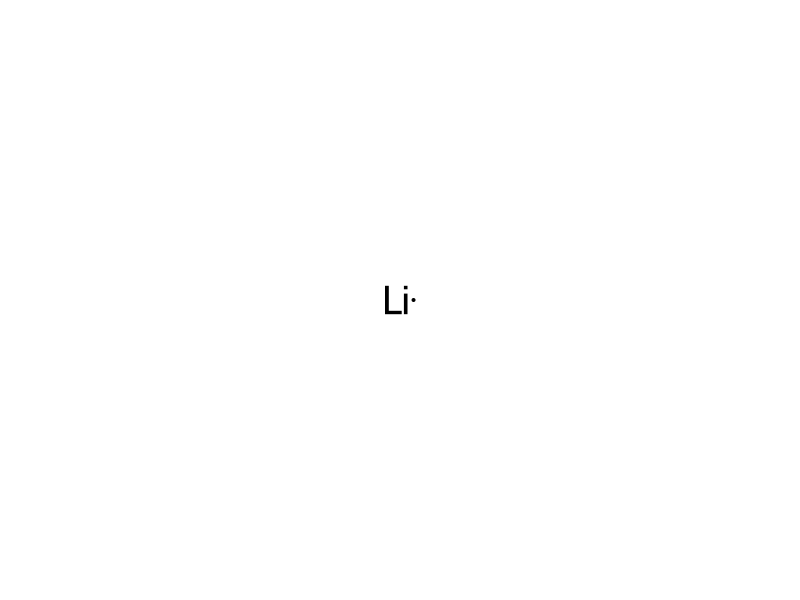
Product 1

Reagents, catalysts & solvents 1

Conditions
- Temperature
- 22.5 °C
Procedure
Under argon and with the exclusion of moisture, 14.0 g of lithium (2.0 mol) are introduced into 250 ml of tetrahydrofuran at room temperature. Following the addition of 1.25 g of naphthalene, 44.8 g (0.25 mol) of dichlorophenylphosphine are added dropwise with stirring at 20-25° C. and, after stirring for 4 h, the black solution is filtered into a three-necked round flask through a frit (G2 porosity) with the exclusion of moisture and under argon as a protective gas. 47.2 g (0.258 mol) of 2,4,6-trimethylbenzoyl chloride are added dropwise at room temperature over the course of 30 minutes with stirring and cooling. Stirring for 2 hours gives the title compound as a red solution in tetrahydrofuran.
Workup
- additionare added dropwise
- stirringafter stirring for 4 h
- filtrationthe black solution is filtered into a three-necked round flask through a frit (G2 porosity) with the exclusion of moisture and under argon as a protective gas
- stirringwith stirring
- temperaturecooling
- stirringStirring for 2 hours
Sources & evidence
- ORD record
- ord-d72a6a1e5665418b9f0041aa8042c3bf
- Source dataset
- uspto-grants-2003_06
- Patent number
- US06579663B2
Reaction notes
Loading…