Ethyl bromoacetate → ethyl 2-(4-ethylphenoxy)acetate
Reaction equation

[CH2:1]([C:3]1[CH:8]=[CH:7][C:6]([OH:9])=[CH:5][CH:4]=1)[CH3:2].C(=O)([O-])[O-].[K+].[K+].Br[CH2:17][C:18]([O:20][CH2:21][CH3:22])=[O:19]>CC(C)=O>[CH2:1]([C:3]1[CH:8]=[CH:7][C:6]([O:9][CH2:17][C:18]([O:20][CH2:21][CH3:22])=[O:19])=[CH:5][CH:4]=1)[CH3:2]Participants
Reactant 3


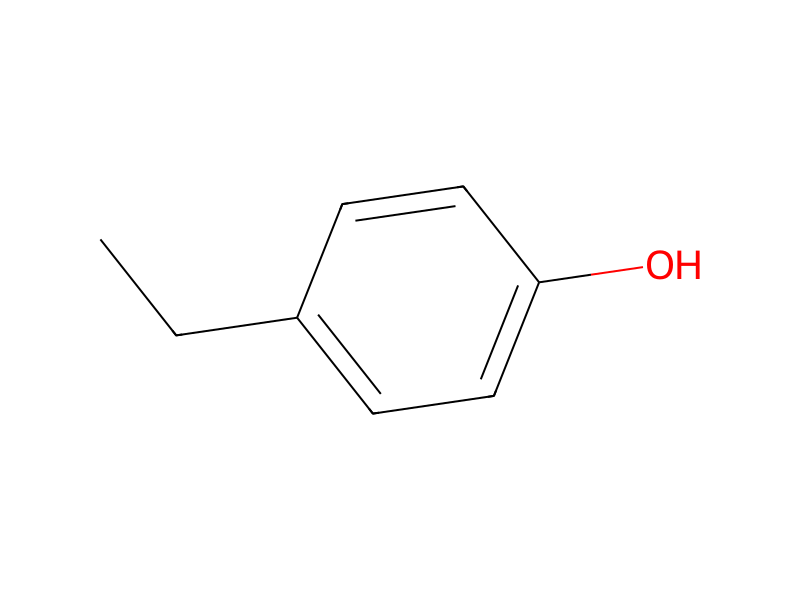
Product 1

Reagents, catalysts & solvents 1

Procedure
A mixture of 4-ethylphenol (Aldrich) (14.34 g, 116.20 mmoles), anhydrous potassium carbonate (Aldrich) (20.47 g, 146.63 mmoles), ethyl bromoacetate (Aldrich) (17.01 g, 99.81 mmoles) and dry acetone (Aldrich) (200 mL) was refluxed with stirring under a drying tube for 18 hours. The reaction was cooled, and the volatiles were removed by spin evaporation in vacuo. The white residue was partitioned between ice-cold water (250 mL) and dichloromethane (250 mL). The dichloromethane phase was separated and washed with ice cold water (2×100 mL), an ice-cold solution of 5% aqueous sodium hydroxide (150 mL) and finally with ice-cold water (2×100 mL). The dichloromethane solution was dried over sodium sulfate and spin evaporated in vacuo to give 19.86 g (95% yield) of ethyl 4-ethylphenoxyacetate as a clear liquid, which was one spot on thin layer chromatography.
Workup
- temperaturewas refluxed
- temperatureThe reaction was cooled
- customthe volatiles were removed by spin evaporation in vacuo
- customThe white residue was partitioned between ice-cold water (250 mL) and dichloromethane (250 mL)
- customThe dichloromethane phase was separated
- washwashed with ice cold water (2×100 mL)
- dry with materialThe dichloromethane solution was dried over sodium sulfate
- customspin evaporated in vacuo
Sources & evidence
- ORD record
- ord-056406802ca44c009296490caed0fa2b
- Source dataset
- uspto-grants-2003_06
- Patent number
- US06583148B1
Reaction notes
Loading…