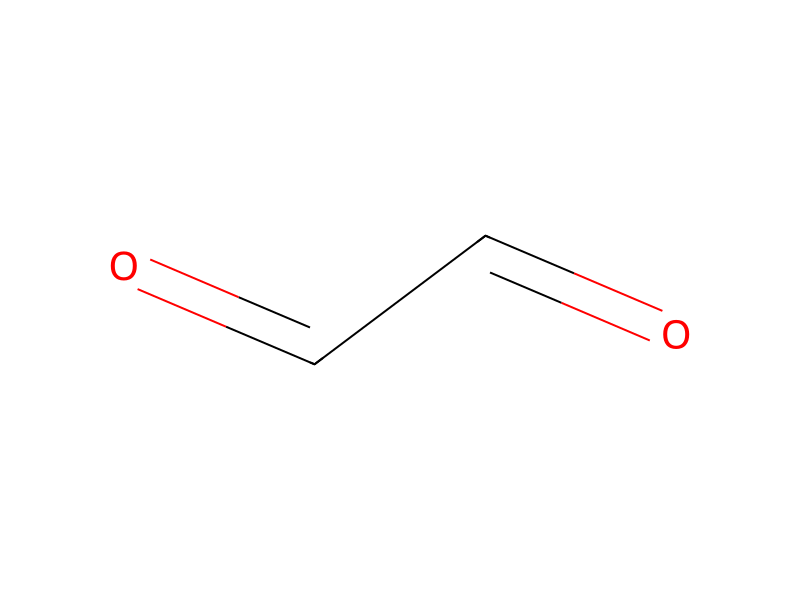
Glyoxal → CYCLEN-GLYOXAL
Reaction equation

[NH2:1][CH2:2][CH2:3][NH:4][CH2:5][CH2:6][NH:7][CH2:8][CH2:9][NH:10][CH2:11][CH3:12].C(=O)([O-])[O-].[K+].[K+].[CH:19]([CH:21]=O)=O>C(#N)C>[N:10]12[CH:21]3[N:7]([CH2:6][CH2:5][N:4]4[CH:19]3[N:1]([CH2:12][CH2:11]1)[CH2:2][CH2:3]4)[CH2:8][CH2:9]2Participants
Reactant 3


Product 1

Reagents, catalysts & solvents 1

Procedure
1,4,7,10-tetraazadodecane(1.1.4)trihydrobromide in acetonitrile with potassium carbonate was reacted with glyoxal to form 1,4,7,10-tetraazatetracyclo-[5,5,2,04.13,010.14]tetradecane(1.1.23). Following separation the pure product was obtained by low pressure distillation. This was dissolved in acetonitrile and benzylbromide was added to form 1,7-dibenzylonium-1,4,7,10-tetraazatetracyclo[5,5,2,04.13,010.14]tetradecane(1.1.24). Following recrystallization from ethanol this was reacted with sodium borohydride. HCl was added, followed by water and NaOH, and the product extracted with chloroform. Following evaporation of solvent the solids were dissolved in methanol and HBr was added to obtain 1,7-dibenzyl-1,4,7,10-tetraazabicyclo[5.5.2]tetradecane(1.1.25) as the hydrobromide salt. This was dissolved in water and reduced using H2 and a Pd-C catalyst to remove the benzyl groups. Purification of the title compound was by crystallization of the hydrobromide salt. The base form was obtained by low pressure distillation following addition of base.
Sources & evidence
- ORD record
- ord-264ac2a0cdb94eaba0d25841d22e70a4
- Source dataset
- uspto-grants-2003_06
- Patent number
- US06583182B1
Reaction notes
Loading…