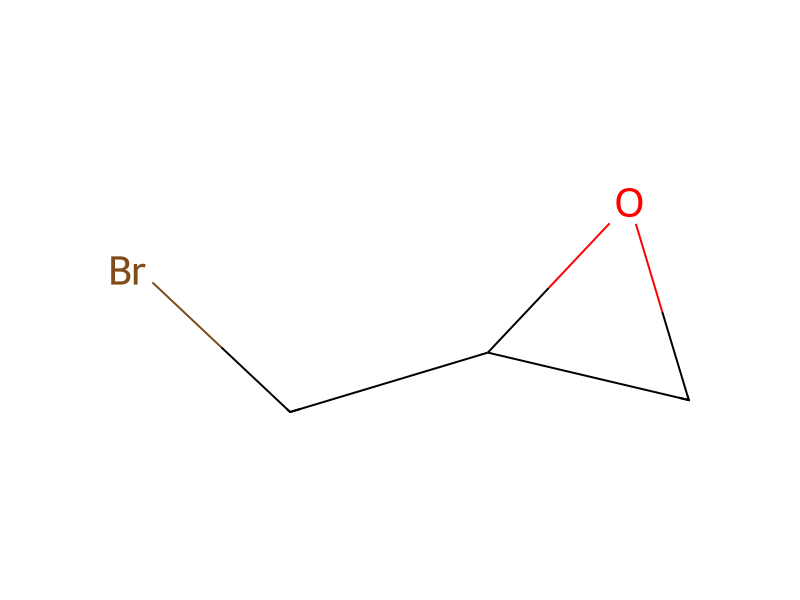
Epibromohydrin → (7-Nitro-2,3-dihydro-1,4-benzodioxin-2-yl)methanol
Reaction equation

[N+:1]([C:4]1[CH:5]=[C:6]([OH:11])[C:7](=[CH:9][CH:10]=1)[OH:8])([O-:3])=[O:2].C(=O)(O)[O-].[K+].[CH2:17]([CH:19]1[O:21][CH2:20]1)Br>CN(C=O)C>[OH:21][CH2:20][CH:19]1[O:11][C:6]2[CH:5]=[C:4]([N+:1]([O-:3])=[O:2])[CH:10]=[CH:9][C:7]=2[O:8][CH2:17]1Participants
Reactant 3


Product 1

Reagents, catalysts & solvents 1

Conditions
- Temperature
- 90 °C
Procedure
17.6 g 4-nitrocatechol and 11.0 g potassium bicarbonate were stirred in 200 ml DMF at 10° C. 13.99 g epibromohydrin in 10 ml DMF were added dropwise and stirring was continued at 60° C. for another 17 hrs. DMF was evaporated and the residue diluted with 50 ml water and extracted with ethyl acetate. The combined organic phases were washed with caustic soda and water, dried and evaporated. The crude oily product was heated to 90° C. with 200 ml toluene and the supernatant decanted from insoluble parts. After cooling to RT the solution is again decanted from insoluble oils and left at RT for 3 d. A first crop of 0.75 g crystalline title product was obtained. The mother liquor was evaporated and the residue dissolved in 20 dichloromethane at RT. Seeding and chilling to 0° C. yielded another 2.78 g crystalline title product.
Workup
- customDMF was evaporated
- additionthe residue diluted with 50 ml water
- extractionextracted with ethyl acetate
- washThe combined organic phases were washed with caustic soda and water
- customdried
- customevaporated
- customthe supernatant decanted from insoluble parts
- temperatureAfter cooling to RT the solution
- customis again decanted from insoluble oils
- waitleft at RT for 3 d
Sources & evidence
- ORD record
- ord-8fa2b576e92d4aa688f0be8b056e2b3b
- Source dataset
- uspto-grants-2007_01
- Patent number
- US07163941B2
Reaction notes
Loading…