Water → 3-Bromo-5-tert-butylamino-1-methyl-4-nitropyrazole
Reaction equation

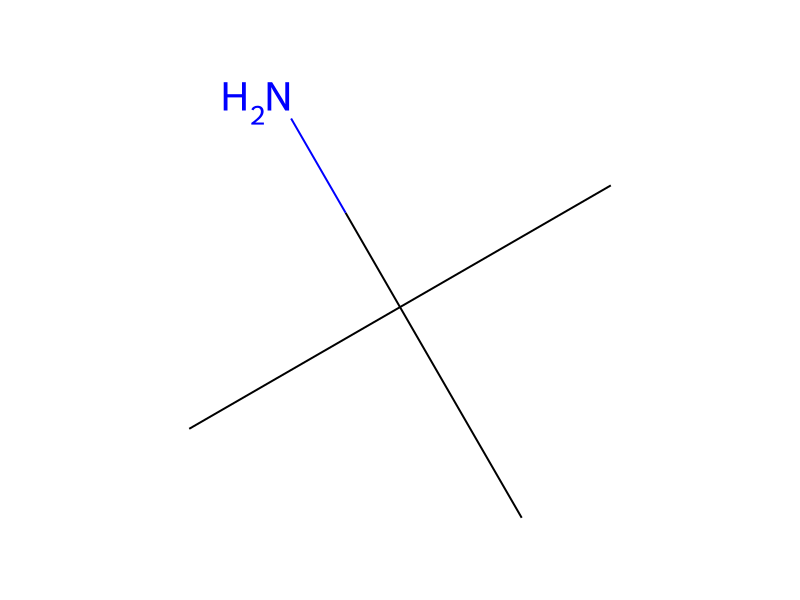
[Br:1][C:2]1[C:6]([N+:7]([O-:9])=[O:8])=[C:5](Br)[N:4]([CH3:11])[N:3]=1.[C:12]([NH2:16])([CH3:15])([CH3:14])[CH3:13].O>C(O)C>[Br:1][C:2]1[C:6]([N+:7]([O-:9])=[O:8])=[C:5]([NH:16][C:12]([CH3:15])([CH3:14])[CH3:13])[N:4]([CH3:11])[N:3]=1Participants
5
Reactant 3


Product 1

Reagents, catalysts & solvents 1

Procedure
1.5 g (5.26 mmoles) of 3,5-dibromo-1-methyl-4-nitropyrazole are heated in a solution of 20 ml tert-butylamine in 30 ml ethanol for 20 hours at boiling temperature. After cooling, the reaction mixture is poured on 150 ml water, the separated product is filtered and washed with 100 ml water. After vacuum drying, 1.14 g (78 percent of theory) of 3-bromo-5-tert-butylamino-1-methyl-4-nitropyrazole are obtained in the form of pale yellow flakes with a melting point of 75° to 77° C.
Workup
- temperatureAfter cooling
- filtrationthe separated product is filtered
- washwashed with 100 ml water
- customAfter vacuum drying
Sources & evidence
- ORD record
- ord-43088b64693c4cccbbd6a2c1eb4dfd17
- Source dataset
- uspto-grants-1997_09
- Patent number
- US05663366
Reaction notes
Loading…