Butanal → 2-Ethylhexanol
Reaction equation

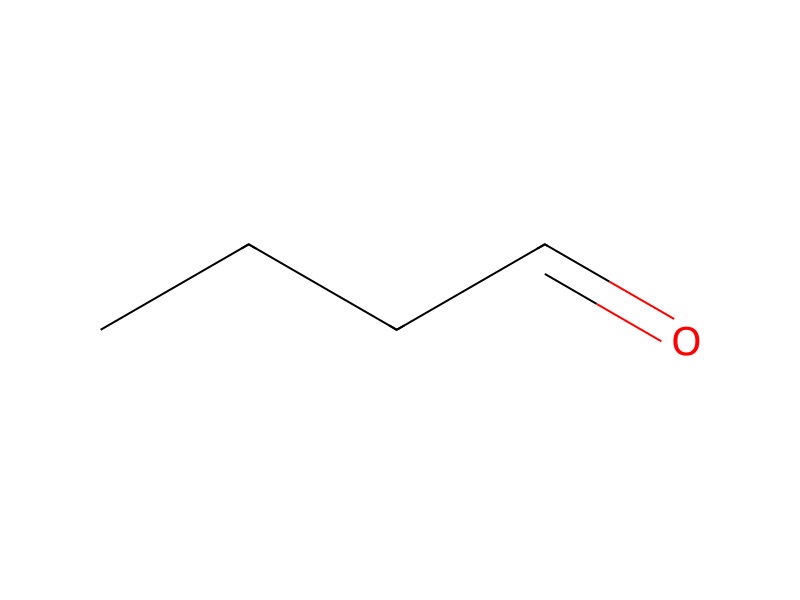
[CH:1](=[O:5])[CH2:2][CH2:3][CH3:4].[OH-].[Na+].Cl>>[CH2:3]([CH:2]([CH2:1][CH2:2][CH2:3][CH3:4])[CH2:1][OH:5])[CH3:4]Participants



Conditions
- Temperature
- 11 °C
Procedure
101.0 g of n-butyraldehyde and 5.0 g of polyethylene glycol (PEG 400) were placed in a reactor. The mixture was cooled to 11° C., and a total of 171.0 g of a 0.25% aqueous solution of NaOH was added to it at such a rate that the temperature of the mixture remained at 30°-32° C. After 2 hours the mixture was neutralized with hydrochloric acid, the phases were separated, and the organic phase was hydrogenated with Raney nickel at 100° C. and at a hydrogen pressure of 20 bar. The product was analyzed gas chromatographically. The 2-ethyl-1,3-hexane diol yield was 57.7 g, which corresponded to a yield of 56.9%. The worst byproduct, 2-ethyl hexanol, formed in an amount of 1.8%, and the unreacted n-butyraldehyde had become reduced to 1-butanol.
Workup
- customremained at 30°-32° C
- customthe phases were separated
- customwas hydrogenated with Raney nickel at 100° C. and at a hydrogen pressure of 20 bar
Sources & evidence
- ORD record
- ord-c2ac69ecb1b643adaf517726bd80ae6a
- Source dataset
- uspto-grants-1997_09
- Patent number
- US05663452
Reaction notes
Loading…