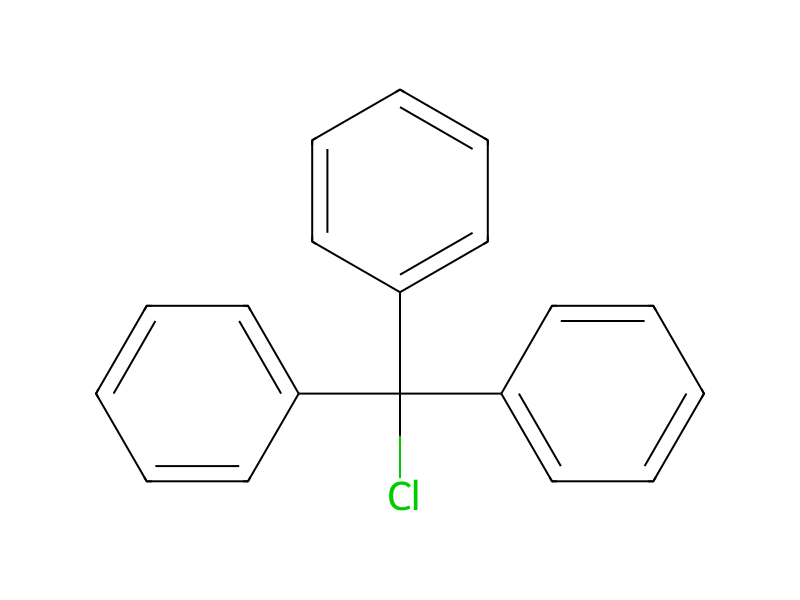
Trityl chloride → 4-trityloxybutan-1-ol
Reaction equation

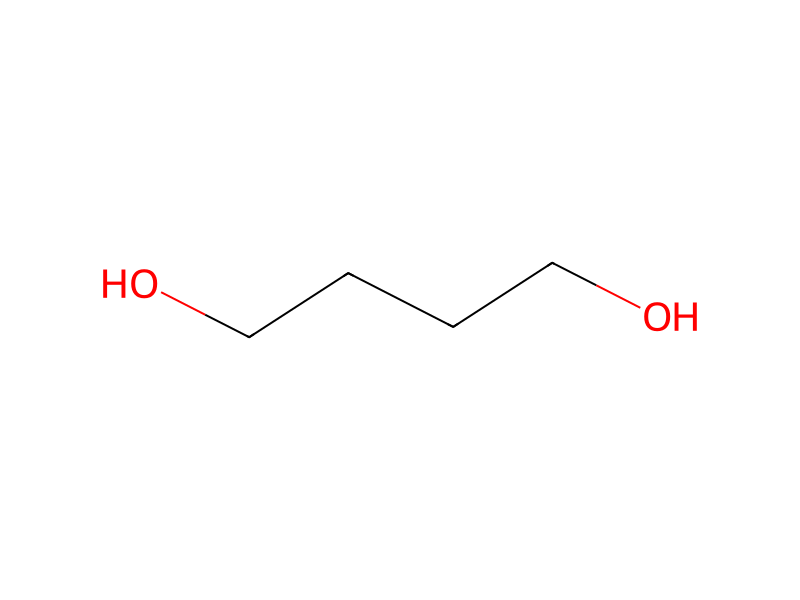
[CH2:1]([OH:6])[CH2:2][CH2:3][CH2:4][OH:5].[C:7]1([C:13]([C:21]2[CH:26]=[CH:25][CH:24]=[CH:23][CH:22]=2)([C:15]2[CH:20]=[CH:19][CH:18]=[CH:17][CH:16]=2)Cl)[CH:12]=[CH:11][CH:10]=[CH:9][CH:8]=1>N1C=CC=CC=1>[C:13]([O:5][CH2:4][CH2:3][CH2:2][CH2:1][OH:6])([C:7]1[CH:12]=[CH:11][CH:10]=[CH:9][CH:8]=1)([C:21]1[CH:22]=[CH:23][CH:24]=[CH:25][CH:26]=1)[C:15]1[CH:16]=[CH:17][CH:18]=[CH:19][CH:20]=1Participants
4
Reactant 2
Product 1

Reagents, catalysts & solvents 1

Procedure
To a solution of 45 g of butane-1,4-diol in 0.25 1 of pyridine, cooled to 0° C., were added 139.4 g of triphenylchloromethane and the mixture was stirred at room temperature for 26 h. The precipitate formed was removed by filtration and the filtrate was evaporated in vacuo. The residue was taken up in 0.5 l of ethyl acetate and the solution was washed successively with 200 ml portions of water, 1N hydrochloric acid, water, 5% sodium bicarbonate solution and brine. The organic layer was dried over sodium sulfate and evaporated in vacuo. Crystallization of the residual material from ethyl acetate/hexane afforded 69.0 g of 4-trityloxy-1-butanol as white crystals of m.p. 73°-74° C.
Workup
- customThe precipitate formed
- customwas removed by filtration
- customthe filtrate was evaporated in vacuo
- washthe solution was washed successively with 200 ml portions of water, 1N hydrochloric acid, water, 5% sodium bicarbonate solution and brine
- dry with materialThe organic layer was dried over sodium sulfate
- customevaporated in vacuo
- customCrystallization of the residual material from ethyl acetate/hexane
Sources & evidence
- ORD record
- ord-723e3b0da42742c09e31073a147551db
- Source dataset
- uspto-grants-1997_09
- Patent number
- US05665746
Reaction notes
Loading…