Diphenyl N-Cyanocarbonimidate → N'-Cyano-N-(2-dimethylamino-3-pyridyl)-O-phenylisourea
Reaction equation

[NH2:1][C:2]1[C:3]([N:8]([CH3:10])[CH3:9])=[N:4][CH:5]=[CH:6][CH:7]=1.[CH:11]1[CH:16]=[CH:15][C:14]([O:17][C:18](OC2C=CC=CC=2)=[N:19][C:20]#[N:21])=[CH:13][CH:12]=1>COCCOC>[C:20]([N:19]=[C:18]([O:17][C:14]1[CH:15]=[CH:16][CH:11]=[CH:12][CH:13]=1)[NH:1][C:2]1[C:3]([N:8]([CH3:10])[CH3:9])=[N:4][CH:5]=[CH:6][CH:7]=1)#[N:21]Participants
4
Reactant 2
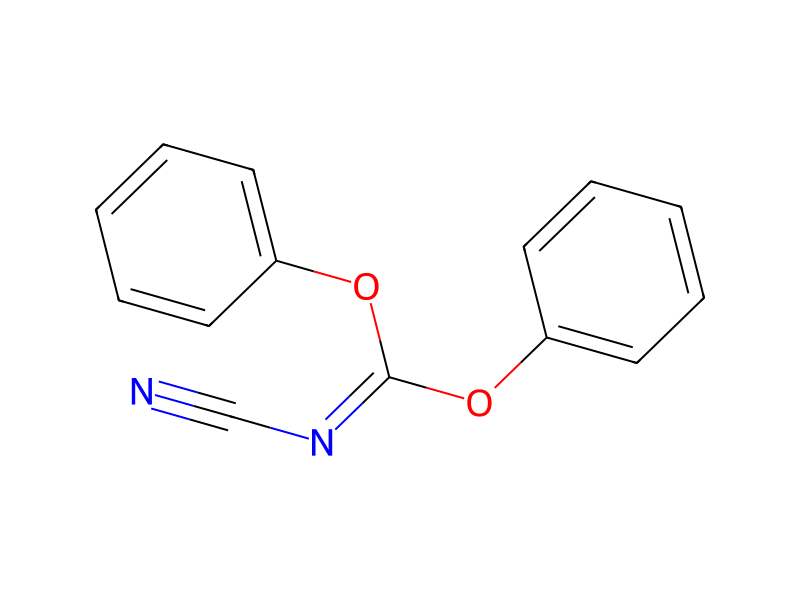

Product 1

Reagents, catalysts & solvents 1

Procedure
According to the procedure of Example 5, Step 3, 3-amino-2-dimethylaminopyridine (1.41 g, 0.0108 mol) was allowed to react with diphenylcyanocarbonimidate (2.45 g, 0.0108 mol) in ethylene glycol dimethyl ether (20 ml), under nitrogen for 18 hours. The reaction mixture was concentrated and the residue chromatographed on silica gel with mixtures of MeOH--CHCl3 containing from 0 to 5% MeOH. The product amounted to 3.23 g.
Workup
- concentrationThe reaction mixture was concentrated
- customthe residue chromatographed on silica gel with mixtures of MeOH
Sources & evidence
- ORD record
- ord-02f6dd59c30e4d0c8b5b9fdd1482c265
- Source dataset
- uspto-grants-1997_09
- Patent number
- US05668157
Reaction notes
Loading…