Acetic Anhydride → 2-(2-Fluorophenyl)-3-(4-methylthiophenyl)propenoic acid
Reaction equation

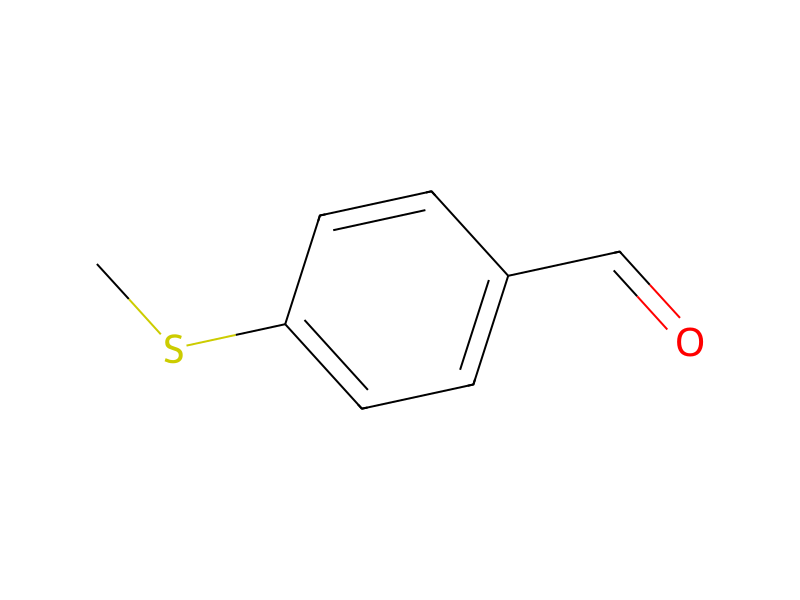
C(OC(=O)C)(=O)C.[CH3:8][S:9][C:10]1[CH:17]=[CH:16][C:13]([CH:14]=O)=[CH:12][CH:11]=1.[F:18][C:19]1[CH:24]=[CH:23][CH:22]=[CH:21][C:20]=1[CH2:25][C:26]([OH:28])=[O:27].C(N(CC)CC)C>O>[F:18][C:19]1[CH:24]=[CH:23][CH:22]=[CH:21][C:20]=1[C:25](=[CH:14][C:13]1[CH:16]=[CH:17][C:10]([S:9][CH3:8])=[CH:11][CH:12]=1)[C:26]([OH:28])=[O:27]Participants





Conditions
- Temperature
- 90 °C
Procedure
Acetic anhydride (60 mL), 4-(methylthio)benzaldehyde (7.05 g, 44 mmol), 2-fluorophenylacetic acid (7.79 g, 50.5 mmol), and triethylamine (5.50 g, 54.5 mmol) were placed in a 250 mL round bottom flask and heated to reflux for 1.75 hours. The reaction was cooled to 90° C., and water (100 mL) was added cautiously through an addition funnel. This caused the solution to reflux vigorously and the temperature to rise to 135° C. A yellow precipitate formed and after cooling to room temperature the solid was collected by filtration, washed with water, and recrystallized from toluene to provide 2-(2-fluorophenyl)-3-(4-methylthiophenyl)propenoic acid as yellow needles (7.98 g, 63%): mp 151.5°-156.0° C. 1H NMR (CDCl3) 300 MHz 8.01 (s,1H), 7.41-7.00 (m, 8H), 2.43 (s, 3H). 19F NMR (CDCl3) -113.40 (m). Mass spectrum M+H+ =289.
Workup
- temperatureheated
- temperatureto reflux for 1.75 hours
- temperatureto reflux vigorously
- customto rise to 135° C
- customA yellow precipitate formed
- temperatureafter cooling to room temperature the solid
- filtrationwas collected by filtration
- washwashed with water
- customrecrystallized from toluene
Sources & evidence
- ORD record
- ord-266ed69d3dc04df48cc4e603f44788a7
- Source dataset
- uspto-grants-1997_09
- Patent number
- US05668161
Reaction notes
Loading…