Acetic Anhydride → HCID 54242288, compound
Reaction equation

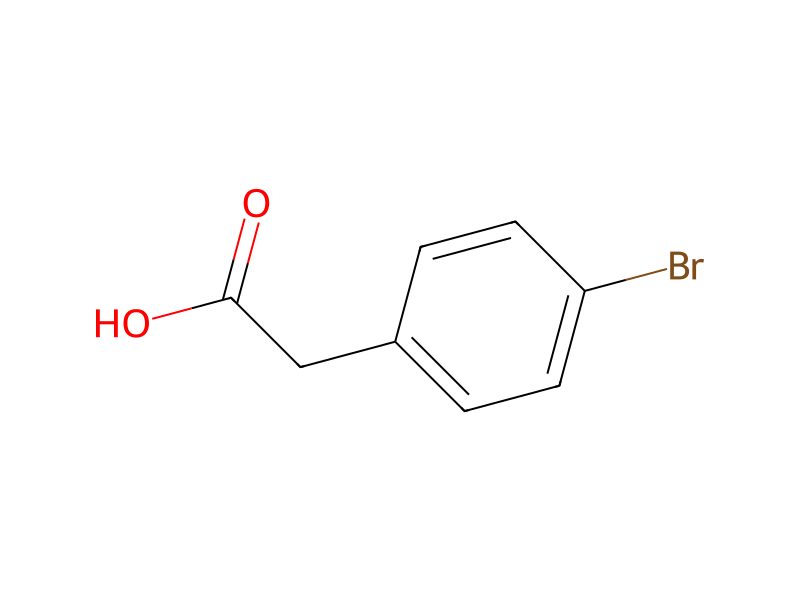
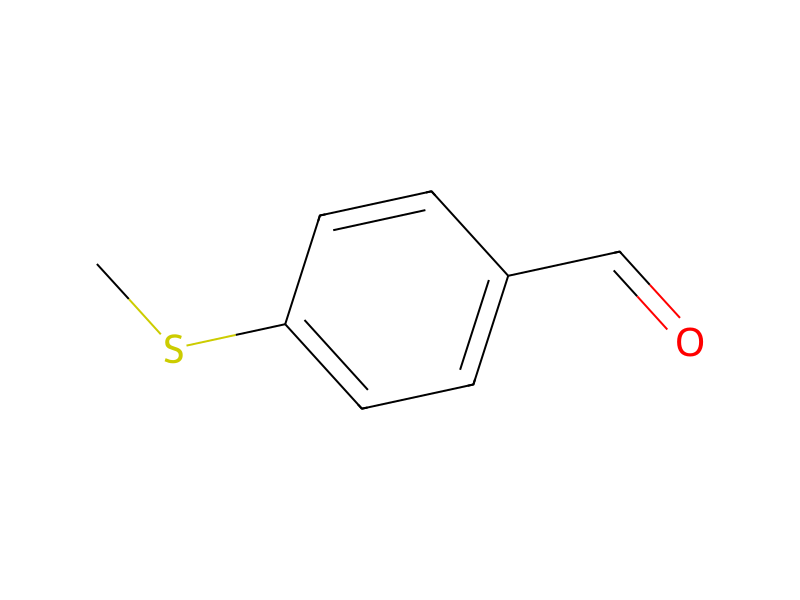
C(OC(=O)C)(=O)C.[CH3:8][S:9][C:10]1[CH:17]=[CH:16][C:13]([CH:14]=O)=[CH:12][CH:11]=1.[Br:18][C:19]1[CH:24]=[CH:23][C:22]([CH2:25][C:26]([OH:28])=[O:27])=[CH:21][CH:20]=1.C(N(CC)CC)C>O>[Br:18][C:19]1[CH:20]=[CH:21][C:22]([C:25](=[CH:14][C:13]2[CH:16]=[CH:17][C:10]([S:9][CH3:8])=[CH:11][CH:12]=2)[C:26]([OH:28])=[O:27])=[CH:23][CH:24]=1Participants
6
Reactant 4


Product 1

Reagents, catalysts & solvents 1

Conditions
- Temperature
- 90 °C
Procedure
A mixture of acetic anhydride (100 mL), 4-(methylthio)benzaldehyde (12.61 g, 82.8 mmol), 4-bromophenylacetic acid (17.79 g, 82.7 mmol), and triethylamine (8.48 g, 83.8 mmol) was heated to reflux for 4.25 hours. The reaction was cooled to 90° C., and water (100 mL) was added through an addition funnel. A yellow solid separated from the solution and was isolated by filtration and air dried and recrystallized from a mixture of ethyl acetate and isooctane to afford the acid (12.83 g, 44%): mp 187°-190° C. 1H NMR (acetone d6) 300 MHz 7.83 (s,1H), 7.57 (d, J=8.5Hz, 1H), 7.20 (d, J=8.5Hz, 2H), 7.10 (d, J=8.1Hz, 2H), 7.08 (d, J=8.1Hz, 1H), 2.46 (s, 3H). Mass spectrum M+ +H=350.
Workup
- temperaturewas heated
- temperatureto reflux for 4.25 hours
- customA yellow solid separated from the solution
- customwas isolated by filtration and air
- customdried
- customrecrystallized from a mixture of ethyl acetate and isooctane
Sources & evidence
- ORD record
- ord-895ebe6a801d45e39dbee8902adc3e6a
- Source dataset
- uspto-grants-1997_09
- Patent number
- US05668161
Reaction notes
Loading…