Pyridine → n,n-dibenzyl-4-bromoaniline
Reaction equation

N1[CH:6]=[CH:5][CH:4]=[CH:3][CH:2]=1.[Br:7][C:8]1[CH:14]=[CH:13][C:11]([NH2:12])=[CH:10][CH:9]=1.[CH2:15](Br)[C:16]1[CH:21]=[CH:20][CH:19]=[CH:18][CH:17]=1.[C:23](#N)[CH3:24]>>[Br:7][C:8]1[CH:14]=[CH:13][C:11]([N:12]([CH2:15][C:16]2[CH:21]=[CH:20][CH:19]=[CH:18][CH:17]=2)[CH2:2][C:3]2[CH:24]=[CH:23][CH:6]=[CH:5][CH:4]=2)=[CH:10][CH:9]=1Participants
5




Procedure
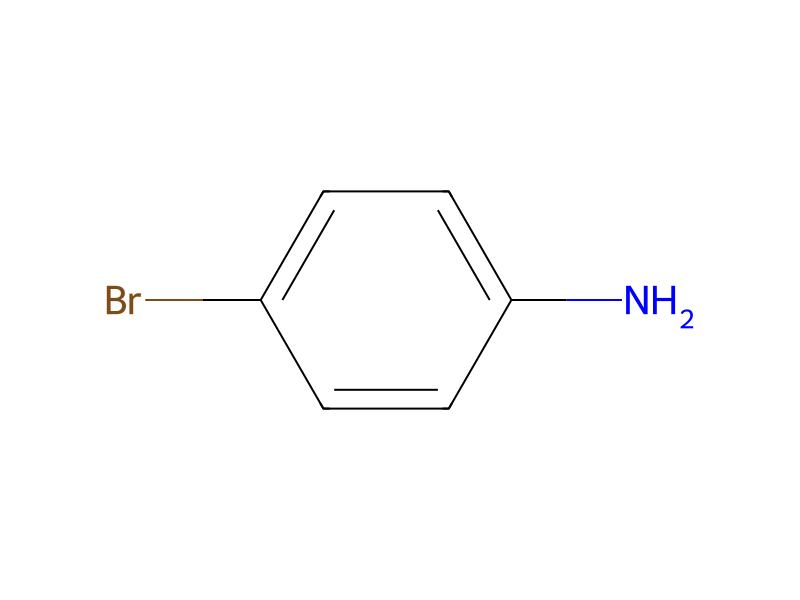
Pyridine (56.3 ml, 0.698 mol) is added to a solution of p-bromoaniline (50 g, 0.290 mol) in acetonitrile (500 ml) at 5° C., and benzylbromide (84 ml, 0.698 mol) is then added dropwise. The mixture is stirred overnight at room temperature and then 1 hour under reflux. The acetonitrile is evaporated off and the residue is taken up in dichloromethane. The organic phase is washed with 1N HCl and then saturated NaCl, dried over sodium sulfate and evaporated to give 68.5 g of a mixture of mono- and dibenzylated (50:50) product. The mixture is separated by chromatography on silica (cyclohexane/ethyl acetate, 70:30) and yields the expected product.
Workup
- temperature1 hour under reflux
- customThe acetonitrile is evaporated off
- washThe organic phase is washed with 1N HCl
- dry with materialsaturated NaCl, dried over sodium sulfate
- customevaporated
Sources & evidence
- ORD record
- ord-2e32a2aab58148248590dbe3a47e6e8d
- Source dataset
- uspto-grants-1997_09
- Patent number
- US05670493
Reaction notes
Loading…