Sodium hydride → 1-Methyl-3-(8-nonenyl)thymine
Reaction equation

O[CH:2]([CH2:20]O)[CH2:3][CH2:4][CH2:5][CH2:6][CH2:7][CH2:8][CH2:9][N:10]1[C:15](=[O:16])[C:14]([CH3:17])=[CH:13][N:12]([CH3:18])[C:11]1=[O:19].[H-].[Na+].CN1C=C(C)C(=O)NC1=O.BrCCCCCCCC=C>CS(C)=O.O>[CH2:9]([N:10]1[C:15](=[O:16])[C:14]([CH3:17])=[CH:13][N:12]([CH3:18])[C:11]1=[O:19])[CH2:8][CH2:7][CH2:6][CH2:5][CH2:4][CH2:3][CH:2]=[CH2:20]Participants
7
Reactant 4

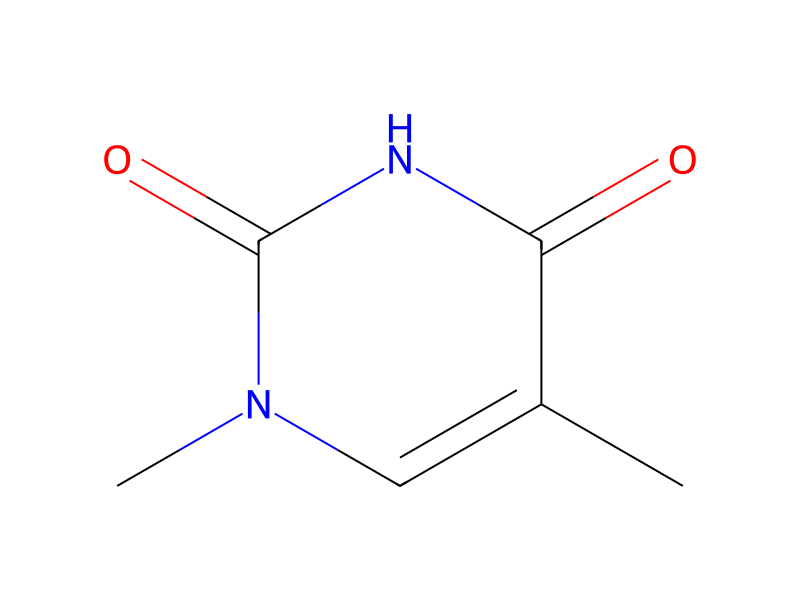


Product 1

Reagents, catalysts & solvents 2


Procedure
3-(8,9-Dihydroxynonyl)-1-methylthymine (CT1918) was used as an intermediate for the synthesis of CT1908 (example 12). A mixture of sodium hydride (343 mg, 14 mmol) and 1-methylthymine (2.00 g, 14 mmol) in dimethylsulfoxide (40 ml) was stirred for 15 min and then 9-bromo-1-nonene (2.93 g, 14 mmol) was added. After stirring for 20 hr, the mixture was poured into water (40 ml) and extracted with dichloromethane (3×50 ml). The combined organic layers were washed with water (40 ml), with saturated aqueous sodium chloride solution (20 ml), and dried over sodium sulfate. The solvent was evaporated to give 3-(8-nonenyl)-1-methylthymine (CT1917) (2.76 g, 73% yield) as a colorless oil which solidified upon standing.
Workup
- stirringAfter stirring for 20 hr
- extractionextracted with dichloromethane (3×50 ml)
- washThe combined organic layers were washed with water (40 ml), with saturated aqueous sodium chloride solution (20 ml)
- dry with materialdried over sodium sulfate
- customThe solvent was evaporated
Sources & evidence
- ORD record
- ord-7b4b3c022d694da6855a0ff1fbb92d3d
- Source dataset
- uspto-grants-1997_09
- Patent number
- US05670506
Reaction notes
Loading…