3-Aminopyridine → HCID 54088157, compound
Reaction equation

NC1C=NC=CC=1.C(NC(OC1CCOC1=O)=O)(C)(C)C.[C:22]([NH:26][C:27]([O:29][CH:30]([CH2:40][CH2:41]I)[C:31]([NH:33][C:34]1[CH:35]=[N:36][CH:37]=[CH:38][CH:39]=1)=[O:32])=[O:28])([CH3:25])([CH3:24])[CH3:23]>>[C:22]([NH:26][C:27]([O:29][CH:30]1[CH2:40][CH2:41][N:33]([C:34]2[CH:35]=[N:36][CH:37]=[CH:38][CH:39]=2)[C:31]1=[O:32])=[O:28])([CH3:25])([CH3:24])[CH3:23]Participants
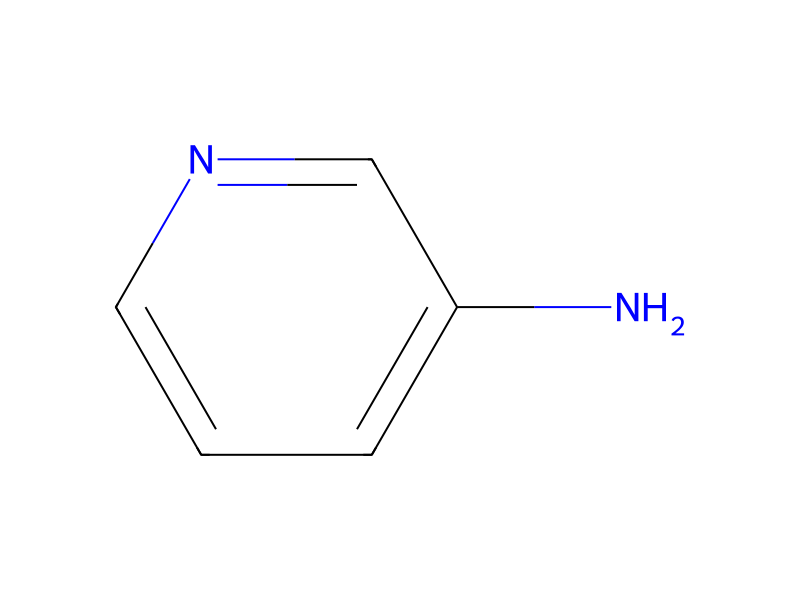


Procedure
By a procedure similar to that described in Example 1, 3-aminopyridine (0.47 g), scaled to 3-t-butylcarbamoyloxytetrahydrofuran-2-one (1.0 g) etc., gave a crude product (3.1 g) containing approximately 20 mole % of 2-t-butylcarbamoyloxy-4-iodo-N(pyridin-3-yl)butanamide. The desired product was apparently unstable in the mixture and to chromatography on silica. NMR (CDCl3) for product only: δ 1.38(9H,s); 2.46(2H,m); 3.25(2H,t); 5.12(1H,bs); 5.25(1H,dd); 7.29(1H,m): 8.17(1H,dd); 8.36(1H,dd); 8.58(1H,d). Base-catalysed cyclisation of this crude material gave Compound 8 (0.18 g, m.p. 129°-131° C.) after several chromatographic separations on silica using dichloromethane-ethanol (19:1) as eluant. NMR (CDCl3): δ 1.35(9H,s); 2.12(1H,m); 2.77(1H,m); 3.86(2H,m); 4.90(1H,bs); 5.36(1H,t); 7.33(1H,dd); 8.28(1H,m); 8.44(1H,dd); 8.76(1H,d). MS: M+ 277.
Workup
- customgave a crude product (3.1 g)
Sources & evidence
- ORD record
- ord-b584654e38c84193afd11353aaf97838
- Source dataset
- uspto-grants-1997_09
- Patent number
- US05670656
Reaction notes
Loading…