Hydrogen Bromide → 4H-1,3-Dioxin-4-one, 5-bromo-2,2,6-trimethyl-
Reaction equation

[Br:1]Br.[CH3:3][C:4]1([CH3:12])[O:9][C:8](=[O:10])[CH:7]=[C:6]([CH3:11])[O:5]1.Br.CCOCC.CCCCCC>C(Cl)Cl>[Br:1][C:7]1[C:8](=[O:10])[O:9][C:4]([CH3:12])([CH3:3])[O:5][C:6]=1[CH3:11]Participants
6





Procedure
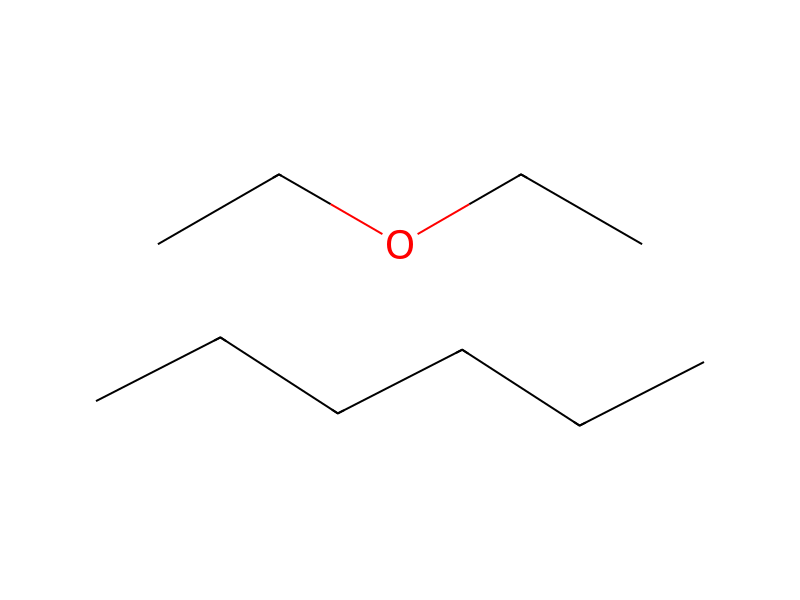
Bromine (0.105 mol, 5.38 ml) was added dropwise to a 20° C. solution of 2,2,6-trimethyl-4H-1,3-dioxin-4-one (TKD, 0.1 mol, 14.2 g) in 100 ml CH2Cl2 over five minutes. The reaction solution was rapidly decolorized and hydrogen bromide evolved. After 15 minutes, the solvent was removed in vacuo to provide 22 g (99%, >95% pure by NMR) of a pale yellow oil which solidified upon refrigeration. Flash chromatography (10% ether/hexane on silica) afforded 16.5 g (75%) of the title compound as colorless plates.
Workup
- customthe solvent was removed in vacuo
- customto provide 22 g (99%, >95% pure by NMR) of a pale yellow oil which
Sources & evidence
- ORD record
- ord-c39d5e366b2f440fac5b146d43dae0f8
- Source dataset
- uspto-grants-1986_04
- Patent number
- US04582913
Reaction notes
Loading…