Pyridine → HCID 70372059, compound
Reaction equation

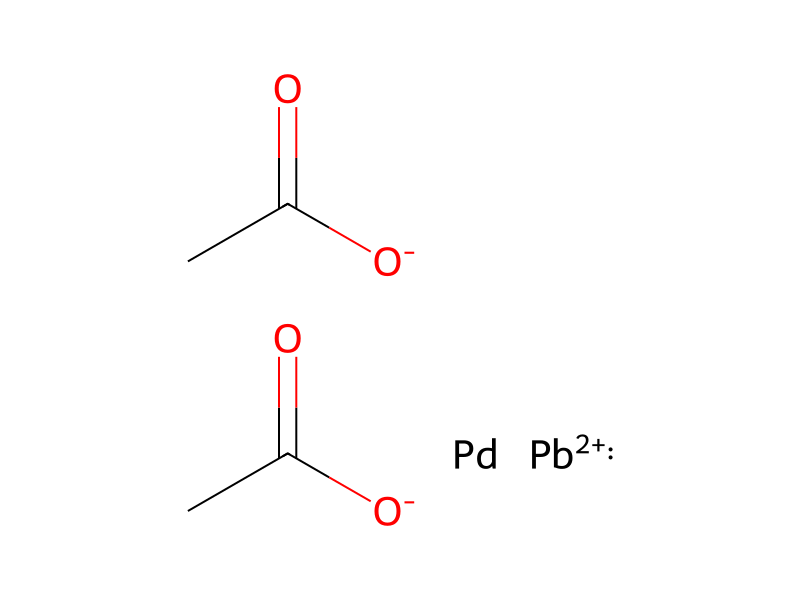
[CH3:1][S:2]([C:5]1[CH:10]=[CH:9][C:8]([C:11]#[C:12][CH2:13][F:14])=[CH:7][CH:6]=1)(=[O:4])=[O:3].N1C=CC=CC=1.[H][H]>[Pd].CC([O-])=O.CC([O-])=O.[Pb+2].C(OCC)(=O)C.[Pd]>[CH3:1][S:2]([C:5]1[CH:10]=[CH:9][C:8]([CH2:11]/[CH:12]=[CH:13]\[F:14])=[CH:7][CH:6]=1)(=[O:4])=[O:3]Participants
7






Procedure
Stir a mixture of 533 mg, 2.51 mmoles of the title compound of Example 1 (recrystallized from dichloromethane-hexane), 211 mg, 2.67 mmoles of pyridine and 127 mg of Lindlar catalyst (palladium on calcium carbonate, poisoned with lead (obtained from Aldrich) in 25 mL of ethyl acetate under hydrogen at atomospheric pressure at 26° C. for 1 hr until the theoretical amount of hydrogen (62 mL) is consumed. Remove the catalyst by filtration and wash it with ethyl acetate. Wash the ethyl acetate solution successively with ice-cold 4% HCl solution, saturated NaHCO3 solution and water, and dry over anhydrous MgSO4. Evaporate solvent under vacuum to give the title compound as an oil (534 mg).
Workup
- customis consumed
- customRemove the catalyst
- filtrationby filtration
- washwash it with ethyl acetate
- washWash the ethyl acetate solution successively with ice-cold 4% HCl solution, saturated NaHCO3 solution and water
- dry with materialdry over anhydrous MgSO4
Sources & evidence
- ORD record
- ord-e056cfff4340412889f69ac28506670e
- Source dataset
- uspto-grants-1986_04
- Patent number
- US04582918
Reaction notes
Loading…