Quinoline → HCID 70372059, compound
Reaction equation

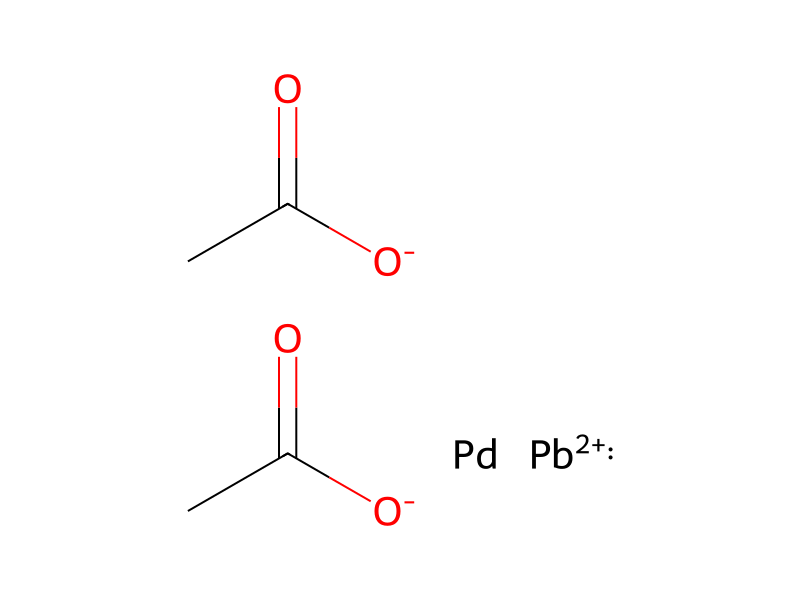
[CH3:1][S:2]([C:5]1[CH:10]=[CH:9][C:8]([C:11]#[C:12][CH2:13][F:14])=[CH:7][CH:6]=1)(=[O:4])=[O:3].N1C2C(=CC=CC=2)C=CC=1.[H][H]>[Pd].CC([O-])=O.CC([O-])=O.[Pb+2].C(OCC)(=O)C.ClCCl>[CH3:1][S:2]([C:5]1[CH:10]=[CH:9][C:8]([CH2:11]/[CH:12]=[CH:13]\[F:14])=[CH:7][CH:6]=1)(=[O:4])=[O:3]Participants






Procedure
Shake a mixture of recrystallized title compound of Example 1 (1 g, 4.72 mmoles), quinoline (60 mg, 99% pure Aldrich) and Lindlar catalyst of procedure A of Example 2 (200 mg) in ethyl acetate (50 mL) in a Parr apparatus under hydrogen at atmospheric pressure at 30° for 20 min. or until theoretical amount of hydrogen (118 mL) is taken up. Remove catalyst by filtration and wash it with ethyl acetate. Evaporate the solvent under vacuum at 35° to give an oil. Dissolve the oil in dichlormethane (40 mL) and wash the dichloromethane solution successively with ice-cold 1 M HCl solution, saturated NaHCO3 solution and water, and then dry over anhydrous MgSO4. Evaporate the under vacuum to give the title compound as an oil (1 g). Purify a portion of the oil (220 mg) by column chromatography. Elute the column with ethyl acetate-hexane (1:1, v/v) to give the title compound as an oil (213 mg). The oil was 95% pure and contained 5% of the over-reduced compound 3-(4-methylsulfonylphenyl)-1-fluoropropane and had the following physical and spectral properties:
Workup
- additionShake a mixture
- filtrationRemove catalyst by filtration
- washwash it with ethyl acetate
- customEvaporate the solvent under vacuum at 35°
- customto give an oil
- washwash the dichloromethane solution successively with ice-cold 1 M HCl solution, saturated NaHCO3 solution and water
- dry with materialdry over anhydrous MgSO4
- customEvaporate the under vacuum
Sources & evidence
- ORD record
- ord-ac50ab9119c94e7d878b484b4b9f6d54
- Source dataset
- uspto-grants-1986_04
- Patent number
- US04582918
Reaction notes
Loading…