Ethylene Glycol → 1-{5-[2-(2-Methyl-1,3-dioxolan-2-yl)ethyl]thiophen-2-yl}ethan-1-one
Reaction equation

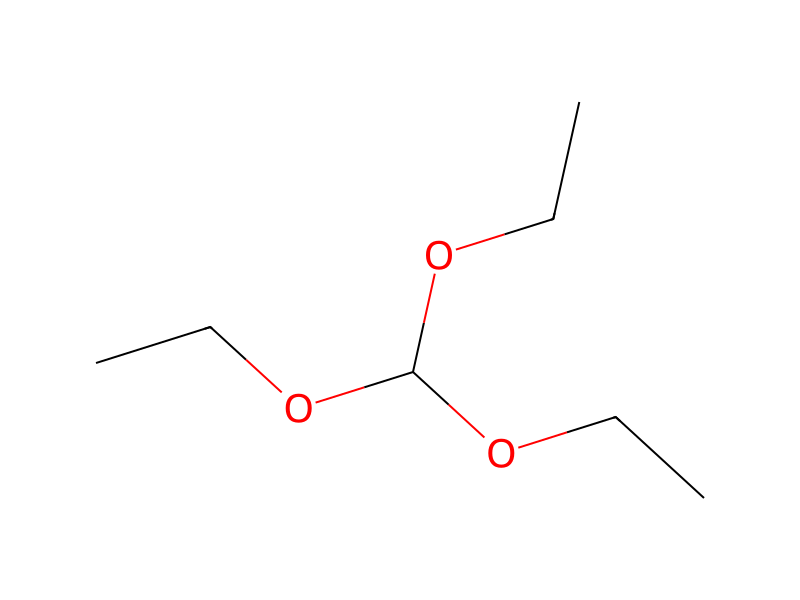
[C:1]([C:4]1[S:8][C:7]([CH2:9][CH2:10][C:11](=[O:13])[CH3:12])=[CH:6][CH:5]=1)(=[O:3])[CH3:2].[CH2:14](O)[CH2:15][OH:16].C(OCC)(OCC)OCC.C1(C)C=CC(S(O)(=O)=O)=CC=1>C(Cl)Cl>[CH3:12][C:11]1([CH2:10][CH2:9][C:7]2[S:8][C:4]([C:1]([CH3:2])=[O:3])=[CH:5][CH:6]=2)[O:16][CH2:15][CH2:14][O:13]1Participants





Procedure
4-(5-Acetyl-2-thienyl)-2-butanone (Tetrahedron 35, 1979, 329) was reacted with ethylene glycol, triethyl orthoformate and p-toluenesulphonic acid in methylene chloride to give methyl 5-[2-(2-methyl-1,3-dioxolan-2-yl)ethyl]-2-thienyl ketone. Oxidation with sodium hypobromite and subsequent hydrolysis gave 5-(3-oxobutyl)-2-thiophenecarboxylic acid. With sodium borohydride there was obtained therefrom 5-(3-hydroxybutyl)-2-thiophenecarboxylic acid which was converted in dimethylacetamide with methyl iodide and sodium carbonate into the methyl ester. Treatment with p-toluenesulphochloride in pyridine and reaction with sodium azide in dimethyl sulphoxide gave methyl 5-(3-azidobutyl)-2-thiophenecarboxylate from which there was obtained by saponification the corresponding acid. The acid was treated with thionyl chloride to give the acid chloride from which there was obtained with concentrated ammonia in ether 5-(3-azidobutyl)-2-thiophenecarboxamide. Reduction of the azido group with triphenylphosphine and subsequent hydrolysis gave (RS)-5-(3-aminobutyl)-2-thiophenecarboxamide of melting point 65°-75°; ε256 =7780; ε275 =9900.
Sources & evidence
- ORD record
- ord-70ee4d17914a4338b02f85b5321af24e
- Source dataset
- uspto-grants-1986_04
- Patent number
- US04585796
Reaction notes
Loading…