Sulfur Dioxide → Magnesium sulfite
Reaction equation

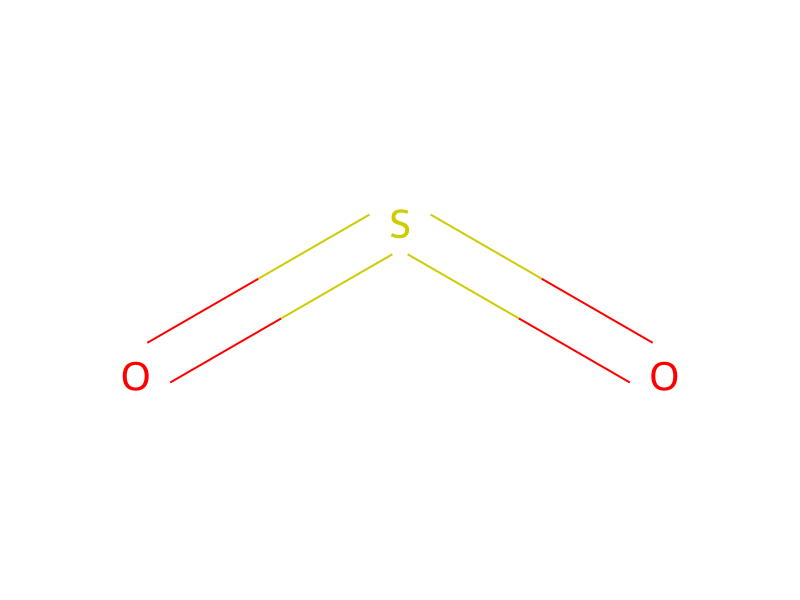
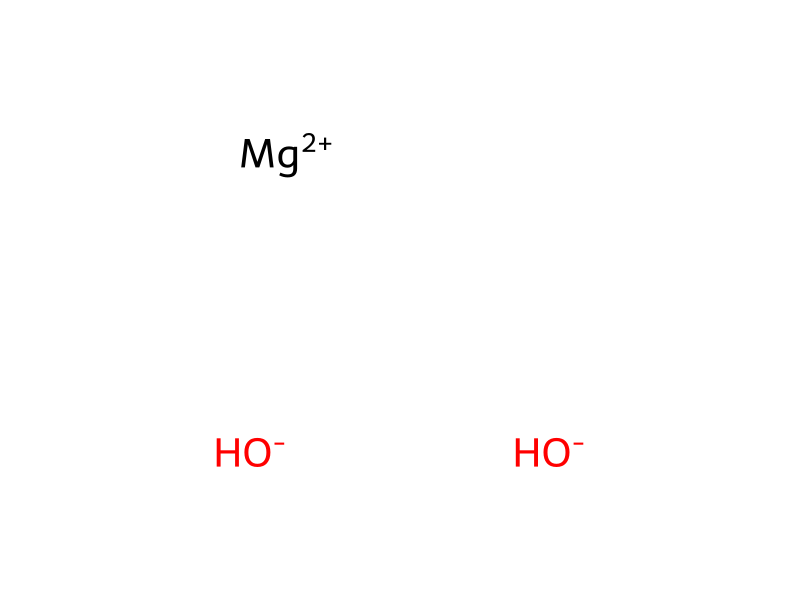
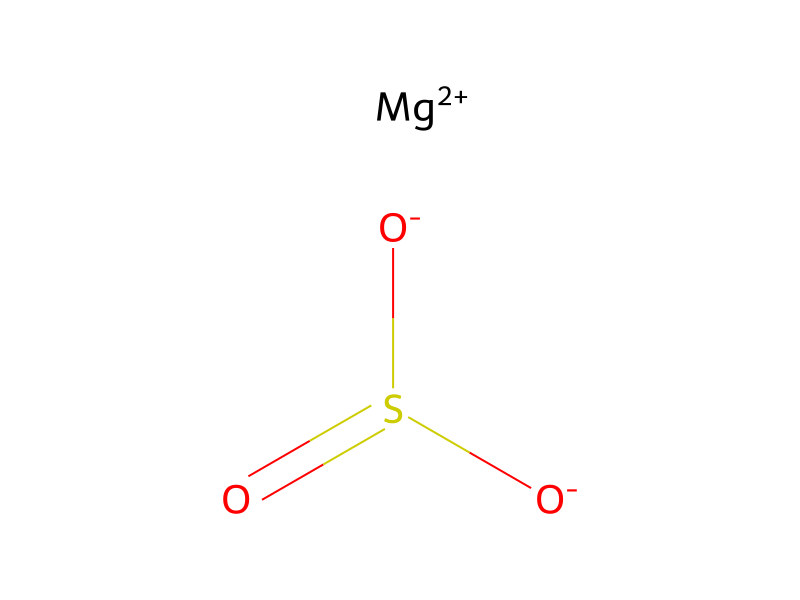
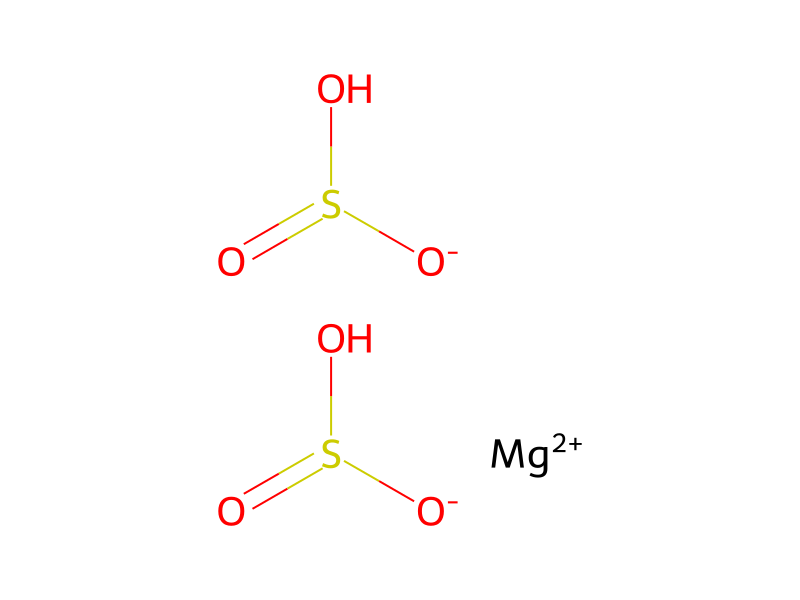
[OH-:1].[Mg+2:2].[OH-].[S:4](=[O:6])=[O:5]>>[S:4]([O-:1])([O-:6])=[O:5].[Mg+2:2].[S:4](=[O:1])([OH:6])[O-:5].[Mg+2:2].[S:4](=[O:1])([OH:6])[O-:5]Participants
Procedure
Desulfurization is accomplished by contacting the flue gas with a recirculating absorbent stream in a suitable contact vessel, typically a scrubber. The absorbent in the recirculation stream includes magnesium hydroxide (Mg(OH)2) as a chemical absorbent species which reacts rapidly with sulfur dioxide to produce magnesium sulfite (MgSO3) and magnesium bisulfite (Mg(HSO3)2). The magnesium sulfite and bisulfite are oxidized to magnesium sulfate and then converted to magnesium hydroxide by reaction with calcium hydroxide, resulting in gypsum (CaSO4.2H2O) as a final product (along with calcium chloride (CaCl2) and magnesium sulfate (MgSO4), as described in more detail hereinbelow). The gypsum, which has a low solubility in water, is removed in a bleed stream from the system and then combined with sufficient excess of seawater so that it is easily solubilized and no solid wastes are produced. Equally important, the gypsum (in low concentration in seawater) and the soluble calcium and magnesium are non-toxic to the marine environment, and the system as a whole produces a minimal temperature rise in the waters which are returned to the ocean. Conveniently, bleed stream from the system can be dissolved in the remaining flow of spent cooling seawater and returned to the ocean with no adverse impact on the environment.
Sources & evidence
- ORD record
- ord-0b97473cf24d433086207f01fbf60c92
- Source dataset
- uspto-grants-1989_02
- Patent number
- US04804523
Reaction notes
Loading…