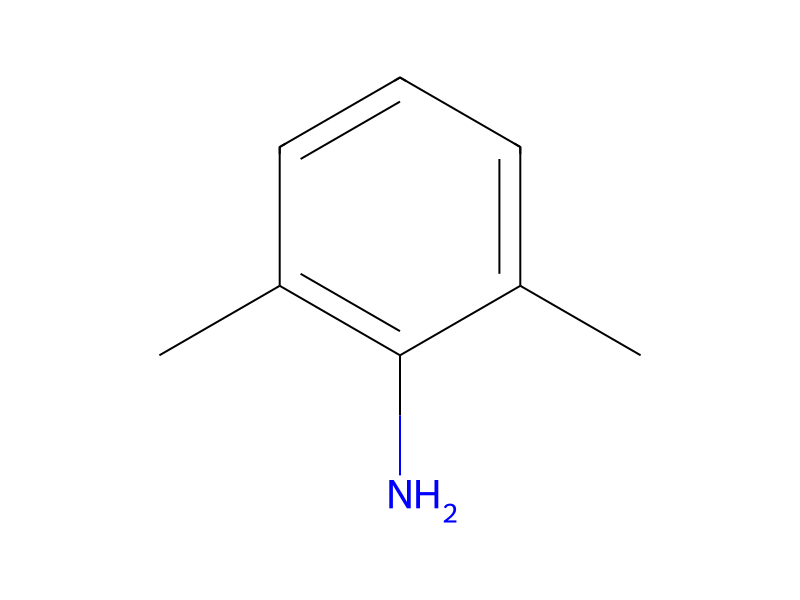
2,6-Dimethylaniline → 3-Butyryl-4-(2,6-dimethylphenylamino)-8-methylquinoline
Reaction equation

[C:1]([C:6]1[CH:7]=[N:8][C:9]2[C:14]([C:15]=1Cl)=[CH:13][CH:12]=[CH:11][C:10]=2[CH3:17])(=[O:5])[CH2:2][CH2:3][CH3:4].[CH3:18][C:19]1[CH:25]=[CH:24][CH:23]=[C:22]([CH3:26])[C:20]=1[NH2:21]>O1CCOCC1>[C:1]([C:6]1[CH:7]=[N:8][C:9]2[C:14]([C:15]=1[NH:21][C:20]1[C:22]([CH3:26])=[CH:23][CH:24]=[CH:25][C:19]=1[CH3:18])=[CH:13][CH:12]=[CH:11][C:10]=2[CH3:17])(=[O:5])[CH2:2][CH2:3][CH3:4]Participants
4
Reactant 2

Product 1

Reagents, catalysts & solvents 1

Procedure
3-Butyryl-4-chloro-8-methylquinoline (2.48 g, 10 mmol) and 2,6-dimethylaniline (1.85 ml, 15 mmol) in dioxan (10 ml) were heated at reflux for 30 minutes, then the solvent evaporated and the product converted to free base. Recrystallisation from aqueous ethanol gave 3-butyryl-4-(2,6-dimethylphenylamino)-8-methylquinoline, m.p. 100°-101°.
Workup
- temperatureat reflux for 30 minutes
- customthe solvent evaporated
- customRecrystallisation from aqueous ethanol
Sources & evidence
- ORD record
- ord-43d6cbab61334cac968be676fcb6bfdc
- Source dataset
- uspto-grants-1989_02
- Patent number
- US04806550
Reaction notes
Loading…