Phenetole → Cyclopropyl 4-ethoxyphenyl ketone
Reaction equation

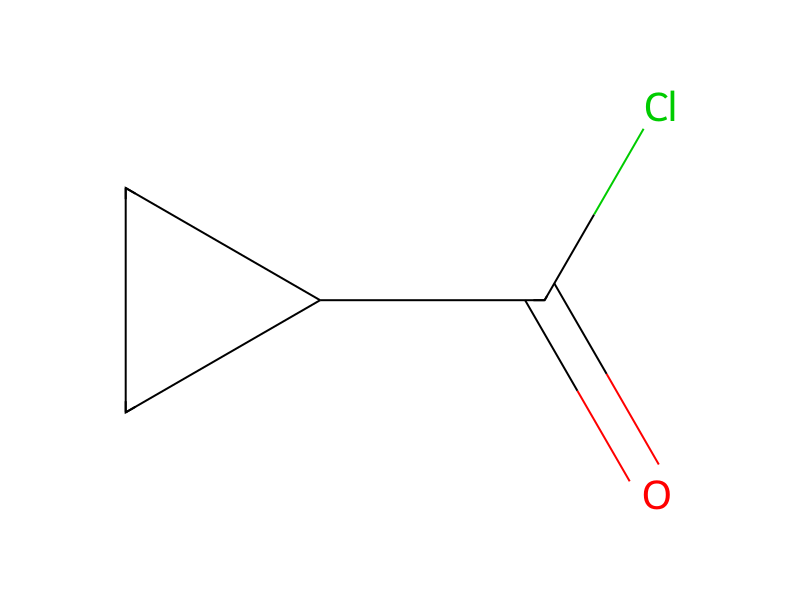
[CH:1]1([C:4](Cl)=[O:5])[CH2:3][CH2:2]1.[Cl-].[Al+3].[Cl-].[Cl-].[CH2:11]([O:13][C:14]1[CH:19]=[CH:18][CH:17]=[CH:16][CH:15]=1)[CH3:12]>>[CH2:11]([O:13][C:14]1[CH:19]=[CH:18][C:17]([C:4]([CH:1]2[CH2:3][CH2:2]2)=[O:5])=[CH:16][CH:15]=1)[CH3:12]Participants
4



Procedure
Alternatively, the substituted-phenyl cyclopropyl ketones may be prepared by reacting cyclopropanecarboxylic acid chloride with an appropriately substituted-phenyl compound in the presence of a Friedel-Crafts catalyst, e.g., aluminum chloride. In Example 6, Step A, cyclopropanecarboxylic acid chloride is reacted with ethoxybenzene in the presence of aluminum chloride, yielding cyclopropyl (4-ethoxyphenyl) ketone.
Sources & evidence
- ORD record
- ord-160afd0f4af840c0b5b384fbb2716072
- Source dataset
- uspto-grants-1989_02
- Patent number
- US04808762
Reaction notes
Loading…