Sodium Hydroxide → Di-tert-butyl dicarbonate
Reaction equation

Br.[Br:2][CH2:3][CH2:4][NH2:5].[OH-].[Na+].[C:8]([O:12][C:13]([O:15][C:16]([O:18][C:19]([CH3:22])([CH3:21])[CH3:20])=[O:17])=[O:14])([CH3:11])([CH3:10])[CH3:9]>O.O1CCOCC1>[C:13]([NH:5][CH2:4][CH2:3][Br:2])([O:12][C:8]([CH3:11])([CH3:10])[CH3:9])=[O:14].[C:19]([O:18][C:16]([O:15][C:13]([O:12][C:8]([CH3:11])([CH3:10])[CH3:9])=[O:14])=[O:17])([CH3:22])([CH3:21])[CH3:20]Participants
7

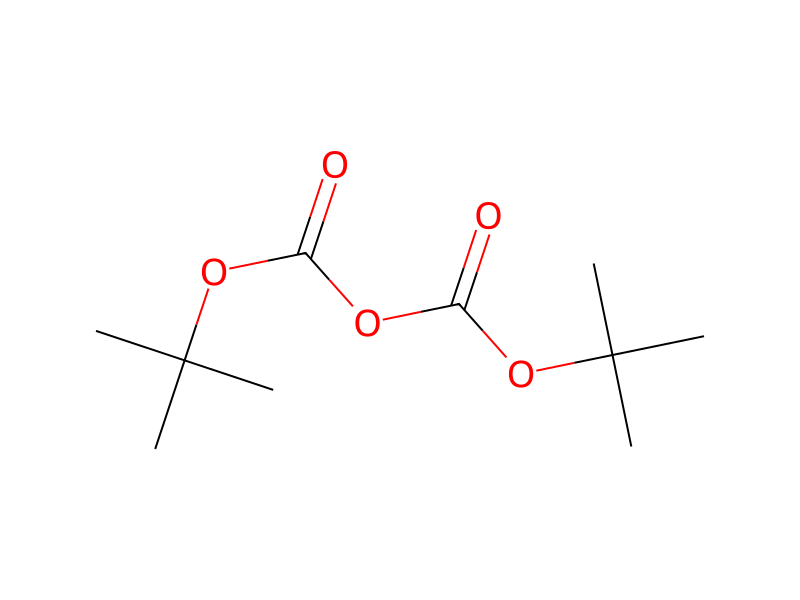




Conditions
- Temperature
- 2.5 °C
Procedure
N-BOC-bromoethylamine was prepared as follows. 2-Bromoethylamine hydrobromide (6.15 g, 30 mmol) was dissolved in a mixture of 30 mL each water and dioxane and the solution was chilled in an ice bath to 0-5° C. Separately, a solution of 3.27 g (15 mmol) di-tert-butyl-dicarbonate in 35 mL dioxane was prepared. Finally a solution of 1 N sodium hydroxide (30 mL), was prepared. Dropwise addition of the di-tert-butyl-dicarbonate and the 1 N sodium hydroxide solutions to the stirred 2-bromoethylamine hydrobromide solution was begun at 0-5° C. The di-tert-butyl-dicarbonate addition took place over 30 min, and the 1N sodium hydroxide addition was complete after 15 min.
Workup
- customwas begun at 0-5° C
- customover 30 min
Sources & evidence
- ORD record
- ord-db4838c204c048cd963fd96feb8a2514
- Source dataset
- uspto-grants-2001_07
- Patent number
- US06262265B1
Reaction notes
Loading…