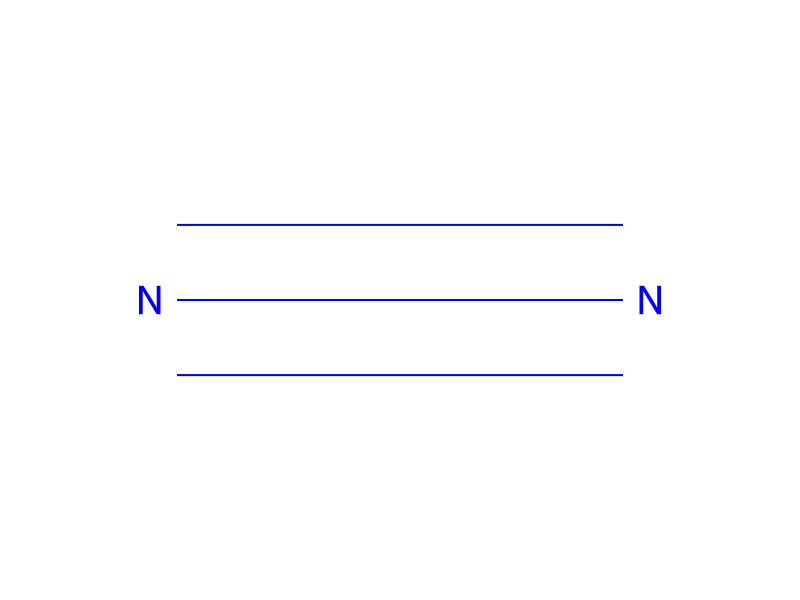
Nitrogen → HCID 11749519, compound
Reaction equation

[Cl:1][C:2]1[CH:7]=[CH:6][CH:5]=[C:4]([F:8])[C:3]=1[C:9]1[N:13]=[C:12]([C:14]2[S:15][CH:16]=[CH:17][C:18]=2[CH3:19])[N:11]([CH3:20])[N:10]=1.N1C=CN=N1.C([O-])(=O)C.[Na+].[Br:31]Br.N#N>CC(O)=O.[Zn]>[Cl:1][C:2]1[CH:7]=[CH:6][CH:5]=[C:4]([F:8])[C:3]=1[C:9]1[N:13]=[C:12]([C:14]2[S:15][CH:16]=[C:17]([Br:31])[C:18]=2[CH3:19])[N:11]([CH3:20])[N:10]=1Participants
Reactant 4



Product 1

Reagents, catalysts & solvents 2


Conditions
- Temperature
- 80 °C
Procedure
The triazole 3-(2-Chloro-6-fluorophenyl)-1-methyl-5-(3-methyl-2-thienyl)-1H-1,2,4-triazole (1715 g, 5.57 mol) and anhydrous sodium acetate (1830 g, 22.3 mol) were weighed as solids into a 22 L jacketed glass reactor under a slow N2 purge, followed by 8.5 L glacial AcOH. Heating of the mixture was begun, and at 66° C. a solution of Br2 (1.15 L, 22.3 mol) in 2.5 L glacial AcOH was added by peristaltic pump over a period of 40 min., at a rate to keep the reaction temperature below 85° C. During heat up most of the solids dissolve. The stirring red solution was heated 1 h at 80° C. and then a sample was removed and analyzed by GC to verify >99% conversion to the dibromo intermediate. Cooling was placed on the jacket, and 1695 g ice was added to the solution, which dropped the temperature from 70° C. to 50° C. At 38° C. zinc powder (815 g, 12.5 mol) was added in 55 g shots over a period of 40 min to dispel excess Br2. During this addition the reactor temperature rose to 71° C. Additional zinc powder (650 g, 9.9 mol) was then added in 50 g shots over a period of 50 min with a stream of N2 passing through the reactor to dispel H2 gas safely. During the addition of this second portion of zinc powder, jacket heating (85° C.) was applied to bring the reaction mixture to 78° C. (Note: zinc addition at this point leads to H2 gas evolution and should be done at such a rate as to control the rate of evolution and maintain precautions against flammability and explosion hazards). After zinc addition was completed, the reactor was stirred at 78° C. for 15 min, then was sampled for GC analysis (Note: the reactor can be maintained at this point at 80° C. overnight to keep the product dissolved if insufficient time exists to carry out the filtration). The solution was filtered warm through a layer of celite on a course glass buchner funnel (pre warmed at 100° C.) to remove residual zinc particulates. The celite cake was washed with a small amount of additional glacial AcOH. The clear light yellow filtrate was diluted with cold water while stirring until the cloud point was reached and product crystallization began. Excess cold water was then added to precipitate the remainder of the solid product. Part of this dilution was done in 4 L Erlenmeyer flasks with magnetic stirring and part was done in a second 22 L reactor. Approximately eight 2 L portions of solution were filtered from the reactor, and approximately 18 L of quench water was used. The white solid product was collected on course glass buchner funnels, rinsed with additional de-ionized water, air suction dried for a few hours, then transferred to glass trays and air dried overnight. A final vacuum oven drying for 2.5 hrs at 0.3 mm Hg and 30° C. was carried out to give 2236 g of 3-(2-Chloro-6-fluorophenyl)-1-methyl-5-(3-methyl-4-bromo-2-thienyl)-1H-1,2,4-triazole as a white solid (theory=2154 g), mp 118-120° C. A GC area % analysis indicated a purity of 98.1%.
Workup
- custompurge
- temperatureHeating of the mixture
- customthe reaction temperature below 85° C
- temperatureDuring heat up most of the solids
- dissolutiondissolve
- customa sample was removed
- temperatureCooling
- additionwas added to the solution, which
- additiondropped the temperature from 70° C. to 50° C
- additionDuring this addition the reactor temperature
- customrose to 71° C
- temperatureheating (85° C.)
- customto 78° C.
- temperaturemaintain precautions against flammability and explosion hazards)
- aliquotwas sampled for GC analysis (Note
- temperaturethe reactor can be maintained at this point at 80° C. overnight
- dissolutiondissolved if insufficient time
- filtrationthe filtration)
- filtrationThe solution was filtered
- temperaturewarm through a layer of celite on a course glass buchner funnel
- temperature(pre warmed at 100° C.)
- customto remove residual zinc particulates
- washThe celite cake was washed with a small amount of additional glacial AcOH
- additionThe clear light yellow filtrate was diluted with cold water
- stirringwhile stirring until the cloud point
- customproduct crystallization
- additionExcess cold water was then added
- customto precipitate the remainder of the solid product
- stirringwith magnetic stirring
- custompart was done in a second 22 L reactor
- filtrationApproximately eight 2 L portions of solution were filtered from the reactor, and approximately 18 L of quench water
- customThe white solid product was collected on course glass buchner funnels
- washrinsed with additional de-ionized water, air suction
- customdried for a few hours
- customdried overnight
- customA final vacuum oven drying for 2.5 hrs at 0.3 mm Hg and 30° C.
Sources & evidence
- ORD record
- ord-79692ba0c1324b7785a8e6d6bb7e2792
- Source dataset
- uspto-grants-2001_07
- Patent number
- US06265424B1
Reaction notes
Loading…