Water → trans-4,4'-Bis(m-tolylphenylamino)stilbene
Reaction equation

Br[C:2]1[CH:7]=[CH:6][C:5](/[CH:8]=[CH:9]/[C:10]2[CH:15]=[CH:14][C:13](Br)=[CH:12][CH:11]=2)=[CH:4][CH:3]=1.[CH3:17][C:18]([CH3:21])([O-])[CH3:19].[Na+].[C:23]1([CH3:36])[CH:28]=[CH:27][CH:26]=[CH:25][C:24]=1[C:29]1[CH:30]=[C:31]([NH2:35])[CH:32]=[CH:33][CH:34]=1.O.[C:38]1([CH3:44])[CH:43]=[CH:42][CH:41]=[CH:40]C=1>C1(P([C-]2C=CC=C2)C2C=CC=CC=2)C=CC=CC=1.[C-]1(P(C2C=CC=CC=2)C2C=CC=CC=2)C=CC=C1.[Fe+2].C(N(CCCCCCCC)C1C=CC(C=CC2C=CC(N(CCCCCCCC)CCCCCCCC)=CC=2)=CC=1)CCCCCCC.CCOCC>[C:23]1([CH3:36])[CH:28]=[CH:27][CH:26]=[CH:25][C:24]=1[C:29]1[CH:30]=[C:31]([NH:35][C:2]2[CH:7]=[CH:6][C:5](/[CH:8]=[CH:9]/[C:10]3[CH:15]=[CH:14][C:13]([NH:35][C:31]4[CH:30]=[CH:29][CH:19]=[C:18]([C:21]5[CH:40]=[CH:41][CH:42]=[CH:43][C:38]=5[CH3:44])[CH:17]=4)=[CH:12][CH:11]=3)=[CH:4][CH:3]=2)[CH:32]=[CH:33][CH:34]=1Participants
Reactant 5


Product 1

Reagents, catalysts & solvents 3


Conditions
- Temperature
- 95 °C
Procedure
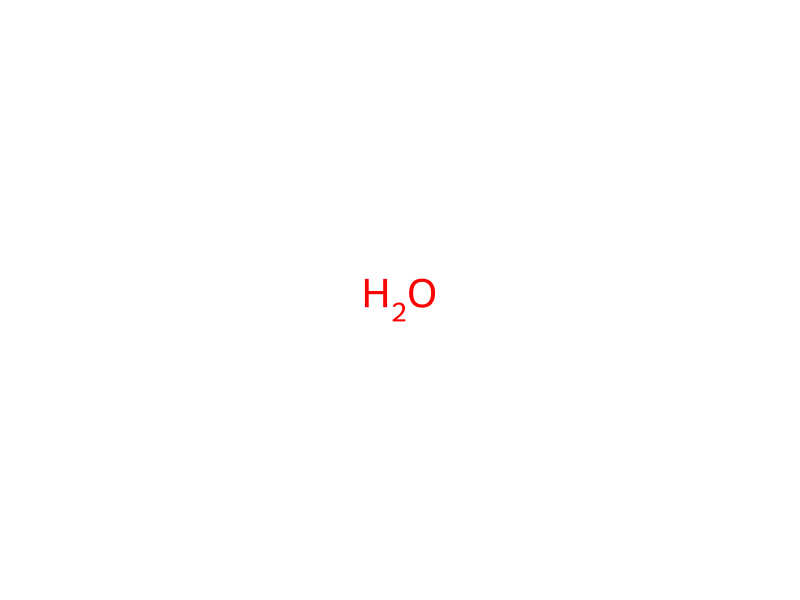
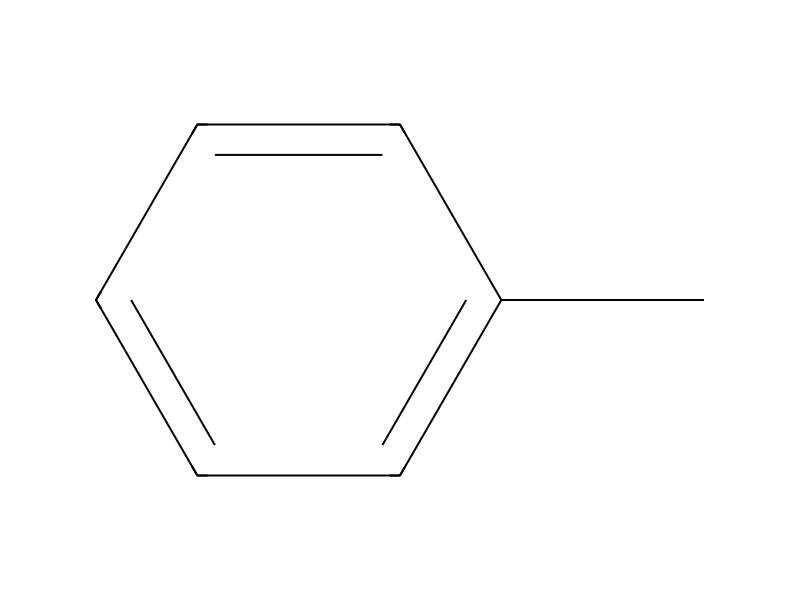
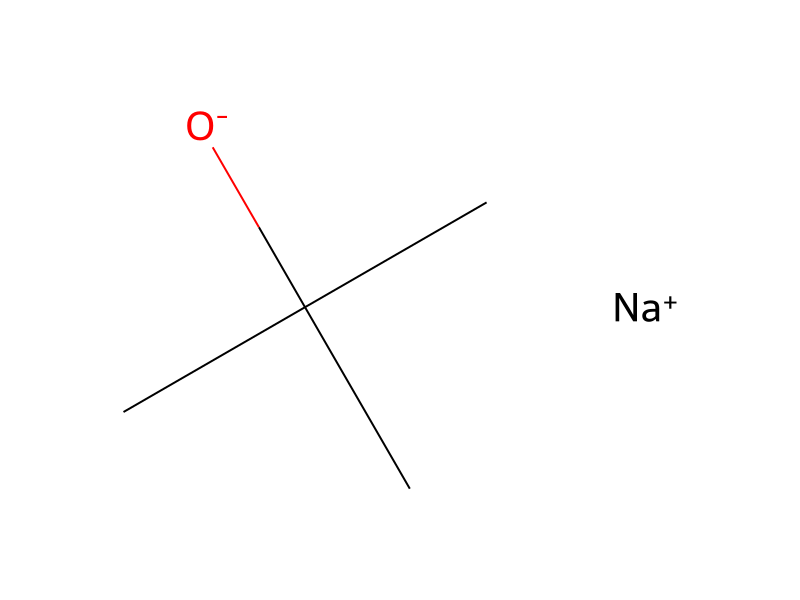
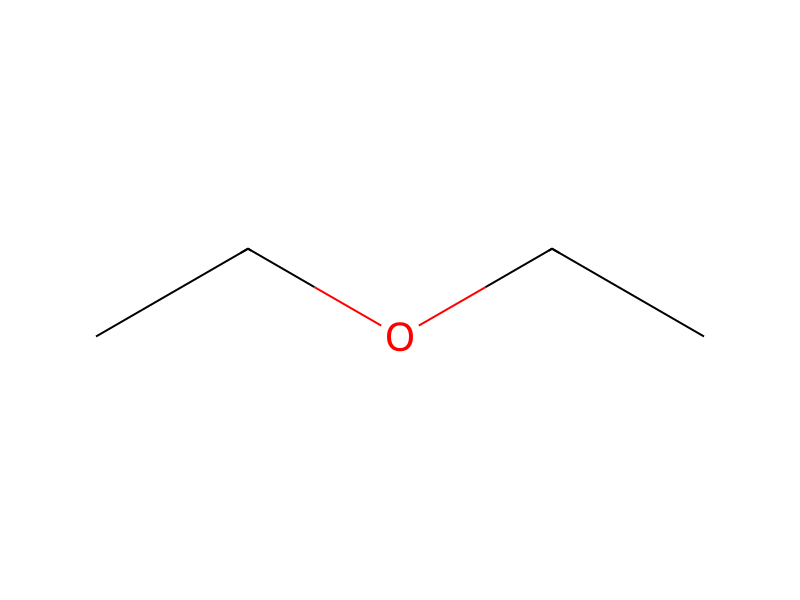
Pd2dba3 (Example 52) (963 mg, 1.05 mmol) and bis(diphenylphosphino)ferrocene (833 mg, 1.33 mmol) were stirred under nitrogen in dry toluene (500 mL) for 15 min. Trans-4,4′-dibromostilbene (15.00 g, 44.4 mmol) was added against a counterflow of nitrogen and the reaction was stirred for an additional 15 min; sodium tert-butoxide (13.00 g, 135 mmol) was then added and m-tolylphenylamine (16.8 mL, 97.6 mmol) was added from a syringe. After 30 min at room temperature, the reaction mixture was warmed to 95° C. for 24 h, at which time, the reaction appeared complete by thin layer chromatography. The reaction mixture was transferred to a separating funnel together with water (1 L) and ether (500 mL). The aqueous layer was extracted with ether until the extracts were almost colorless. The combined organics were dried over magnesium sulfate, filtered and concentrated by rotary evaporation. The resulting material was dissolved in benzene and passed through a silica plug. The benzene solution was concentrated under reduced pressure and heated. Addition of methanol followed by cooling afforded trans-4,4′-bis(m-tolylphenylamino)stilbene as an NMR-pure yellow powder (22.59 g, 41.6 mmol, 94%). 1H NMR (d6-acetone) δ 7.47 (d, J=8.6 Hz, 4H), 7.34-7.27 (m, ca. 6H), 7.19 (t, J=7.7 Hz, 2H), 7.10-6.85 (m, ca. 16H), 2.24 (s, 6H); 13C NMR (75 MHz, d6-acetone) δ 148.5, 148.4, 148.0, 139.9, 132.9, 130.2, 130.0, 128.1, 127.3, 125.9, 125.0, 124.9, 124.2, 123.8, 122.5, 21.4; UV (TBF) λmax 305 (ε305 26000), 387 (ε387 51000) nm; UV (acetone) λmax 386 nm; UV (ethanol) λmax 304, 386 nm; High resolution LSIMS calcd. for C40H34N2 M+ 542.2722, found 542.2716.
Workup
- waitAfter 30 min at room temperature
- extractionThe aqueous layer was extracted with ether until the extracts
- dry with materialThe combined organics were dried over magnesium sulfate
- filtrationfiltered
- concentrationconcentrated by rotary evaporation
- dissolutionThe resulting material was dissolved in benzene
- concentrationThe benzene solution was concentrated under reduced pressure
- temperatureheated
- additionAddition of methanol
- temperatureby cooling
Sources & evidence
- ORD record
- ord-173f4a75c019445ba98a3b3d35c184ba
- Source dataset
- uspto-grants-2001_07
- Patent number
- US06267913B1
Reaction notes
Loading…