Aniline → Phenyl-1-naphthylamine
Reaction equation

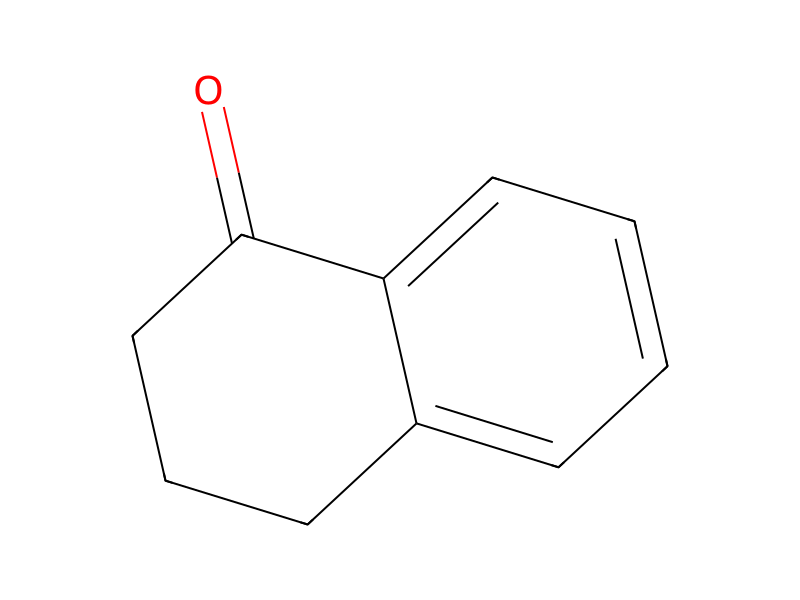
[NH2:1][C:2]1[CH:7]=[CH:6][CH:5]=[CH:4][CH:3]=1.[N+](C1C=CC=CC=1)([O-])=O.[C:17]1(=O)[C:26]2[C:21](=[CH:22][CH:23]=[CH:24][CH:25]=2)[CH2:20][CH2:19][CH2:18]1>CC1C=CC(C(C)C)=CC=1>[C:2]1([NH:1][C:25]2[C:26]3[C:21](=[CH:20][CH:19]=[CH:18][CH:17]=3)[CH:22]=[CH:23][CH:24]=2)[CH:7]=[CH:6][CH:5]=[CH:4][CH:3]=1Participants
Reactant 3


Product 1

Reagents, catalysts & solvents 1

Conditions
- Temperature
- 185 °C
Procedure
To a 200 ml, 3-necked round bottom flask equipped with a thermometer and a Dean-Stark apparatus filled with p-cymene and having a condenser are added 7.45 g (80 mmole) of aniline, 4.82 g (39 mmole) of nitrobenzene, 14.6 g (100 mmole) of 1-tetralone and 65 ml of p-cymene solvent. Also introduced were catalyst and various acid promoters as indicated in Table I. The reaction mixtures were heated at reflux (about 185° C.) for 5 hours while removing the evolving water. Thereafter, the mixture was cooled to room temperature, and the catalyst was filtered out using a Celite (trademark) diatomaceous earth filter. The reaction mixture was analyzed by gas-liquid phase chromatography (GLPC) against a PANA standard. The yields mentioned in Table I are based on conversion of tetralone to PANA.
Workup
- customTo a 200 ml, 3-necked round bottom flask equipped with a thermometer
- additionAlso introduced
- customThe reaction mixtures
- temperaturewere heated
- customwhile removing the evolving water
- temperatureThereafter, the mixture was cooled to room temperature
- filtrationthe catalyst was filtered out
- filtrationfilter
Sources & evidence
- ORD record
- ord-c5f5ac2d786c49dd9d5f79e43040d2c8
- Source dataset
- uspto-grants-1984_02
- Patent number
- US04431841
Reaction notes
Loading…