Propionyl chloride → HCID 20292249, compound
Reaction equation

[CH:1]([NH:14][CH2:15][CH2:16][CH2:17][C:18]([O:20][CH2:21][CH3:22])=[O:19])([C:8]1[CH:13]=[CH:12][CH:11]=[CH:10][CH:9]=1)[C:2]1[CH:7]=[CH:6][CH:5]=[CH:4][CH:3]=1.C(N(C(C)C)CC)(C)C.[C:32](Cl)(=[O:35])[CH2:33][CH3:34]>C1C=CC=CC=1>[C:32]([N:14]([CH:1]([C:8]1[CH:9]=[CH:10][CH:11]=[CH:12][CH:13]=1)[C:2]1[CH:3]=[CH:4][CH:5]=[CH:6][CH:7]=1)[CH2:15][CH2:16][CH2:17][C:18]([O:20][CH2:21][CH3:22])=[O:19])(=[O:35])[CH2:33][CH3:34]Participants
5
Reactant 3
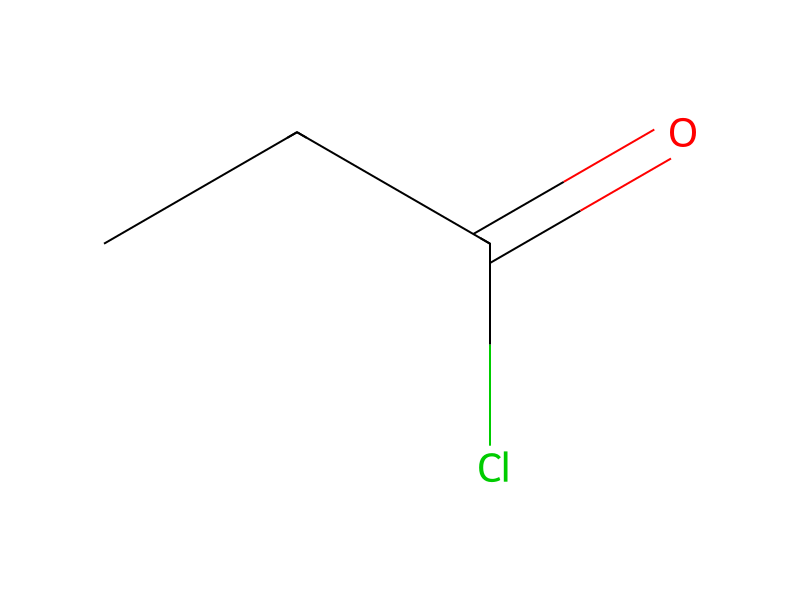


Product 1

Reagents, catalysts & solvents 1

Procedure
Analogously to Example 19, 9.0 g of ethyl 4-benzhydrylaminobutyrate and 4.3 g of diisopropylethylamine in 100 ml of benzene are reacted with 3.1 g of propionyl chloride. The reaction product is recrystallized from ethyl acetate/ligroin (1:1) to obtain 9.9 g (92.5% of theory) of ethyl N-propionyl-4-benzhydrylaminobutyrate (M.P. 83° to 85°).
Workup
- customThe reaction product is recrystallized from ethyl acetate/ligroin (1:1)
Sources & evidence
- ORD record
- ord-68e705025b7b4629b17d27b93e3a810c
- Source dataset
- uspto-grants-1981_01
- Patent number
- US04243678
Reaction notes
Loading…