Pyridine → 19-Trimethylsiloxy-4-androstene-3,17-dione
Reaction equation

[OH:1][CH2:2][C@@:3]12[C@@H:20]3[C@H:11]([C@H:12]4[C@@:16]([CH2:18][CH2:19]3)([CH3:17])[C:15](=[O:21])[CH2:14][CH2:13]4)[CH2:10][CH2:9][C:8]1=[CH:7][C:6](=[O:22])[CH2:5][CH2:4]2.[CH3:23][Si:24]([CH3:27])([CH3:26])Cl.N1C=CC=CC=1>C1C=CC=CC=1>[CH3:23][Si:24]([CH3:27])([CH3:26])[O:1][CH2:2][C@@:3]12[C@@H:20]3[C@H:11]([C@H:12]4[C@@:16]([CH2:18][CH2:19]3)([CH3:17])[C:15](=[O:21])[CH2:14][CH2:13]4)[CH2:10][CH2:9][C:8]1=[CH:7][C:6](=[O:22])[CH2:5][CH2:4]2Participants
5
Reactant 3


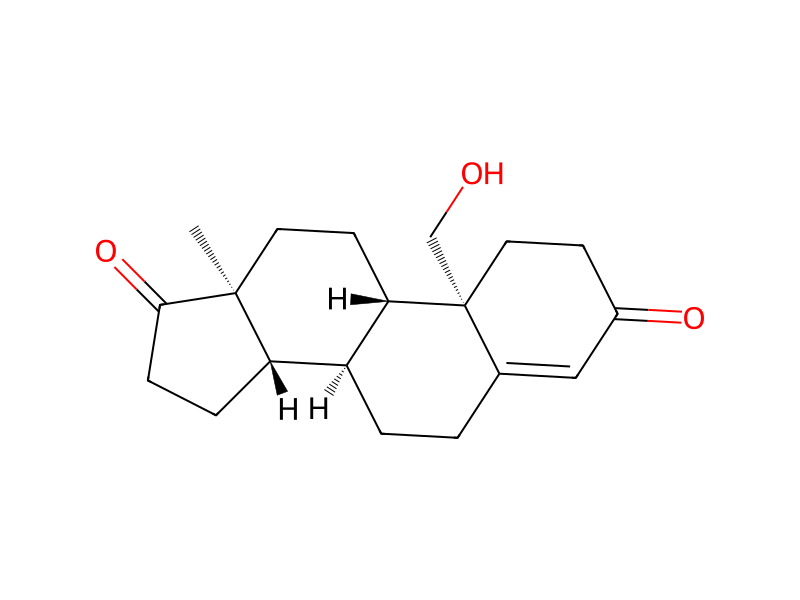
Product 1

Reagents, catalysts & solvents 1

Procedure
A mixture of 19-hydroxy-4-androstene-3,17-dione, trimethylchlorosilane and pyridine is refluxed in benzene for a period of 18 hours. The resulting suspension is filtered, the volatiles removed in vacuo and concentrated to a yellow oil. The oil is placed upon a silica gel chromatographic column packed in chloroform and eluted with chloroform. The chloroform eluate is evaporated to dryness in vacuo and the residue is recrystallized twice from hexane to yield the desired 19-(trimethylsiloxy)-4-androstene-3,17-dione.
Workup
- filtrationThe resulting suspension is filtered
- customthe volatiles removed in vacuo
- concentrationconcentrated to a yellow oil
- washeluted with chloroform
- customThe chloroform eluate is evaporated to dryness in vacuo
- customthe residue is recrystallized twice from hexane
Sources & evidence
- ORD record
- ord-dc3bce60d3ec46e392113a5860cba5b8
- Source dataset
- uspto-grants-1979_02
- Patent number
- US04139617
Reaction notes
Loading…