Phosgene → N,N-Diphenylcarbamic chloride
Reaction equation

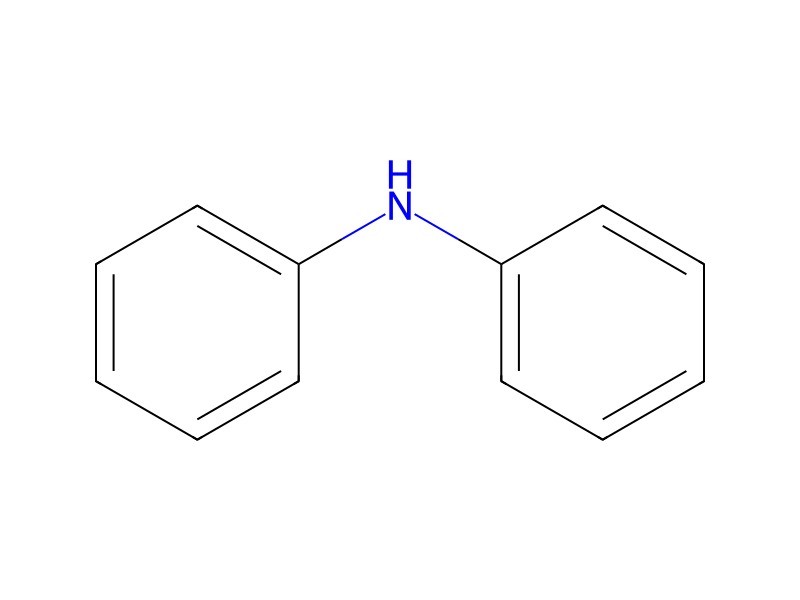
[C:1]1([NH:7][C:8]2[CH:13]=[CH:12][CH:11]=[CH:10][CH:9]=2)[CH:6]=[CH:5][CH:4]=[CH:3][CH:2]=1.[C:14](Cl)([Cl:16])=[O:15]>ClC1C=CC=CC=1>[C:8]1([N:7]([C:1]2[CH:2]=[CH:3][CH:4]=[CH:5][CH:6]=2)[C:14]([Cl:16])=[O:15])[CH:9]=[CH:10][CH:11]=[CH:12][CH:13]=1Participants
4


Reagents, catalysts & solvents 1

Procedure
By way of illustration, one mole of diphenylamine is reacted with a 10% molar excess of phosgene in a suitable solvent such as monochlorobenzene, to yield diphenylcarbamyl chloride. The carbamyl chloride thus produced is reacted further with n-propyl amine in stoichiometric amounts, in the presence of a mole of caustic soda. Diphenyl propyl urea (DPPU) is formed in essentially stoichiometric amounts. The DPPU formed may be either separated from the solvent or, if desired, supplied as a solution in its reaction solvent. DPPU pyrolyzes at 210°-220° C. to yield n-propyl isocyanate of 99% purity and greater than 90% yield. The diphenylamine remaining may be returned easily in tankcars or tankwagons for reprocessing.
Sources & evidence
- ORD record
- ord-560acc4ef24744df962abaf71c630e18
- Source dataset
- uspto-grants-1979_02
- Patent number
- US04141913
Reaction notes
Loading…