Water → Bicyclo(2.2.1)hept-5-ene-2-carboxaldehyde
Reaction equation

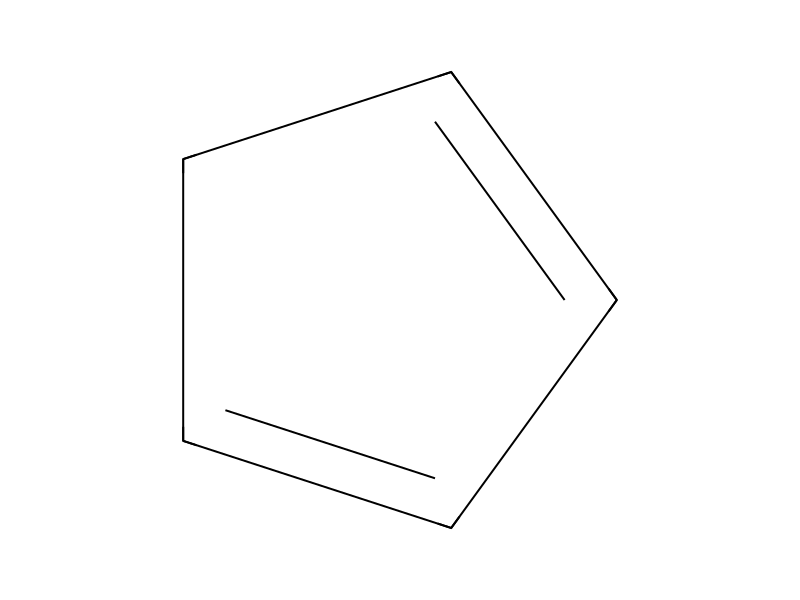
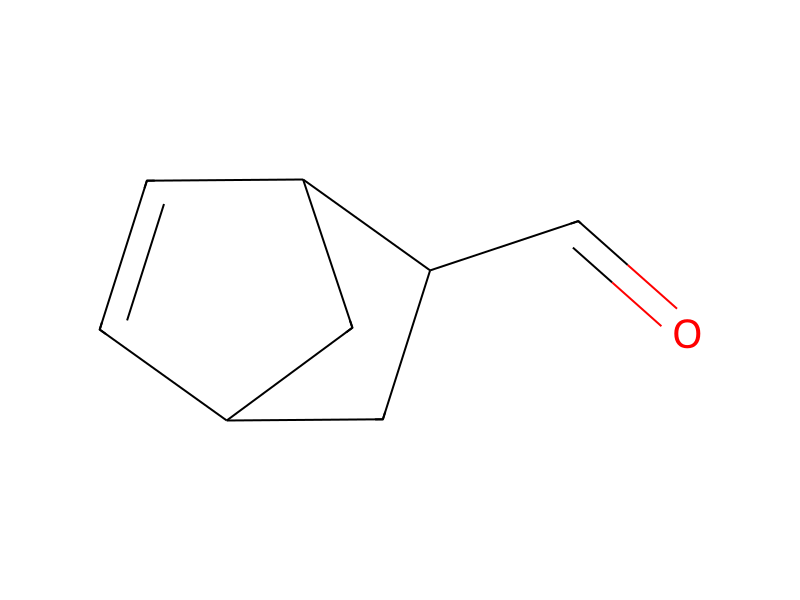
[O:1]=[CH:2][C:3](=[CH2:5])[CH3:4].[CH:6]1[CH2:10]C=[CH:8][CH:7]=1.O>ClCCl.C(N(CC)CC)C>[CH:5]12[CH2:8][CH:7]([CH:6]=[CH:10]1)[CH2:4][CH:3]2[CH:2]=[O:1]Participants
Reactant 3


Product 1
Reagents, catalysts & solvents 2


Procedure
Diels-Alder reaction was conducted to a methacrolein wherein the scandium (III) pentafluorophenylbis(triflyl)methide obtained from Examples 13 and 14 was used as a Lewis acid catalyst (Chemical formula 39). Methacrolein (0.21 mL, 2.6 mmol) and cyclopentadiene (0.56 mL, 6.8 mmol) were reacted while stirring in 3 mL dichloromethane at −40° C. for 4 hours, under the presence of scandium (III) pentafluorophenylbis(triflyl)methide as 1 mol % of Lewis acid catalyst. Two to 3 drops of triethylamine was added to stop the reaction, 5 mL of water was added and the 5-norbornene-2-aldehyde produced was extracted with pentane. After concentration and drying, the crude product was analyzed with 1HNMR and it was found that the 5-norbornene-2-aldehyde showed a high yield of 95% (88% exo). The same reaction as mentioned above was conducted, except for the use of scandium (III) triflate [Sc(OTf)3] as a conventionally known Lewis acid catalyst, instead of the scandium (III) pentafluorophenylbis(triflyl)methide mentioned above. The 5-norbornene-2-aldehyde was hardly synthesized. Subsequently, 2 mol % of this scandium (III) triflate was used, and the yield of the 5-norbornene-2-aldehyde was 97% (89% exo). Based on these results, it was found out that the catalytic activity of the scandium (III) pentafluorophenylbis(triflyl)methide of the present invention is much more higher compared to that of the existing Lewis acid catalysts.
Workup
- customDiels-Alder reaction
- additionwas added
Sources & evidence
- ORD record
- ord-a10849147b064df7a7ff59026cd0ac2c
- Source dataset
- uspto-grants-2008_03
- Patent number
- US07339082B2
Reaction notes
Loading…