Acetic Acid → 2,3-diphenyl-1H-indole-5-carboxylic Acid
Reaction equation

[C:1]1([C:7]([CH2:9][C:10]2[CH:15]=[CH:14][CH:13]=[CH:12][CH:11]=2)=O)[CH:6]=[CH:5][CH:4]=[CH:3][CH:2]=1.[NH:16]([C:18]1[CH:26]=[CH:25][C:21]([C:22]([OH:24])=[O:23])=[CH:20][CH:19]=1)N.C(O)(=O)C.Cl>O>[C:1]1([C:7]2[NH:16][C:18]3[C:26]([C:9]=2[C:10]2[CH:11]=[CH:12][CH:13]=[CH:14][CH:15]=2)=[CH:25][C:21]([C:22]([OH:24])=[O:23])=[CH:20][CH:19]=3)[CH:6]=[CH:5][CH:4]=[CH:3][CH:2]=1Participants
6
Reactant 4


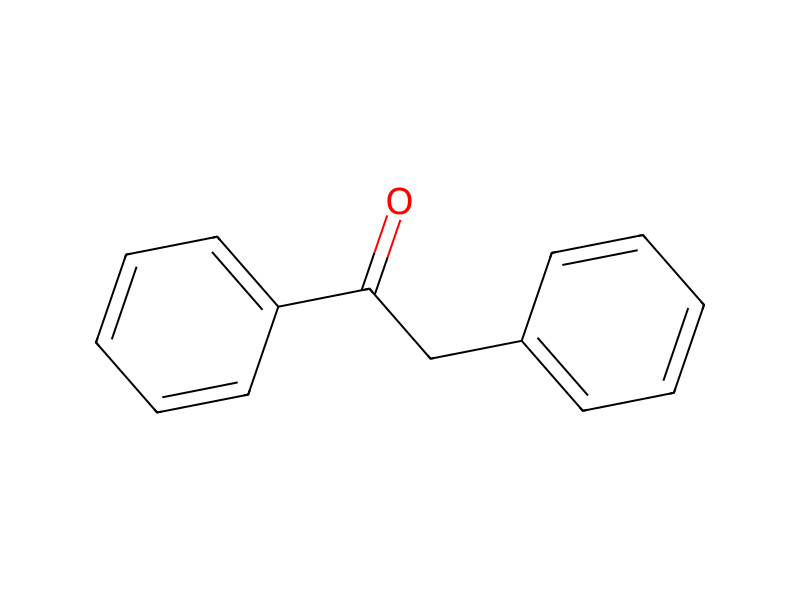

Product 1

Reagents, catalysts & solvents 1

Procedure
1.96 g (10 mmol) of deoxybenzoin and 1.52 g of 4-hydrazinobenzoic acid were ground in a mortar and then fused in an open flask at 160° C. for 15 minutes (min). The cooled melt was admixed with 100 ml of acetic acid and 30 ml of concentrated hydrochloric acid and heated under reflux for 3 hours (h). The cooled solution was admixed with water, resulting in the precipitation of the product 2,3-diphenyl-1H-indole-5-carboxylic acid. The product was filtered off with suction and the residue was washed with water and dried. For purification, the crude product was stirred with warm toluene, filtered off with suction and dried again. This gave 2,3-diphenyl-1H-indole-5-carboxylic acid.
Workup
- temperatureheated
- temperatureunder reflux for 3 hours (h)
Sources & evidence
- ORD record
- ord-247662469629456b9020fdcff16643b5
- Source dataset
- uspto-grants-2008_03
- Patent number
- US07342029B2
Reaction notes
Loading…