Acetic Acid → Terephthalaldehyde
Reaction equation

[C:1]1([CH2:9][OH:10])[CH:6]=[CH:5][C:4]([CH2:7][OH:8])=[CH:3][CH:2]=1.C(O)(=O)C.Br([O-])(=O)=O.[Na+]>O>[CH:3]1[C:4]([CH:7]=[O:8])=[CH:5][CH:6]=[C:1]([CH:9]=[O:10])[CH:2]=1Participants
5
Reactant 3


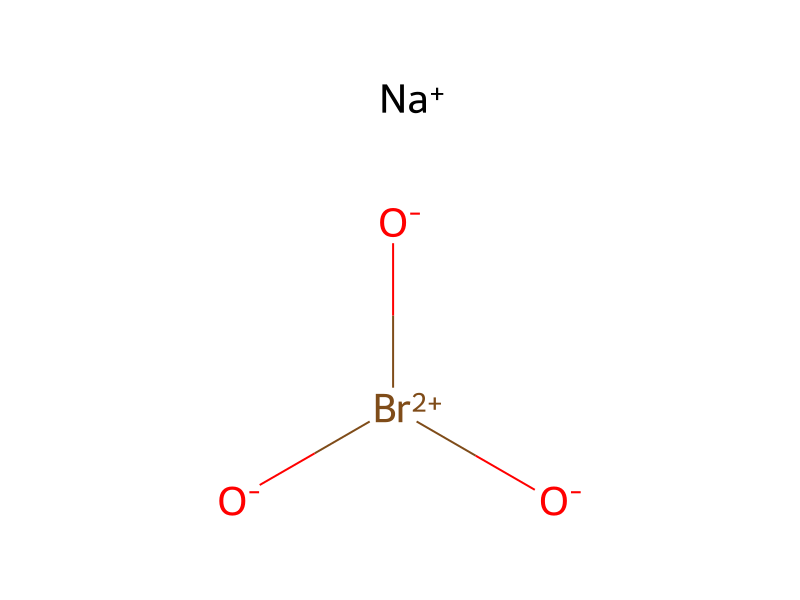
Product 1

Reagents, catalysts & solvents 1

Procedure
In the same manner as in Example 3, the operation was conducted, except that 0.55 g (4 mmols) of p-xylylene glycol was used in place of m-methoxybenzyl alcohol and 1 ml (17.4 mmols) of acetic acid was used in place of 2 ml of acetic acid, and also 1 ml of water and 0.4 g (2.7 mmols) of sodium bromate were used. With respect to the components in the reaction solution, the intended p-phthalaldehyde was produced in an area ratio, as determined by gas chromatography, of 56.0% and p-hydroxymethylbenzaldehyde as a product at the intermediate stage (compound in which only one among two hydroxymethyl groups in a molecule of the raw material was replaced by a formyl group) was produced in an area ratio of 28.6%.
Sources & evidence
- ORD record
- ord-37a199fd6c6f4ed49d5a51d6e8cfa8ac
- Source dataset
- uspto-grants-2008_03
- Patent number
- US07342138B2
Reaction notes
Loading…