Pyridine → N~2~-(6-Chloropyridin-2-yl)-N~1~,N~1~-dimethylethane-1,2-diamine
Reaction equation

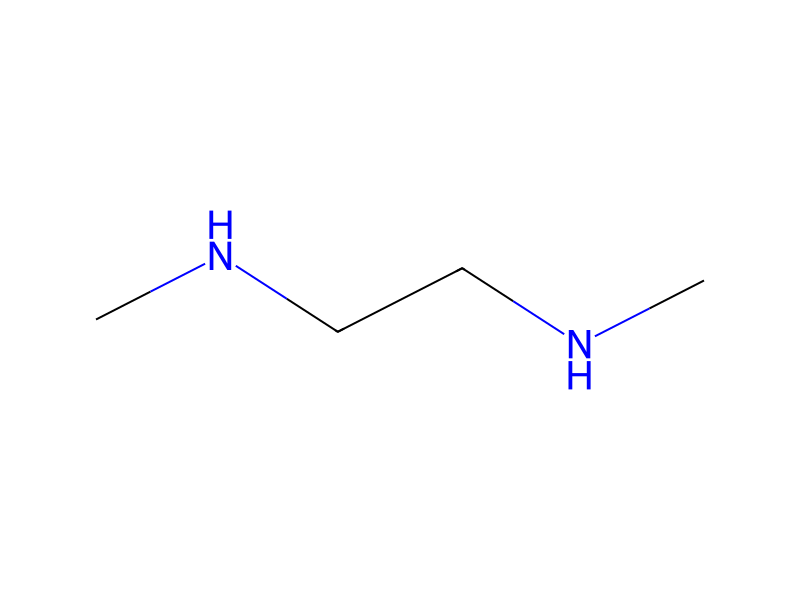
Cl[C:2]1[CH:7]=[CH:6][CH:5]=[C:4]([Cl:8])[N:3]=1.C[NH:10][CH2:11][CH2:12][NH:13][CH3:14].N1C=CC=C[CH:16]=1>>[CH3:16][N:13]([CH3:14])[CH2:12][CH2:11][NH:10][C:2]1[CH:7]=[CH:6][CH:5]=[C:4]([Cl:8])[N:3]=1Participants
4



Procedure
A solution of 2,6-dichloropyridine (29.6 g., 0.20 mole) and unsymmetrical dimethylethylenediamine (52.9 g., 0.60 mole) in 100 ml of pyridine is stirred at reflux for 48 hours. The pyridine is removed under reduced pressure and the residual mixture is poured into water and made basic with excess sodium hydroxide. The product is extracted into ethyl acetate which is then concentrated and the residual oil is distilled. 2-(2-Dimethylaminoethylamino)-6-chloropyridine boiling at 104°-105° at 0.2 mm is collected in 70% yield.
Workup
- temperatureat reflux for 48 hours
- customThe pyridine is removed under reduced pressure
- additionthe residual mixture is poured into water
- extractionThe product is extracted into ethyl acetate which
- concentrationis then concentrated
- distillationthe residual oil is distilled
- custom2-(2-Dimethylaminoethylamino)-6-chloropyridine boiling at 104°-105° at 0.2 mm is collected in 70% yield
Sources & evidence
- ORD record
- ord-3aad83be6d564b87924b3fa512e8ba83
- Source dataset
- uspto-grants-1980_05
- Patent number
- US04203988
Reaction notes
Loading…