Phthalic Anhydride → Ditalimfos
Reaction equation

[C:1]1(=[O:11])[O:6][C:4](=O)[C:3]2=[CH:7][CH:8]=[CH:9][CH:10]=[C:2]12.[P:12](=[S:20])([NH2:19])([O:16][CH2:17][CH3:18])[O:13][CH2:14][CH3:15].C(N(CC)CC)C>O>[C:4]1(=[O:6])[N:19]([P:12](=[S:20])([O:16][CH2:17][CH3:18])[O:13][CH2:14][CH3:15])[C:1](=[O:11])[C:2]2=[CH:10][CH:9]=[CH:8][CH:7]=[C:3]12Participants
5
Reactant 3
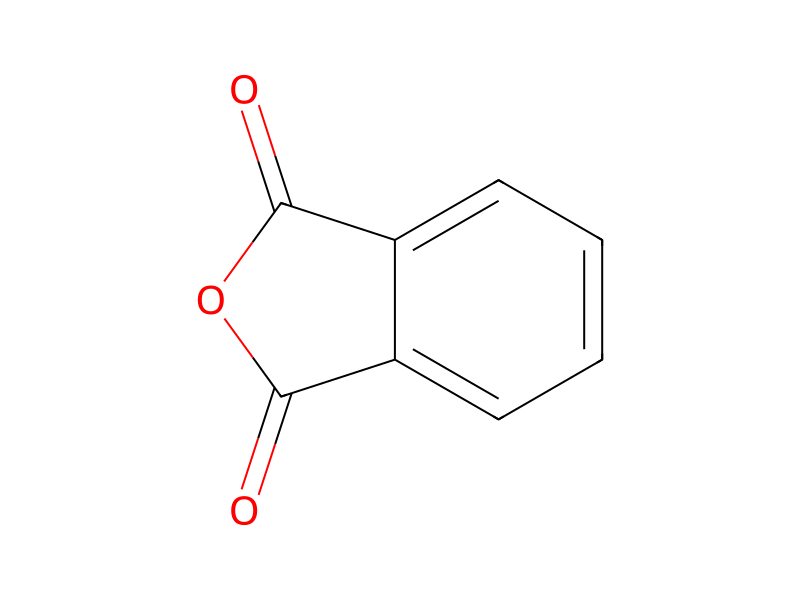


Product 1

Reagents, catalysts & solvents 1

Conditions
- Temperature
- 55 °C
Procedure
A mixture of the 74.06 g (0.5 mole) phthalic anhydride, 33.84 g (0.2 mole) O,O-diethyl phosphoramidothioate and 50.60 g (0.5 mole) triethylamine was heated at 55° C. for 3.5 hours. Eighty three mls of water were added to the stirred mixture and the system was stirred for 10 minutes and then cooled to 25° C. over a one hour period. The solid was filtered, washed with 150 ml water to give the desired compound, O,O-diethyl phthalimidophosphonothioate, purity by GLC. The yield was calculated to be 76% from the phosphoramidothioate.
Workup
- temperaturecooled to 25° C. over a one hour period
- filtrationThe solid was filtered
- washwashed with 150 ml water
Sources & evidence
- ORD record
- ord-06f4bc4d707e4bcebde15db0ee40fe44
- Source dataset
- uspto-grants-1980_05
- Patent number
- US04204996
Reaction notes
Loading…