Azobisisobutyronitrile → 2-Oxazolidinone, 3-acetyl-5-chloro-
Reaction equation

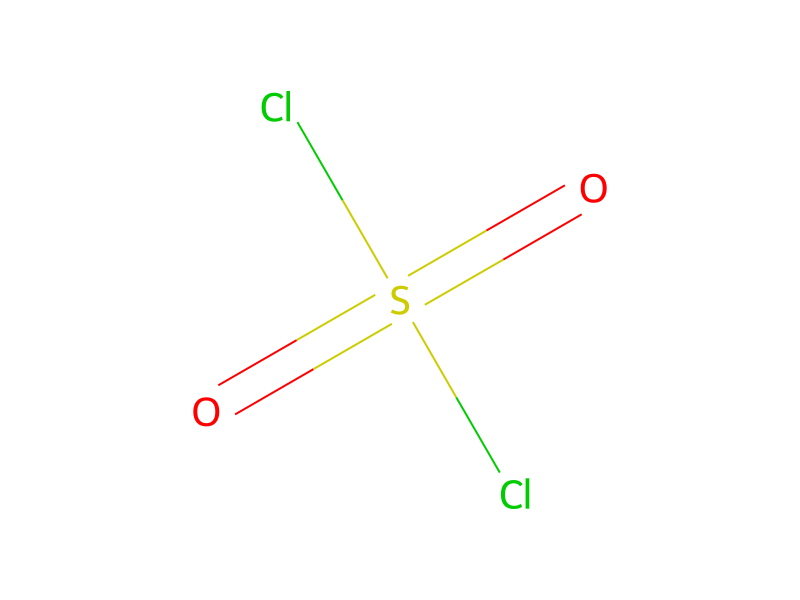
[C:1]([N:4]1[CH2:8][CH2:7][O:6][C:5]1=[O:9])(=[O:3])[CH3:2].S(Cl)([Cl:13])(=O)=O.N(C(C)(C)C#N)=NC(C)(C)C#N>C(Cl)(Cl)(Cl)Cl>[C:1]([N:4]1[CH2:8][CH:7]([Cl:13])[O:6][C:5]1=[O:9])(=[O:3])[CH3:2]Participants
5
Reactant 3


Product 1

Reagents, catalysts & solvents 1

Conditions
- Temperature
- 70 °C
Procedure
5.00 g of 3-acetyloxazolidin-2-one were initially charged in 25 ml of carbon tetrachloride and heated to 70° C. under an argon atmosphere. Then, alternately, a solution of 3.46 ml of sulfuryl chloride in 5 ml of carbon tetrachloride and 0.10 g of 2,2′-azobis(2-methylpropionitrile) were added, and then the mixture was stirred at the same temperature for 2 hours. After cooling to room temperature, the clear solution was decanted off from the solid residues, and the solvent was removed under reduced pressure. This gave the product (6.80 g) with a molecular weight of 163.6 g/mol (C5H6ClNO3).
Workup
- temperatureAfter cooling to room temperature
- customthe clear solution was decanted off from the solid residues
- customthe solvent was removed under reduced pressure
Sources & evidence
- ORD record
- ord-a4b3da96da004f8a8730862dbe3bce08
- Source dataset
- uspto-grants-2014_12
- Patent number
- US08901114B2
Reaction notes
Loading…