Triphenylphosphine → 3-(4-Phenylthiazol-2-yl)propan-1-amine
Reaction equation

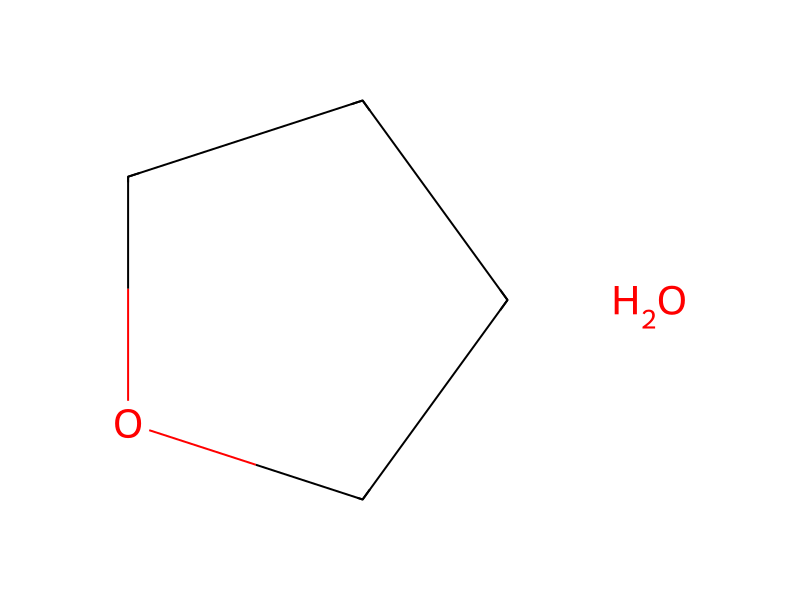
C1(P(C2C=CC=CC=2)C2C=CC=CC=2)C=CC=CC=1.[N:20]([CH2:23][CH2:24][CH2:25][C:26]1[S:27][CH:28]=[C:29]([C:31]2[CH:36]=[CH:35][CH:34]=[CH:33][CH:32]=2)[N:30]=1)=[N+]=[N-]>C1COCC1.O>[C:31]1([C:29]2[N:30]=[C:26]([CH2:25][CH2:24][CH2:23][NH2:20])[S:27][CH:28]=2)[CH:32]=[CH:33][CH:34]=[CH:35][CH:36]=1Participants
Reactant 2


Product 1

Reagents, catalysts & solvents 1
Procedure
Triphenylphosphine (485 mg, 1.85 mmol) was added to a solution of 2-(3-azidopropyl)-4-phenylthiazole (0.3 g, 1.23 mmol) in THF—H2O (10 mL, 8:2 v/v) at 0° C. The reaction mixture was allowed to warm up to room temperature, stirred for 8 h and then concentrated under reduced pressure. The residue was diluted with 1.5N HCl and the aqueous layer was washed with CH2Cl2. The pH of the aqueous layer was adjusted to ˜8-9 using 10% NaOH solution and the organic product was extracted with CH2Cl2. The combined extracts were washed with brine, dried over anhydrous Na2SO4, and concentrated under reduced pressure to afford 3-(4-phenylthiazol-2-yl)propan-1-amine (240 mg, yield 89%) as a pale yellow liquid, which was carried through without further purification. MS (ESI) m/z: Calculated for C12H14N2S: 218.09. found: 219.2 (M+H)+.
Workup
- concentrationconcentrated under reduced pressure
- additionThe residue was diluted with 1.5N HCl
- washthe aqueous layer was washed with CH2Cl2
- extractionthe organic product was extracted with CH2Cl2
- washThe combined extracts were washed with brine
- dry with materialdried over anhydrous Na2SO4
- concentrationconcentrated under reduced pressure
Sources & evidence
- ORD record
- ord-22b35684d75949438568027d46e64e6a
- Source dataset
- uspto-grants-2014_12
- Patent number
- US08901156B2
Reaction notes
Loading…