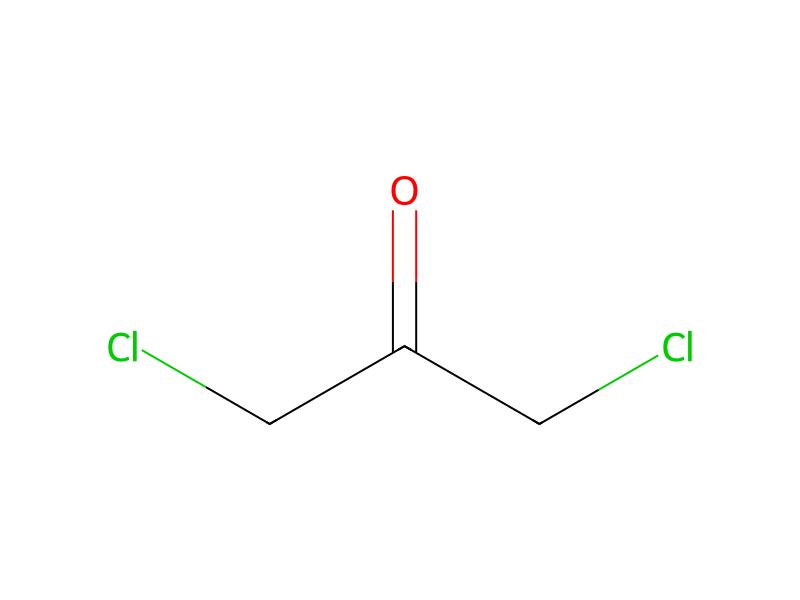
1,3-Dichloroacetone → 2-(4-Bromophenyl)-4-(chloromethyl)oxazole
Reaction equation

[Br:1][C:2]1[CH:10]=[CH:9][C:5]([C:6]([NH2:8])=[O:7])=[CH:4][CH:3]=1.[Cl:11][CH2:12][C:13]([CH2:15]Cl)=O>>[Br:1][C:2]1[CH:10]=[CH:9][C:5]([C:6]2[O:7][CH:15]=[C:13]([CH2:12][Cl:11])[N:8]=2)=[CH:4][CH:3]=1Participants
3


Procedure
This compound was synthesized from 4-bromobenzamide and 1,3-dichloroacetone as described in example 74 step 1 (1.5 g, yield 14%) as a white solid. 1H NMR (400 MHz, CDCl3) δ 7.92-7.89 (d, J=8.8 Hz, 2H), 7.71 (s, 1H), 7.61-7.59 (d, J=8.8 Hz, 2H), 4.57 (s, 2H). MS (ESI) m/z: Calculated for C10H7BrClNO: 272.94. found: 273.8 (M+H)+.
Sources & evidence
- ORD record
- ord-2e72f6c44e4d48ef9329c072765fddcf
- Source dataset
- uspto-grants-2014_12
- Patent number
- US08901156B2
Reaction notes
Loading…