1,4-Dioxane → HCID 86692358, compound
Reaction equation

FC(F)(F)S(O[C:7]1[C:8]([CH3:39])([CH3:38])[C@H:9]2[C@:22]([CH3:25])([CH2:23][CH:24]=1)[C@@H:21]1[C@:12]([CH3:37])([C@@:13]3([CH3:36])[C@H:18]([CH2:19][CH2:20]1)[C@H:17]1[C@H:26]([C:29]([CH3:31])=[CH2:30])[CH2:27][CH2:28][C@:16]1([NH:32][CH2:33][CH2:34][Cl:35])[CH2:15][CH2:14]3)[CH2:11][CH2:10]2)(=O)=O.CC1(C)C(C)(C)OB([C:50]2[CH2:68][C:52]3([CH2:55][C:54]([C:62]([O:64][CH:65]([CH3:67])[CH3:66])=[O:63])([C:56]([O:58][CH:59]([CH3:61])[CH3:60])=[O:57])[CH2:53]3)[CH:51]=2)O1.O.C(=O)([O-])[O-].[Na+].[Na+].O1CCOCC1>C1C=CC([P]([Pd]([P](C2C=CC=CC=2)(C2C=CC=CC=2)C2C=CC=CC=2)([P](C2C=CC=CC=2)(C2C=CC=CC=2)C2C=CC=CC=2)[P](C2C=CC=CC=2)(C2C=CC=CC=2)C2C=CC=CC=2)(C2C=CC=CC=2)C2C=CC=CC=2)=CC=1.O>[Cl:35][CH2:34][CH2:33][NH:32][C@:16]12[CH2:28][CH2:27][C@@H:26]([C:29]([CH3:31])=[CH2:30])[C@@H:17]1[C@@H:18]1[C@@:13]([CH3:36])([CH2:14][CH2:15]2)[C@@:12]2([CH3:37])[C@@H:21]([C@:22]3([CH3:25])[C@@H:9]([CH2:10][CH2:11]2)[C:8]([CH3:38])([CH3:39])[C:7]([C:50]2[CH2:68][C:52]4([CH2:53][C:54]([C:56]([O:58][CH:59]([CH3:61])[CH3:60])=[O:57])([C:62]([O:64][CH:65]([CH3:67])[CH3:66])=[O:63])[CH2:55]4)[CH:51]=2)=[CH:24][CH2:23]3)[CH2:20][CH2:19]1Participants
Reactant 4



Product 1

Reagents, catalysts & solvents 2


Procedure
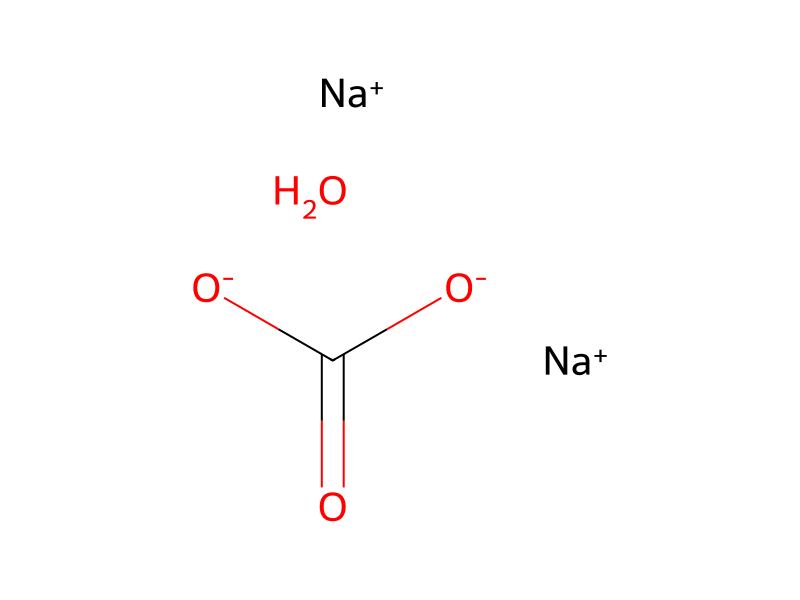
(1R,3aS,5 aR,5bR,7aR,11aR,11bR,13aR,13bR)-3a-((2-chloroethyl)amino)-5a,5b,8,8,11a-pentamethyl-1-(prop-1-en-2-yl)-2,3,3a,4,5,5a,5b,6,7,7a,8,11,11a,11b,12,13,13a,13b-octadecahydro-1H-cyclopenta[a]chrysen-9-yl trifluoromethanesulfonate (73 mg, 0.118 mmol), previously dried, was mixed with diisopropyl 6-(4,4,5,5-tetramethyl-1,3,2-dioxaborolan-2-yl)spiro[3.3]hept-5-ene-2,2-dicarboxylate (55.4 mg, 0.141 mmol) in a 50 mL RBF fitted with an air condenser and a 3-way stopcock/balloon setup. To this mixture was added sodium carbonate hydrate (43.8 mg, 0.353 mmol), tetrakis(triphenylphosphine)palladium (4.08 mg, 3.53 mmol) and dioxane (2 mL), followed by water (0.5 mL). The mixture was quickly immersed into a dry-ice bath until completely frozen. Standard evacuation/purging cycles were repeated 4 times. Under nitrogen, the frozen solid was allowed to melt at RT, forming a very pale lemon yellow solution. Once the solution became nearly homogeneous, it was immersed into an oil bath at 85° C. The reaction was allowed to remain at 85° C. for the 2 hours. LCMS analysis showed the desired product, in the forms of water and methanol adducts. The crude reaction mixture was quenched with a mixture of 4 mL saturated ammonium chloride and 4 mL 0.5 N HCl to bring aziridine back to the chloroethyl open form. The desired product was purified by silica gel chromatography eluted with mixture of ethyl acetate and hexanes to give 19 mg (22%). MS: m/e 736.5/738.5 (M+H)+, 4.53 min (method 19). 1H NMR (400 MHz, CHLOROFORM-d) δ 5.87 (s, 1H), 5.52 (dd, J=6.5, 2.0 Hz, 1H), 5.07 (dq, J=17.1, 6.3 Hz, 2H), 4.72 (d, J=2.0 Hz, 1H), 4.62-4.57 (m, 1H), 3.73-3.62 (m, 2H), 2.86-2.72 (m, 2H), 2.70 (s, 3H), 2.59 (d, J=2.5 Hz, 2H), 2.17-1.82 (m, 4H), 1.80-1.70 (m, 3H), 1.69 (s, 3H), 1.66-1.28 (m, 18H), 1.25 (dd, J=6.3, 5.0 Hz, 12H), 1.15 (s, 3H), 1.07 (s, 3H), 1.06 (s, 3H), 0.96 (s, 3H), 0.82 (s, 3H).
Workup
- customRBF fitted with an air condenser
- customThe mixture was quickly immersed into a dry-ice bath
- temperatureuntil completely frozen
- customStandard evacuation/purging cycles
- customto melt at RT
- customforming a very pale lemon yellow solution
- customit was immersed into an oil bath at 85° C
- customto remain at 85° C. for the 2 hours
Sources & evidence
- ORD record
- ord-36791ade97834dc4829bc43b3ef4d3f4
- Source dataset
- uspto-grants-2014_12
- Patent number
- US08906889B2
Reaction notes
Loading…