Acetone → HCID 45381085, compound
Reaction equation

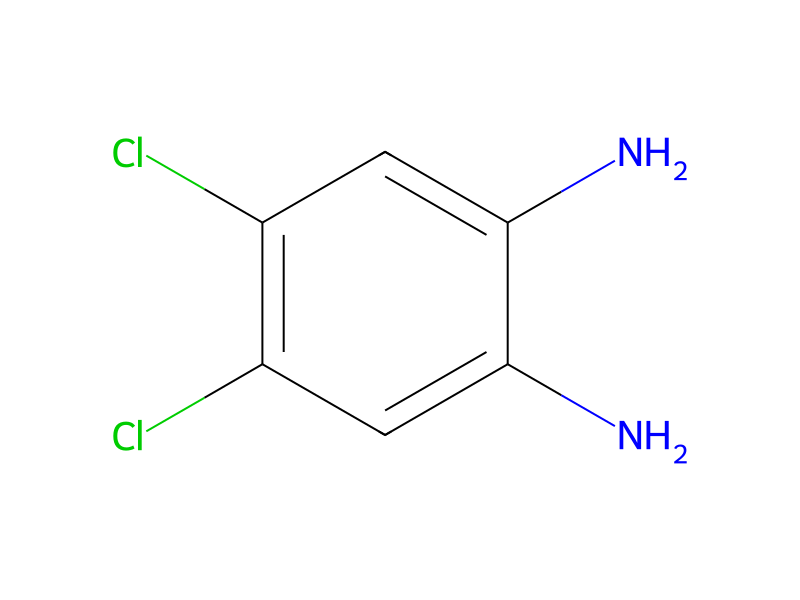
[Cl:1][C:2]1[C:7]([Cl:8])=[CH:6][C:5]([NH2:9])=[C:4]([NH2:10])[CH:3]=1.[C:11]1([CH:17]2[CH2:23][C:22](=O)O[C:19](=[O:20])[CH2:18]2)[CH:16]=[CH:15][CH:14]=[CH:13][CH:12]=1.CC(C)=O>C1COCC1>[Cl:1][C:2]1[C:7]([Cl:8])=[CH:6][C:5]2[N:9]3[C:19](=[O:20])[CH2:18][CH:17]([C:11]4[CH:16]=[CH:15][CH:14]=[CH:13][CH:12]=4)[CH2:23][C:22]3=[N:10][C:4]=2[CH:3]=1Participants
Reactant 3


Product 1

Reagents, catalysts & solvents 1

Procedure
The solution of commercial 4,5-dichloro-1,2-phenylenediamine (0.38 g) and 3-phenylglutaric anhydride (0.4 g) in THF (1 ml) was heated shortly and kept at rt for 0.5 h. The solvent was removed in vacuo and the residue redissolved in acetic acid (3 ml). The dark solution was heated to reflux overnight. Then all volatiles were removed in vacuo and the residue was heated with ethanol (5 ml). After reccoling to rt the precipitate was collected by filtration, washed with ethanol, and dried to give a crude (0.39 g). The crude was decolorized in boiling acetone solution with activated carbon and filtered over Celite. Concentration of the filtrate and drying of the residue afforded 7,8-dichloro-3-phenyl-3,4-dihydropyrido[1,2-a]benzimidazol-1(2H)-one (0.13 g) as colourless crystals.
Workup
- customThe solvent was removed in vacuo
- dissolutionthe residue redissolved in acetic acid (3 ml)
- temperatureThe dark solution was heated
- temperatureto reflux overnight
- customThen all volatiles were removed in vacuo
- temperaturethe residue was heated with ethanol (5 ml)
- customAfter reccoling to rt
- filtrationwas collected by filtration
- washwashed with ethanol
- customdried
- customto give a crude (0.39 g)
- filtrationfiltered over Celite
- customConcentration of the filtrate and drying of the residue
Sources & evidence
- ORD record
- ord-cc4aa223431d4da1aefd761ea4ee8359
- Source dataset
- uspto-grants-2014_12
- Patent number
- US08912186B2
Reaction notes
Loading…