Acetic Acid → 5-benzyl-3-propyldihydrofuran-2(3H)-one
Reaction equation

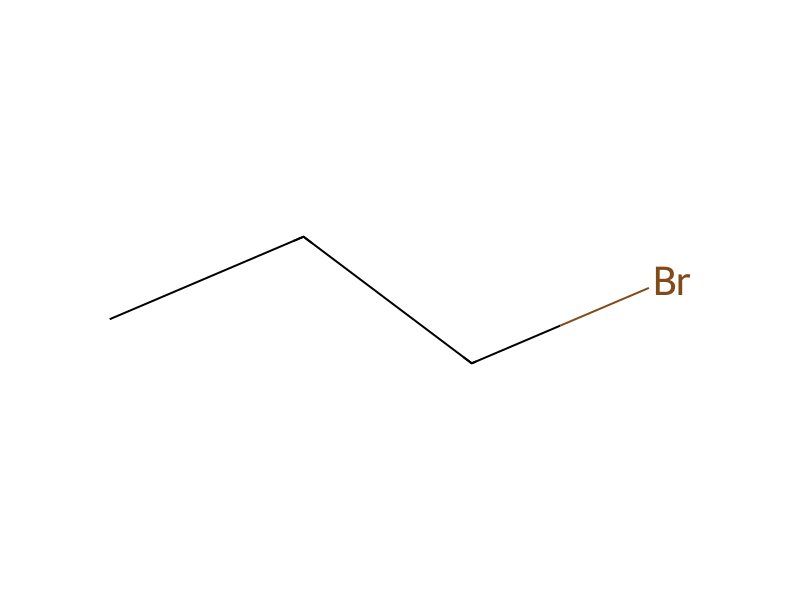
C(N[CH:5]([CH3:7])[CH3:6])(C)C.[Li].[CH2:9]([CH:16]1N[C:19](=[O:21])[CH2:18][CH2:17]1)[C:10]1[CH:15]=[CH:14][CH:13]=[CH:12][CH:11]=1.C(Br)CC.C(O)(=[O:28])C>C1COCC1>[CH2:9]([CH:16]1[O:28][C:19](=[O:21])[CH:18]([CH2:7][CH2:5][CH3:6])[CH2:17]1)[C:10]1[CH:15]=[CH:14][CH:13]=[CH:12][CH:11]=1Participants
6
Reactant 4



Product 1

Reagents, catalysts & solvents 1

Conditions
- Temperature
- -78 °C
Procedure
To a 2 M lithium diisopropylamine solution in THF of −78° C. is added 5-benzylpyrrolidin-2-one and the mixture is stirred for 1.5 hours at −78° C. Then 1-propyl bromide is added and the reaction is stirred for another 1.5 hours at −78° C. The reaction mixture is allowed to warm up to 0° C. before ice-cold water with acetic acid is added and subsequently extracted 3 times with dichloromethane. The dichloromethane is concentrated in vacuo and the residue is dissolved in dichloromethane, washed with saturated NaHCO3 and brine. Crude 5-benzyl-3-propyldihydrofuran-2(3H)-one is obtained after removal of the solvents in vacuo. The product is purified by column chromatography.
Workup
- stirringthe reaction is stirred for another 1.5 hours at −78° C
- additionis added
- extractionsubsequently extracted 3 times with dichloromethane
- concentrationThe dichloromethane is concentrated in vacuo
- dissolutionthe residue is dissolved in dichloromethane
- washwashed with saturated NaHCO3 and brine
Sources & evidence
- ORD record
- ord-6a5648b09dd945309fbcc11d93daf687
- Source dataset
- uspto-grants-2014_12
- Patent number
- US08912329B2
Reaction notes
Loading…