Water → 1-Bromo-4-hydroxy-isoquinoline-3-carboxylic acid butyl ester
Reaction equation

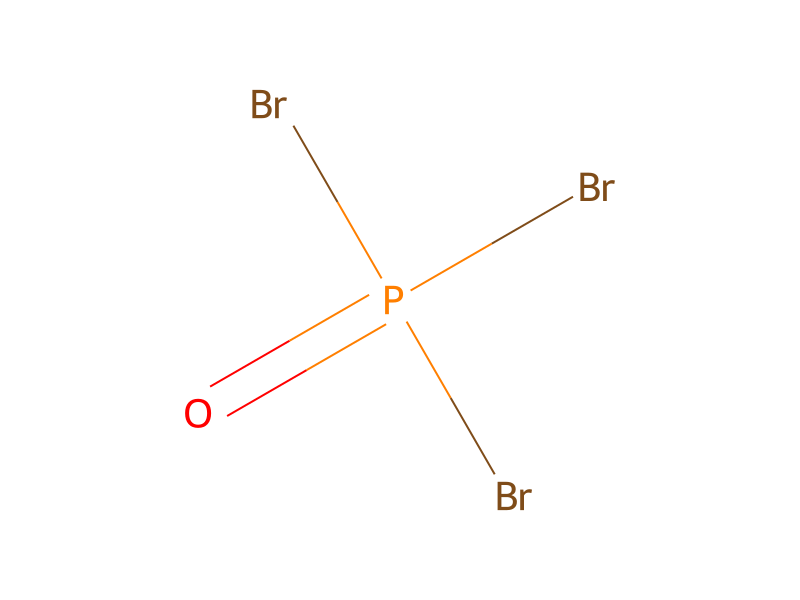
[CH2:1]([O:5][C:6]([C:8]1[N:9]=[C:10](O)[C:11]2[C:16]([C:17]=1[OH:18])=[CH:15][CH:14]=[CH:13][CH:12]=2)=[O:7])[CH2:2][CH2:3][CH3:4].P(Br)(Br)([Br:22])=O.O>C(#N)C>[CH2:1]([O:5][C:6]([C:8]1[N:9]=[C:10]([Br:22])[C:11]2[C:16]([C:17]=1[OH:18])=[CH:15][CH:14]=[CH:13][CH:12]=2)=[O:7])[CH2:2][CH2:3][CH3:4]Participants




Conditions
- Temperature
- 80 °C
Procedure
2 g (7.7 mmol) of 1,4-Dihydroxy-isoquinoline-3-carboxylic acid butyl ester (from Example D-20b) dissolved in 100 ml of acetonitrile. 15.4 g (53.6 mmol) of phosphorous oxybromide added to solution and mixture stirred at 80° C. for 64 h. 100 ml of water was added to mixture, and mixture was removed from heat. Mixture was partitioned between ethyl acetate and water. Two phases were separated and the aqueous layer was extracted with ethyl acetate. Organic layers were combined, washed with brine, dried over magnesium sulfate, filtered, and evaporated. Residue was purified by silica gel flash chromatography to give 0.1 g (0.3 mmol) of product. 1H NMR (200 MHz, CDCl3) δ 11.89 (s, 1 H), 8.41 (m, 1 H), 8.25 (m, 1 H), 7.84 (m, 2 H), 4.49 (t, J=7.0 Hz, 2 H), 1.87 (m, 2 H), 1.47 (m, 2 H), 1.00 (t, J=7.2 Hz, 3 H).
Workup
- customwas removed
- temperaturefrom heat
- customMixture was partitioned between ethyl acetate and water
- customTwo phases were separated
- extractionthe aqueous layer was extracted with ethyl acetate
- washwashed with brine
- dry with materialdried over magnesium sulfate
- filtrationfiltered
- customevaporated
- customResidue was purified by silica gel flash chromatography
Sources & evidence
- ORD record
- ord-d373bef4fa3746c49b41800149698d12
- Source dataset
- uspto-grants-2014_12
- Patent number
- US08916585B2
Reaction notes
Loading…