Diisopropylethylamine → 2-[5-(1-Benzyl-1H-pyrazol-4-ylcarbamoyl)-2-oxo-1-(2-trimethylsilanyl-ethoxymethyl)-1,2-dihydro-pyridin-3-yl]-indole-1-carboxylic acid tert-butyl ester
Reaction equation

[C:1]([O:5][C:6]([N:8]1[C:16]2[C:11](=[CH:12][CH:13]=[CH:14][CH:15]=2)[CH:10]=[C:9]1[C:17]1[C:18](=[O:34])[N:19]([CH2:26][O:27][CH2:28][CH2:29][Si:30]([CH3:33])([CH3:32])[CH3:31])[CH:20]=[C:21]([C:23](O)=[O:24])[CH:22]=1)=[O:7])([CH3:4])([CH3:3])[CH3:2].Cl.CN(C)CCCN=C=NCC.O.ON1C2C=CC=CC=2N=N1.C(N(CC)C(C)C)(C)C.[CH2:67]([N:74]1[CH:78]=[C:77]([NH2:79])[CH:76]=[N:75]1)[C:68]1[CH:73]=[CH:72][CH:71]=[CH:70][CH:69]=1>O1CCCC1>[C:1]([O:5][C:6]([N:8]1[C:16]2[C:11](=[CH:12][CH:13]=[CH:14][CH:15]=2)[CH:10]=[C:9]1[C:17]1[C:18](=[O:34])[N:19]([CH2:26][O:27][CH2:28][CH2:29][Si:30]([CH3:33])([CH3:32])[CH3:31])[CH:20]=[C:21]([C:23](=[O:24])[NH:79][C:77]2[CH:76]=[N:75][N:74]([CH2:67][C:68]3[CH:69]=[CH:70][CH:71]=[CH:72][CH:73]=3)[CH:78]=2)[CH:22]=1)=[O:7])([CH3:4])([CH3:3])[CH3:2]Participants
Reactant 5
 HCID 81531Diisopropylethylamine
 HCID 2066941-benzyl-1H-pyrazol-4-amine
 HCID 27239391,3-Propanediamine, N'-(ethylcarbonimidoyl)-N,N-dimethyl-, monohydrochloride
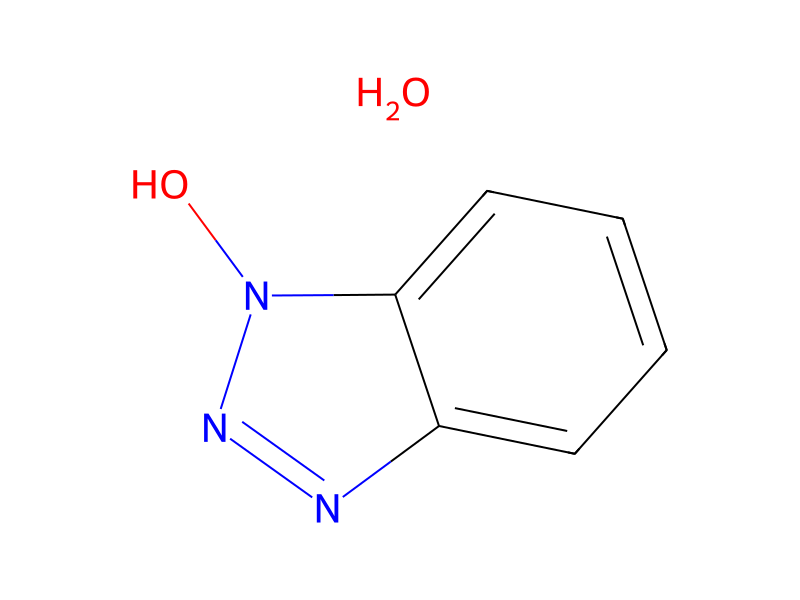 HCID 27960291-Hydroxybenzotriazole hydrate
 HCID 581173092-[5-Carboxy-2-oxo-1-(2-trimethylsilanyl-ethoxymethyl)-1,2-dihydro-pyridin-3-yl]-indole-1-carboxylic acid tert-butyl ester2×
Product 1

Reagents, catalysts & solvents 1

Conditions
- Temperature
- 90 °C
Procedure
Intermediate (1c), 2-[5-carboxy-2-oxo-1-(2-trimethylsilanyl-ethoxymethyl)-1,2-dihydro-pyridin-3-yl]-indole-1-carboxylic acid tert-butyl ester (300 mg, 0.62 mmol), N-(3-dimethylaminopropyl)-N′-ethylcarbodiimide hydrochloride (357 mg, 1.86 mmol), 1-hydroxybenzotriazole hydrate (251 mg, 1.86 mmol), N,N-diisopropylethylamine (320 mg, 0.431 mL, 2.48 mmol), 1-benzyl-1H-pyrazol-4-ylamine (322 mg, 1.86 mmol) and tetrahydrofuran (12 mL) were combined in a 20 mL microwave vial. The contents of the vial were heated at 90° C. for 30 minutes under microwave irradiation. The reaction mixture was concentrated in vacuo. The residue was partitioned between water and dichloromethane, and the organic layer was separated. The aqueous was extracted with a further portion of dichloromethane and the combined dichloromethane layers were dried (Na2SO4) and concentrated in vacuo. The resultant crude product was purified by flash chromatography on SiO2 eluting with 20% ethyl acetate/hexane and then 2% methanol/dichloromethane to afford the desired title compound as a solid, 315 mg, 80%.
Workup
- concentrationThe reaction mixture was concentrated in vacuo
- customThe residue was partitioned between water and dichloromethane
- customthe organic layer was separated
- extractionThe aqueous was extracted with a further portion of dichloromethane
- dry with materialthe combined dichloromethane layers were dried (Na2SO4)
- concentrationconcentrated in vacuo
- customThe resultant crude product was purified by flash chromatography on SiO2 eluting with 20% ethyl acetate/hexane
Sources & evidence
- ORD record
- ord-e82557e7c978418dbde18deed8808331
- Source dataset
- uspto-grants-2014_12
- Patent number
- US08916591B2
Reaction notes
Loading…