2-Hydroxyethyl Methacrylate → HCID 131730879, compound
Reaction equation

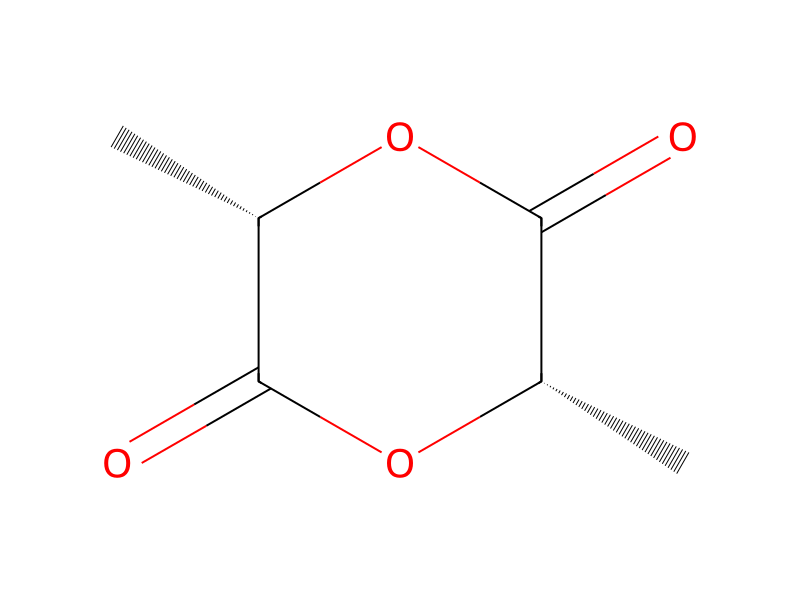
[CH3:1][C@@H:2]1[O:9]C(=O)[C@H](C)[O:5][C:3]1=[O:4].[C:11]([O:16][CH2:17][CH2:18][OH:19])(=[O:15])[C:12]([CH3:14])=[CH2:13]>>[C:11]([O:16][CH2:17][CH2:18][OH:19])(=[O:15])[C:12]([CH3:14])=[CH2:13].[C:3]([O-:5])(=[O:4])[CH:2]([CH3:1])[OH:9]Participants


Procedure
Dextran-(2-hydroxyethylmethacrylate)-lactate (Dex-lactateHEMA) macromer was synthesized according to a published method (Wolthuis, et al. Polymer, 1997, 38, 6235-6242). For example, L-lactide and 2-hydroxyethyl methacrylate (HEMA) with 1:1 molar ratio were first reacted at 110° C. for one hour in the presence of catalyst SnOct2 to obtain HEMA-lactate. Secondly, N,N′-carbonyldiimidazole (CDI) was reacted with the above HEMA-lactate product at 1:1 feeding molar ratio at room temperature in THF for 16 h to obtain HEMA-lactateCl. Finally, a calculated amount of dextran was reacted with HEMA-lactateCI (HEMAlactateCI:glucopyranose=7:1 molar ratio) in the presence of catalyst 4-(N,N-dimethylamino) pyridine (DMAP) in dimethyl sulfoxide (DMSO) at room temperature for four days to obtain the Dex-lactateHEMA macromer. The average length of lactate spacer (DPav) is equal to 3, and degree of substitute (DS; amount of methacrylate groups per 100 dextran glucopyranose residues) is equal to 4.6.
Workup
- customwere first reacted at 110° C. for one hour in the presence of catalyst SnOct2
Sources & evidence
- ORD record
- ord-a03bc827ef674a9096ba5f3d0a105a73
- Source dataset
- uspto-grants-2014_12
- Patent number
- US08916616B2
Reaction notes
Loading…