Ethanol → Ethyl phenylacetate
Reaction equation

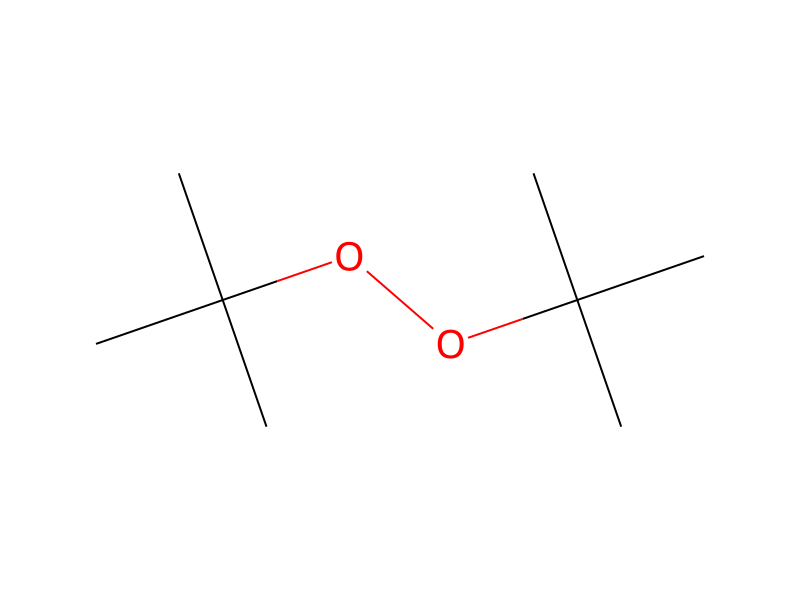
[C:1]1([CH3:7])[CH:6]=[CH:5][CH:4]=[CH:3][CH:2]=1.[CH2:8]([OH:10])[CH3:9].[C:11]([O:15]OC(C)(C)C)(C)(C)C.[C]=O>>[C:1]1([CH2:7][C:11]([O:10][CH2:8][CH3:9])=[O:15])[CH:6]=[CH:5][CH:4]=[CH:3][CH:2]=1Participants




Conditions
- Temperature
- 120 °C
Procedure
Toluene (18.4 g, 100 mmol), ethanol (1.84 g, 40 mmol), di-tert-butyl peroxide (5.84 g, 40 mmol), and Pd(Xantphos)Cl2 (15.2 mg, 0.02 mmol) were added into a reaction kettle, into which 10 atm carbon monoxide was introduced. The reaction was heated to 120° C., and stirred at this constant temperature for 24 h. After the reaction was completed, carbon monoxide was discharged, and 4.2 g ethyl phenylacetate was obtained by column chromatography, in a yield of 64%, TON=1280. The ethyl phenylacetate obtained was dissolved in 1,4-dioxane. 6 N sodium hydroxide solution was added, and the reaction was heated to 60° C. After 2 h of reaction, the pH value was adjusted to 1 by adding 2 N hydrochloric acid. After removing the organic solvent under reduced pressure, 3.2 g product phenylacetic acid was obtained by extraction with ethyl acetate, and the yield of hydrolysis was 92%.
Workup
- additionwas introduced
Sources & evidence
- ORD record
- ord-a4ae073520b94595acc80b7ac67fba3e
- Source dataset
- uspto-grants-2014_12
- Patent number
- US08921591B2
Reaction notes
Loading…