HomeMCPWorkbenchSkills
HomeWorkbenchNotificationsMe
llms.txt · MCP GuidePrivacy Policy · Terms of Service · Supportv1.8.0
  1. Home
  2. /Compound

Di-tert-butyl peroxide

HCID 8033
New noteNew reactionRequest quotes
Print preview
Basic informationOverviewNames & identifiersPropertiesSafety & regulationChemistry & industryRelated reactionsCompound notes
Substructure searchFind similar structures

Basic information

CAS
110-05-4
Standard SMILES
CC(C)(C)OOC(C)(C)C
InChIKey
LSXWFXONGKSEMY-UHFFFAOYSA-N
Molecular formula
C8H18O2
Average molar mass
146.23 g/mol
Monoisotopic mass
146.13067982

Overview

Di-tert-butyl peroxide is a clear colorless liquid. (NTP, 1992)

Names & identifiers

Preferred name
Di-tert-butyl peroxide
IUPAC
2-tert-butylperoxy-2-methylpropane
English name
Di-tert-butyl peroxide
Molecular formula
C8H18O2
Molecular weight
146.23

Names & synonyms

Di-tert-butyl peroxide110-05-4tert-Butyl peroxidet-Butyl peroxideDTBPTrigonox BCadox TBPCadoxKayabutyl DPerbutyl DInterox DTBtert-Butylperoxide
Show more names
2-(tert-Butylperoxy)-2-methylpropaneDI-T-BUTYL PEROXIDE(tributyl)peroxidebis(tert-butyl)peroxideDI-TERTIARY-BUTYL PEROXIDE
Peroxide, bis(1,1-dimethylethyl)Bis(tert-butyl) peroxideDi-tert-butylperoxidDi-tert-butyl peroxydePeroxyde de butyle tertiaireBis(t-butyl)peroxideDi-tert-Butyl hydroperoxidePerossido di butile terziario

Database identifiers

CAS
110-05-4
PubChem CID
8033
DTXSID
DTXSID2024955
ChEMBL
CHEMBL1558599
UNII
M7ZJ88F4R1
EC Number
203-733-6
Nikkaji
J3.251D

Properties

Computed structural properties

XLogP
2.1
Topological polar surface area
18.5 Ų
Hydrogen bond donors
0
Hydrogen bond acceptors
2
Rotatable bonds
3
Heavy atoms
10
Formal charge
0
Complexity
80.8

Experimental & physicochemical properties

Chemical Classes · 2 items

Other Classes -> Peroxides, Organic

Flammable agents - 3rd degree

SpringerMaterials PropertiesSchoenflies notation
LogP · 2 items

log Kow = 3.2 at 22 °C, pH 7.2

1-4

Density · 4 items

0.704 at 68 °F (NTP, 1992) - Less dense than water; will float

0.7910 at 25 °C/25 °C

Relative density (water = 1): 0.8

0.791 @25 °C

Color/Form · 3 items

Clear, water-white liquid

Liquid at 20 °C

Yellow liquid

Solubility · 6 items

less than 1 mg/mL at 70 °F (NTP, 1992)

In water, 100 mg/L at 25 °C

In water, 1.71 mg/L at 20 °C, pH 8.1

Insoluble in water

Soluble in styrene, ketones, most aliphatic and aromatic hydrocarbons

For more Solubility (Complete) data for Bis(1,1-dimethylethyl)peroxide (6 total), please visit the HSDB record page.

Flash Point · 5 items

Safety & regulation

Safety information is for reference only and does not replace the supplier’s Safety Data Sheet (SDS), applicable regulations, or professional assessment.

GHS classification

GHS Classification · 6 items

Danger

H225: Highly Flammable liquid and vapor [Danger Flammable liquids]

P203, P210, P233, P234, P235, P240, P241, P242, P243, P280, P303+P361+P353, P318, P370+P378, P403, P403+P235, P405, P410, P411, P420, and P501 (click each P-code to see the statement)

Danger

H225 (> 99.9%): Highly Flammable liquid and vapor [Danger Flammable liquids]

P203, P210, P233, P234, P235, P240, P241, P242, P243, P260, P264+P265, P271, P273, P280, P284, P303+P361+P353, P304+P340, P305+P351+P338, P318, P337+P317, P342+P316, P370+P378, P403, P403+P235, P405, P410, P411, P420, and P501 (click each P-code to see the statement)

Hazard information

Regulatory Information · 5 items

Chemical: Peroxide, bis(1,1-dimethylethyl)

Peroxide, bis(1,1-dimethylethyl) is listed on the EPA's Chemical Data Reporting (CDR) system. Manufacturers and importers of Peroxide, bis(1,1-dimethylethyl) are required to report information about their production and use of this chemical to the EPA under the Toxic Substances Control Act (TSCA). (40 eCFR Part 711)

Status: Active Update: 24-12-2021 https://echa.europa.eu/registration-dossier/-/registered-dossier/14549

Peroxide, bis(1,1-dimethylethyl): Does not have an individual approval but may be used under an appropriate group standard

The New Jersey Worker and Community Right to Know Act requires public and private employers to provide information about hazardous substances at their workplaces. (N.J.S.A. 34:5A-1 et. seq.)

Other Safety InformationIMAP assessments - Peroxide, bis(1,1-dimethylethyl): Human health tier II assessment
DOT LabelOrganic Peroxide
Fire Hazards · 2 items

Excerpt from ERG Guide 145 [Organic Peroxides (Heat and Contamination Sensitive)]:

Chemistry & industry

Uses & manufacturing

Uses · 6 items

Used as an initiator for high-temperature, high-pressure polymerizations of ethylene and halogenated ethylenes; in the synthesis of polyketones; as a finishing catalyst for polystyrene; as a polymerization catalyst for acrylonitrile polymers and resins (including olefins, styrene, styrenated alkyds, and silicones); as curing agent for styrenated alkyds and silicone rubbers; as ignition accelerator for diesel fuels; and as a cross-linking agent (rubber and resins); [HSDB]

Petroleum Production and Refining [Category: Industry]

Polymerization catalyst for resins, including olefins, styrene, styrenated alkyds, and silicones; ignition accelerator for diesel fuel; organic synthesis; intermediate.

Cross-linking agent (rubber, resins)

POLYMERIZATION CATALYST/INITIATOR FOR POLYETHYLENE

IGNITION ACCELERATOR FOR DIESEL FUELS

U.S. Exports · 2 items

(1978) No Data

(1982) No Data

U.S. Imports · 2 items

(1978) No Data

(1982) No Data

U.S. Production · 5 items

2023: 2,500,000 - <4,000,000 lb

(1978) 1.22X10+9 G

(1982) 1.30X10+9 G

(1977): 2.01-20.1 million pounds.

Non-confidential 2016 Chemical Data Reporting (CDR) information on the production and use of chemicals manufactured or imported into the United States. Chemical: Peroxide, bis(1,1-dimethylethyl):

Consumer UsesCatalyst
Industry UsesPolymerization promoter
Methods of Manufacturing · 3 items

... Synthesized from tert-butyl hydroperoxide and tert-butanol. This reaction can also be carried out with an acidic ion-exchange resin as catalyst, the water produced in the reaction being removed by azeotropic distillation

t-Butyl hydroperoxide + isobutylene (peroxidation)

REACTION OF SULFATED T-BUTYL ALCOHOL OR ISOBUTYLENE WITH HYDROGEN PEROXIDE

Related reactions

190 records
New reaction record
HRID 5640 reaction equation
HRID 5640As reactantuspto-grants-1993_09
HRID 23833 reaction equation
HRID 23833As reactantuspto-grants-2005_02
HRID 37329 reaction equation
HRID 37329As reactantuspto-grants-1995_05
HRID 80342 reaction equation
HRID 80342As reactantuspto-grants-2014_09
HRID 83953 reaction equation
HRID 83953As reactantuspto-grants-2014_09
HRID 88597 reaction equation
HRID 88597As reactantTraining data from https://doi.org/10.1039/C8SC04228D (2/10)
HRID 111475 reaction equation
HRID 111475As productTraining data from https://doi.org/10.1039/C8SC04228D (2/10)
HRID 111935 reaction equation
HRID 111935As reactantTraining data from https://doi.org/10.1039/C8SC04228D (2/10)
Page 1 of 24

Compound notes

Loading…

On this pageBasic informationOverviewNames & identifiersPropertiesSafety & regulationChemistry & industryRelated reactionsCompound notes
More actions
New noteNew reactionRequest quotes

65 °F (NTP, 1992)

1 °C (34 °F) - closed cup

65 °F (18 °C) - open cup

12 °C - closed cup

12 °C c.c.

Boiling Point · 3 items

232 °F at 760 mmHg (NTP, 1992)

111 °C

111 °C @760 [mm Hg]

Decomposition · 4 items

When heated to decomposition it emits acrid smoke and fumes.

Decomposes at 111 °C. This increases fire hazard.

Thermal decomposition is exothermic and self-ignition may result, especially if oxygen is present. Though the heat of exothermic decomposition (1.32 kJ/g) is not exceptionally high, the weakness of the peroxide link tends to ready decomposition, and the energy release, coupled with the high volume of gaseous products (7.6 mol) at the adiabatic maximum of 550 °C would give a 21-fold pressure increase in a closed vessel.

111 °C. This increases fire hazard. The substance is a strong oxidant. It reacts violently with combustible and reducing materials.

Melting Point · 5 items

-40 °F (NTP, 1992)

-40 °C

MP: -29 °C

-40 °C

-40 °C

Vapor Density · 3 items

5.03 (NTP, 1992) - Heavier than air; will sink (Relative to Air)

5.03

Relative vapor density (air = 1): 5

Vapor Pressure · 5 items

19.51 mmHg at 68 °F (NTP, 1992)

25.1 [mmHg]

25.1 mm Hg at 25 °C /calculated from experimentally derived coefficients/

Vapor pressure, kPa at 20 °C: 2.6

25.1 [mm Hg] @25 °C

Physicochemical properties

Melting point
-30 °C · -30 °C
Boiling point
109 · 109-110 °C(lit.)
Density
0.796 g/mL · 0.796 g/mL at 25 °C(lit.)
vapor pressure
40 mm · 40 mm Hg ( 20 °C)
refractive index
20 · n20/D 1.3891(lit.)
Flash point
34 °F · 34 °F
storage temp.
15 °C · Store at +15°C to +25°C.
solubility
0.063 g/l · 0.063g/l
form
Liquid
color
Clear
Odor
distinctive odor
Water Solubility
immiscible
Merck
14 · 14,3461
BRN
1735581 · 1735581
Henry's Law Constant
8.2 · 8.2×10-4 mol/(m3Pa) at 25℃, HSDB (2015)
Stability
May decompose explosively if heated, subjected to shock, or treated with reducing agents. Highly flammable. Refrigerate.
InChI
1S/C8H18O2/c1-7(2,3)9-10-8(4,5)6/h1-6H3
InChIKey
LSXWFXONGKSEMY-UHFFFAOYSA-N
SMILES
CC(C)(C)OOC(C)(C)C
LogP
3.2 at · 3.2 at 22℃
CAS DataBase Reference
110 · 110-05-4(CAS DataBase Reference)
Indirect Additives used in Food Contact Substances
TERT-BUTYL PEROXIDE
FDA 21 CFR
176.17 · 176.170; 177.2600
EWG's Food Scores
1 · 1
FDA UNII
7 ZJ88F4R1 · M7ZJ88F4R1
NIST Chemistry Reference
Di-tert-butyl peroxide(110-05-4)
EPA Substance Registry System
Di-tert-butyl peroxide (110-05-4)
UNSPSC Code
12352120 · 12352120
NACRES
22 · NA.22
Symbol(GHS)
2 · GHS02
Signal word
Danger
Hazard statements
320 · H320-H225-H242
Precautionary statements
501 · P501-P240-P210-P233-P234-P243-P241-P242-P264-P280-P370+P378-P305+P351+P338-P410-P411-P403+P235
PPE
Eyeshields, Faceshields, Gloves, type ABEK (EN14387) respirator filter
Hazard Codes
O,F,Xn
Risk Statements
7 · 7-11-68-52/53-2017/7/11
Safety Statements
14 · 14-16-3/7-36/37/39-14A-61-23
RIDADR
3107 · UN 3107 5.2
WGK Germany
1 · 1
RTECS
2450000 · ER2450000
Autoignition Temperature
182 °C · 182 °C
TSCA
TSCA listed
HS Code
2909 · 2909 60 00
HazardClass
5.2 · 5.2
PackingGroup
II
Storage Class
5.2 · 5.2 - Organic peroxides and self-reacting hazardous materials
Hazard Classifications
3 Flam · Aquatic Chronic 3Flam. Liq. 2Muta. 2Org. Perox. E
Hazardous Substances Data
110 · 110-05-4(Hazardous Substances Data)
Toxicity
50 orally · LD50 orally in Rabbit: > 25000 mg/kg
REACH Registrations
Active

Highly flammable. Many reactions may cause fire or explosion. Vapour/air mixtures are explosive.

Fire Potential · 3 items

Flammable liquid.

Prevention: No open flames, no sparks and no smoking. No contact with flammables. No contact with contaminants. No contact with hot surfaces.

Flammable, dangerous fire hazard.

Health HazardsExcerpt from ERG Guide 145 [Organic Peroxides (Heat and Contamination Sensitive)]:
Hazards Summary · 1 item

Caused muscle weakness and ataxia after intraperitoneal lethal-dose studies of rats; Mild irritant effect when administered into eyes of rabbits; [RTECS] Fire hazard; Strong oxidizer; [Hawley] A skin and mucous membrane irritant; Corrosive to eyes; [HSDB] An eye and respiratory tract irritant; [ICSC] May cause irritation; [MSDSonline]

Reactive GroupPeroxides, Organic
EC ClassificationSymbol: O, F; R: 7-11; S: (2)-3/7-14-16-36/37/39
UN ClassificationUN Hazard Class: 5.2; UN Pack Group: II
Special Reports · 3 items

Preliminary 2D Animation of Events Leading to 2017 Fire at Arkema Chemical Plant in Crosby, Texas.[U.S. Chemical Safety Board; Preliminary 2D Animation of Events Leading to 2017 Fire at Arkema Chemical Plant in Crosby, Texas; Available from, as of November 27, 2017: http://www.csb.gov/videos/preliminary-2d-animation-of-events-leading-to-2017-fire-at-arkema-chemical-plant-in-crosby-texas/]

USEPA/ITC; Information Review: Tertiary Alkyl Peroxides (Addendum-A) (1984)

Lai DY, et al; J Environ Sci Hlth 14 (1, Pt C): 63-80 (1996). Carcinogenic potential of organic peroxides prediction based on structure activity relationships and mechanism based short term test.

Reactivity AlertsExplosive

Safety & protection

Fire Fighting · 2 items

Excerpt from ERG Guide 145 [Organic Peroxides (Heat and Contamination Sensitive)]:

Use water spray, powder, foam, carbon dioxide. In case of fire: keep drums, etc., cool by spraying with water. Combat fire from a sheltered position.

First Aid Measures · 4 items

Fresh air, rest. Half-upright position. Refer for medical attention.

First rinse with plenty of water for at least 15 minutes, then remove contaminated clothes and rinse again.

First rinse with plenty of water for several minutes (remove contact lenses if easily possible), then refer for medical attention.

Rinse mouth. Refer for medical attention .

First Aid · 1 item

EYES: First check the victim for contact lenses and remove if present. Flush victim's eyes with water or normal saline solution for 20 to 30 minutes while simultaneously calling a hospital or poison control center. Do not put any ointments, oils, or medication in the victim's eyes without specific instructions from a physician. IMMEDIATELY transport the victim after flushing eyes to a hospital even if no symptoms (such as redness or irritation) develop.

Safe StorageFireproof. Separated from combustible substances and reducing agents. Cool. Well closed.
Fire Fighting Procedures · 5 items

Suitable extinguishing media: Use water spray, alcohol-resistant foam, dry chemical or carbon dioxide.

Advice for firefighters: Wear self-contained breathing apparatus for firefighting if necessary.

Use water spray to cool unopened containers.

Use water spray, powder, foam, carbon dioxide. In case of fire: keep drums, etc., cool by spraying with water. Combat fire from a sheltered position.

Warning: Water may not work to fight fire.

Storage Conditions · 2 items

Store in original container. Keep container tightly closed in a dry and well-ventilated place. Containers which are opened must be carefully resealed and kept upright to prevent leakage. Recommended storage temperature 2 - 8 °C. Storage class (TRGS 510): Organic peroxides and self-reacting hazardous materials.

Fireproof. Separated from combustible substances and reducing agents. Cool. Well closed.

Cleanup Methods · 2 items

ACCIDENTAL RELEASE MEASURES: Personal precautions, protective equipment and emergency procedures: Use personal protective equipment. Avoid breathing vapors, mist or gas. Ensure adequate ventilation. Remove all sources of ignition. Evacuate personnel to safe areas. Beware of vapors accumulating to form explosive concentrations. Vapors can accumulate in low areas. Environmental precautions: Prevent further leakage or spillage if safe to do so. Do not let product enter drains. Discharge into the environment must be avoided. Methods and materials for containment and cleaning up: Contain spillage, and then collect with an electrically protected vacuum cleaner or by wet-brushing and place in container for disposal according to local regulations.

Personal protection: filter respirator for organic gases and vapors adapted to the airborne concentration of the substance. Ventilation. Remove all ignition sources. Collect leaking and spilled liquid in sealable containers as far as possible. Absorb remaining liquid in sand or inert absorbent. Then store and dispose of according to local regulations. Do not wash away into sewer. Do not absorb in saw-dust or other combustible absorbents.

Nonfire Spill ResponseExcerpt from ERG Guide 145 [Organic Peroxides (Heat and Contamination Sensitive)]:
Disposal Methods · 2 items

SRP: Recycle any unused portion of the material for its approved use or return it to the manufacturer or supplier. Ultimate disposal of the chemical must consider: the material's impact on air quality; potential migration in air, soil or water; effects on animal, aquatic and plant life; and conformance with environmental and public health regulations. If it is possible or reasonable use an alternative chemical product with less inherent propensity for occupational harm/injury/toxicity or environmental contamination.

Product: Burn in a chemical incinerator equipped with an afterburner and scrubber but exert extra care in igniting as this material is highly flammable. Offer surplus and non-recyclable solutions to a licensed disposal company. Contact a licensed professional waste disposal service to dispose of this material; Contaminated packaging: Dispose of as unused product.

Spillage Disposal · 1 item

Personal protection: filter respirator for organic gases and vapours adapted to the airborne concentration of the substance. Ventilation. Remove all ignition sources. Collect leaking and spilled liquid in sealable containers as far as possible. Absorb remaining liquid in sand or inert absorbent. Then store and dispose of according to local regulations. Do NOT wash away into sewer. Do NOT absorb in saw-dust or other combustible absorbents.

Preventive Measures · 5 items

ACCIDENTAL RELEASE MEASURES: Personal precautions, protective equipment and emergency procedures: Use personal protective equipment. Avoid breathing vapors, mist or gas. Ensure adequate ventilation. Remove all sources of ignition. Evacuate personnel to safe areas. Beware of vapors accumulating to form explosive concentrations. Vapors can accumulate in low areas. Environmental precautions: Prevent further leakage or spillage if safe to do so. Do not let product enter drains. Discharge into the environment must be avoided.

Precautions for safe handling: Avoid contact with skin and eyes. Avoid inhalation of vapor or mist. Use explosion-proof equipment. Keep away from sources of ignition - No smoking. Take measures to prevent the build up of electrostatic charge. Keep away from heat and sources of ignition.

Appropriate engineering controls: Handle in accordance with good industrial hygiene and safety practice. Wash hands before breaks and at the end of workday.

Gloves must be inspected prior to use. Use proper glove removal technique (without touching glove's outer surface) to avoid skin contact with this product. Dispose of contaminated gloves after use in accordance with applicable laws and good laboratory practices. Wash and dry hands.

For more Preventive Measures (Complete) data for Bis(1,1-dimethylethyl)peroxide (9 total), please visit the HSDB record page.

Isolation and EvacuationExcerpt from ERG Guide 145 [Organic Peroxides (Heat and Contamination Sensitive)]:

Toxicology

Interactions · 1 item

Effect of peroxide administration on chick growth, severity of exudative diathesis, and glutathione peroxidase ... was greatly influenced by dietary selenium level but little if any relationship of this disease to peroxide induced reductions in glutathione peroxidase activity. ... Tertiary butyl peroxide administration caused depression in glutathione peroxidase activity in liver.

Environmental Fate · 3 items

TERRESTRIAL FATE: Based on a classification scheme(1), an estimated Koc value of 620(SRC), determined from a structure estimation method(2), indicates that bis(1,1-dimethylethyl)peroxide is expected to have moderate mobility in soil(SRC). Volatilization of bis(1,1-dimethylethyl)peroxide from moist soil surfaces is expected to be an important fate process(SRC) given an estimated Henry's Law constant of 0.0483 atm-cu m/mole(SRC), based upon its vapor pressure, 25.1 mm Hg(3), and water solubility, 100 mg/L(4). Bis(1,1-dimethylethyl)peroxide is expected to volatilize from dry soil surfaces(SRC) based upon its vapor pressure(3). Utilizing the Japanese MITI test, 0% of the Theoretical BOD was reached in 4 weeks(4) indicating that biodegradation is not an important environmental fate process in soil(SRC). Organic peroxides, such as bis(1,1-dimethylethyl)peroxide, are strong oxidizers and may ignite organic materials in soil on contact(6).

AQUATIC FATE: Based on a classification scheme(1), an estimated Koc value of 620(SRC), determined from a structure estimation method(2), indicates that bis(1,1-dimethylethyl)peroxide is expected to adsorb to suspended solids and sediment(SRC). Volatilization from water surfaces is expected(3) based upon an estimated Henry's Law constant of 0.0483 atm-cu m/mole(SRC), derived from its vapor pressure, 25.1 mm Hg(4), and water solubility, 100 mg/L(5). Using this Henry's Law constant and an estimation method(3), volatilization half-lives for a model river and model lake are 4 hrs and 5 days, respectively(SRC). According to a classification scheme(6), an estimated BCF of 88(SRC), from an estimated log Kow of 32.45(2), suggests the potential for bioconcentration in aquatic organisms is moderate(SRC). Utilizing the Japanese MITI test, 0% of the Theoretical BOD was reached in 4 weeks(7) indicating that biodegradation is not an important environmental fate process in water(SRC). Organic peroxides, such as bis(1,1-dimethylethyl)peroxide, are strong oxidizers and may ignite organic materials in water on contact(8).

ATMOSPHERIC FATE: According to a model of gas/particle partitioning of semivolatile organic compounds in the atmosphere(1), bis(1,1-dimethylethyl)peroxide, which has a vapor pressure of 25.1 mm Hg at 25 °C(2), is expected to exist solely as a vapor in the ambient atmosphere. Vapor-phase bis(1,1-dimethylethyl)peroxide is degraded in the atmosphere by reaction with photochemically-produced hydroxyl radicals(SRC); the half-life for this reaction in air is estimated to be 15 days(SRC), calculated from its rate constant of 1.0X10⁻¹² cu cm/molecule-sec at 25 °C(SRC) that was derived using a structure estimation method(3). Bis(1,1-dimethylethyl)peroxide absorbs UV light at wavelengths of 340 nm(4) and, therefore, may be susceptible to direct photolysis by sunlight(SRC).

Exposure RoutesThe substance can be absorbed into the body by inhalation of its vapour.
Toxicity Summary · 1 item

IDENTIFICATION AND USE: Bis(1,1-dimethylethyl) peroxide is a liquid. It is used as a polymerization catalyst for resins, including olefins, styrene, styrenated alkyds, and silicones. It is also used as an ignition accelerator for diesel fuel, and an organic synthesis intermediate. HUMAN STUDIES: Workers engaged in the production of organic peroxides suffered from grippe, angina, acute respiratory diseases, and pneumonia. ANIMAL STUDIES: Tumorigenic response after exposure of di-tert-butyl peroxide at a single dose of 100 umol to 50 mice consisted of 7 animals with malignant lymphomas and 1 animal with pulmonary adenomas out of 35 survivors. Di-t-butyl peroxide, which was essentially inactive in short-term in vitro promotion assays, was also totally inactive in promoting papillomas or carcinomas in initiated skin. Chromosome breakage has been detected using tert-butyl peroxide. The mutagenicity of di-t-butyl peroxide was tested using Salmonella typhimurium TA 98 and TA 100 in the presence of metabolic activation. No mutagenic activity was observed with di-t-butyl peroxide.

Signs and Symptoms · 3 items

Cough. Shortness of breath. Sore throat.

Redness. Pain.

Abdominal cramps. Vomiting. Further see Inhalation.

Ongoing Test Status · 2 items

EPA has released the Interactive Chemical Safety for Sustainability (iCSS) Dashboard. The iCSS Dashboard provides an interactive tool to explore rapid, automated (or in vitro high-throughput) chemical screening data generated by the Toxicity Forecaster (ToxCast) project and the federal Toxicity Testing in the 21st century (Tox21) collaboration. /The title compound was tested by ToxCast and/or Tox21 assays/[USEPA; ICSS Dashboard Application; Available from, as of September 21, 2017: http://actor.epa.gov/dashboard/]

The following link will take the user to the National Toxicology Program (NTP) Test Status of Agents Search page, which tabulates the results and current status of tests such as "Short-Term Toxicity Studies", "Long-term Carcinogenicity Studies", "Developmental Studies", "Genetic Toxicology Studies", etc., performed with this chemical. Testing status for di-tert-butyl peroxide is available.[Available from, as of September 20, 2017: https://ntpsearch.niehs.nih.gov/?e=True&ContentType=Testing+Status]

Soil Adsorption/Mobility · 1 item

Using a structure estimation method based on molecular connectivity indices(1), the Koc of bis(1,1-dimethylethyl)peroxide can be estimated to be 620(SRC). According to a classification scheme(2), this estimated Koc value suggests that bis(1,1-dimethylethyl)peroxide is expected to have moderate mobility in soil.

Natural Pollution SourcesBis(1,1-dimethylethyl)peroxide is of anthropogenic origin, and is not known to be produced by natural sources. (SRC)
Human Toxicity Excerpts/SIGNS AND SYMPTOMS/ Workers engaged in the production of organic peroxides, eg, tert-butyl perbenzoate and di-tert-butyl peroxide, suffered from grippe, angina, acute respiratory diseases, pneumonia ... .
Artificial Pollution Sources · 1 item

Bis(1,1-dimethylethyl)peroxide's production and use as a polymerization catalyst(1) for resins, including olefins, styrene, styrenated alkyds, and silicones and an ignition accelerator for diesel fuel, in organic synthesis, as an intermediate(2) may result in its release to the environment through various waste streams(SRC).

Environmental BiodegradationAEROBIC: Bis(1,1-dimethylethyl)peroxide, present at 7.94 mg/L, reached 0% of its Theoretical BOD in 4 weeks using 1 drop/L of an activated sludge inoculum in the Japanese MITI test(1).
Environmental Bioconcentration · 1 item

An estimated BCF of 88 was calculated in fish for bis(1,1-dimethylethyl)peroxide(SRC), using an estimated log Kow of 3.45(1) and a regression-derived equation(1). According to a classification scheme(2), this BCF suggests the potential for bioconcentration in aquatic organisms is moderate(SRC).

Safety data

PPE
Eyeshields, Faceshields, Gloves, type ABEK (EN14387) respirator filter
wgk
1
tsca
TSCA listed
rtecs
ER2450000
ridadr
UN 3107 5.2
hs_code
2909 60 00
Toxicity
LD50 orally in Rabbit: > 25000 mg/kg
risk_code
7-11-68-52/53-2017/7/11
Signal word
Danger
Symbol(GHS)
GHS02
hazard_code
O,F,Xn
safety_code
14-16-3/7-36/37/39-14A-61-23
hazard_class
5.2
Storage Class
5.2 - Organic peroxides and self-reacting hazardous materials
packing_group
II
Hazard statements
H320-H225-H242
REACH Registrations
Active
Hazard Classifications
Aquatic Chronic 3Flam. Liq. 2Muta. 2Org. Perox. E
Autoignition Temperature
182 °C
Precautionary statements
P501-P240-P210-P233-P234-P243-P241-P242-P264-P280-P370+P378-P305+P351+P338-P410-P411-P403+P235
Hazardous Substances Data
110-05-4(Hazardous Substances Data)
Formulations/Preparations · 3 items

CADOX

CADOX TBP

TRIGONOX B

General Manufacturing Information · 2 items

Food, beverage, and tobacco product manufacturing

Peroxide, bis(1,1-dimethylethyl): ACTIVE

Applications · 4 items

DescriptionDi-tert-butyl peroxide is a clear, water-white liquid. It has a specific gravity of 0.79, which is lighter than water, and it will float on the surface. It is nonpolar and insoluble in water. Di-tert-butyl peroxide is a strong oxidizer and may ignite organic materials or explode if shocked or in contact with reducing agents. In addition to being an oxidizer, Di-tert-butyl peroxide is highly flammable. It has a boiling point of 231°F (110°C) and a flash point of 65°F (18°C). The NFPA 704 designation is health 3, flammability 2, and reactivity 4. The prefix “oxy” for oxidizer is placed in the white section at the bottom of the 704 diamond.

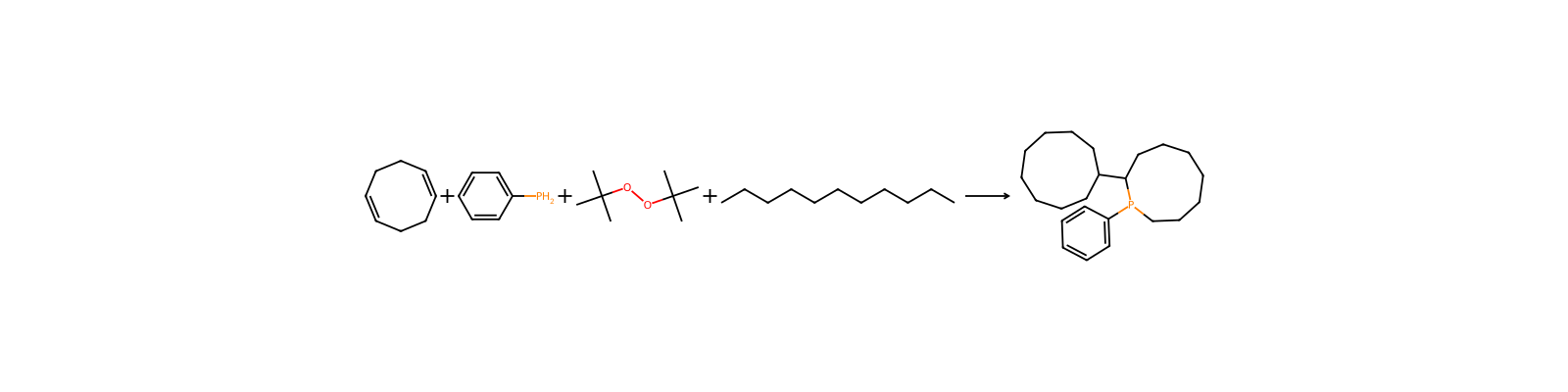
UsesThe decomposition reaction proceeds via the generation of methyl radicals. The peroxide bond undergoes homolysis at temperatures above 100 °C. Hence di-tert-butyl peroxide is commonly used as a radical initiator in organic synthesis and polymer chemistry. DTBP can in principle be used in engines where oxygen is limited, since the molecule supplies both the oxidizer and the fuel.

UsesDi-tert-butyl peroxide has been used as a radical initiator to induce free radical polymerization. It has also been used as a cetane enhancer in a study to determine the phase behavior of carboxylate-based extended surfactant reverse micellar microemulsions with ethanol and vegetable oil/diesel blends.

General DescriptionDi-tert-butyl peroxide is a clear colorless liquid. (NTP, 1992)

Upstream & downstream products

Upstream raw materials

tert-Butyl hydroperoxideHydrogen peroxidetert-Butanol

Downstream products

(4-Methoxy-pyridin-2-yl)-methanol4-MethoxypicolinaldehydeCH34-Fluoro-2-methylbenzoic acid[1-(4-Bromo-phenyl)-ethyl]-carbamic acid tert-butyl ester4-trans-propenylveratroleN-(tert-Butoxycarbonyl)-3-bromoanilinetert-Butyl 4-cyanophenylcarbamateMethyl 2-nitrobenzoate1-Methylcaffeine4-bromo-2,6-dimethylbenzoic acid4-Methyl-benzoic acid tert-butyl ester4-Fluorothioanisole3-Bromothioanisole2-Methylthiopyridine2,3-Epoxy-2-methylbutane4-Bromophenyl methyl sulfone